

Greenpeace fishing barrier
Eighteen limestone boulders have been placed on the seabed in the South West Deeps (East) marine protected area (MPA) by Greenpeace UK to block destructive industrial fishing in the area.
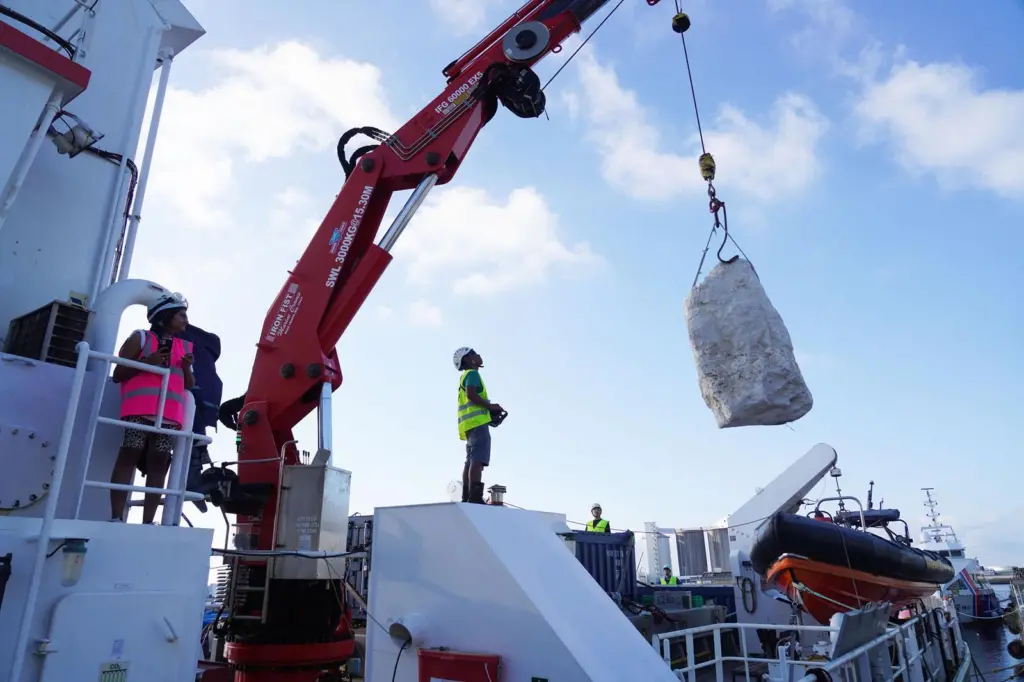
On 1 September, campaigners and crew onboard Greenpeace ship Arctic Sunrise sailed to the western English Channel to make a portion of the South West Deeps off-limits to bottom-trawling.
Greenpeace explained that the boulder action took place days after UK leaders failed to help secure a Global Ocean Treaty at IGC5 in New York, threatening the government’s aim to achieve at least 30% ocean protection by 2030.
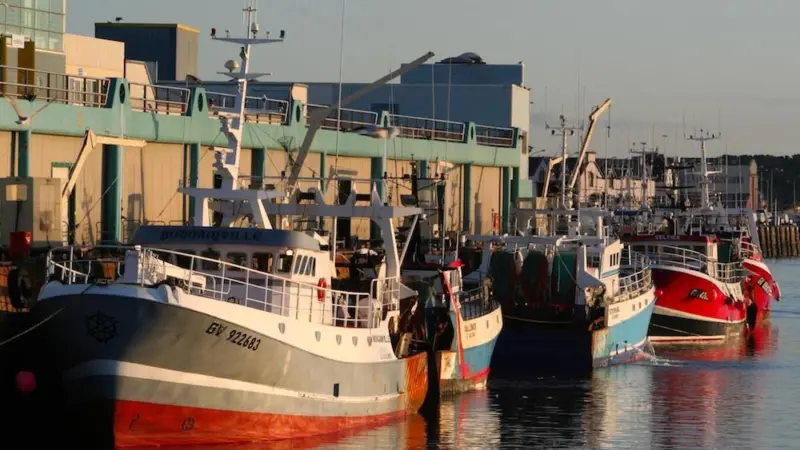
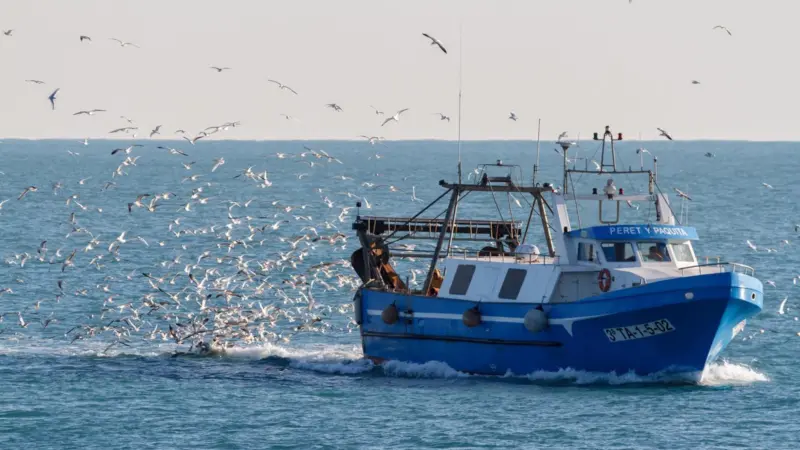
According to the environmental campaign group, this is one of the most heavily fished MPAs in the UK, whereby in the last 18 months, it experienced almost 19,000 hours of industrial fishing, 3,370 hours of which was bottom-trawling.
Most of the industrial fishing vessels in the area were from France (53%) followed by Spain (30%) and UK (9%), it said.
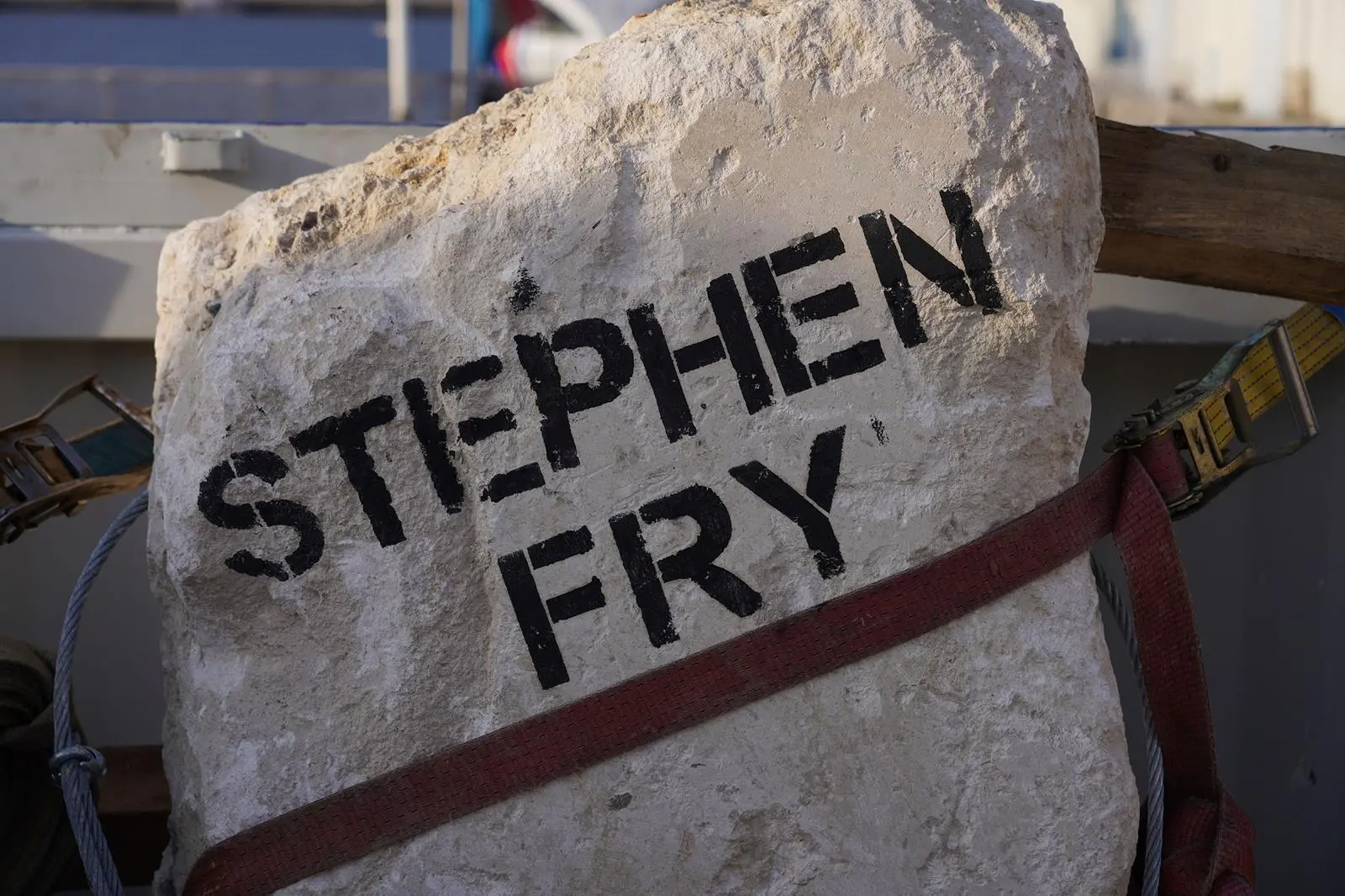
Celebrities Hugh Fearnley Whittingstall, Simon Pegg, Stephen Fry, and Daniel Lismore have supported the action, alongside Conservative politicians Henry Smith MP, Sir Peter Bottomley MP and Theresa May’s former Downing Street environment advisor Lord Randall, as well as the Green Party’s Caroline Lucas MP. Their names were stencilled onto the boulders before being dropped into the ocean.
The 18 boulders are Portland limestone, and each weighs between 500kg and 1.4 tonnes – making it impossible for bottom-towed fishing gear to be dragged along the seabed.
Will McCallum, Head of Oceans at Greenpeace UK, said, “Right now, there’s an industrial fishing frenzy happening in UK waters, and what’s our government doing about it? Greenpeace UK has created this underwater boulder barrier as a last resort to protect the oceans. We’d much rather the government just did their job.
“It is outrageous that bottom-trawlers are allowed to scrape along the seabed in most of our marine protected areas every single day. They destroy huge swathes of the marine ecosystem and make a mockery of our so-called ‘protection’.
“Ocean protection is even more urgent now that our leaders have failed to help secure a Global Ocean Treaty. Our new Prime Minister must protect local fishing communities and immediately ban industrial fishing in marine protected areas by tweaking commercial fishing licenses. The government already has the power to do this; all they need is the will to make it happen.”
Newhaven fisherman Neil Whitney said, “Big industrial fishing boats can catch more in one day than I can catch all year. They’re able to take out entire ecosystems, and if they cause a fishery to collapse, they just move on to the next one. Greenpeace gets the urgency, while leaders and policymakers just twiddle their thumbs.
“Industrial fishing, like fly-shooters and supertrawlers, are killing our marine environment, and small-scale UK fishermen like me are losing out big time. Coastal communities are on their knees because fishermen are having to leave the profession they’ve dedicated their lives to; there’s hardly anything left to catch and no money to be made, despite all the promises politicians made to us.
“I’m a trawlerman, and I know it’s absurd that bottom trawling is legal in our marine protected areas. It’s like ploughing a combine harvester through a national park. MPAs are supposed to be the areas where fish stocks can recover, so that we have fish for generations to come. It’s a case of common sense.”
Campaigning chef Hugh Fearnley-Whittingstall said, “For more than a decade, I’ve been just one voice among millions asking our government to take urgent and meaningful action to conserve our marine life. They say they are listening, and that they have already made world-leading commitments on marine conservation. But as industrial fishing vessels continue to plough through our so-called marine protected areas, the government’s rhetoric is revealed as empty and cynical.
“It makes no sense at all to call something a protected area if you’re going to sit by and let huge fishing boats trash the seafloor with their heavy gear. There is no good explanation for the government’s inaction. It’s baffling and frustrating, and completely undermines their claims to be world-leaders on ocean protection.
“That’s why I fully support Greenpeace’s latest boulder barrier in the South West Deeps. My name has been stencilled, for the second time, onto a boulder which is now at the bottom of the sea, stopping bottom-trawlers from continuing their trail of destruction,” he said.