



The tuna purse-seine fishery’s existence in the Indian Ocean is now at stake following the decision taken by the Indian Ocean Tuna Commission (IOTC) to phase out drifting fish aggregating devices (FADs), according to European fishing industry trade body Europêche.
It also warns that coastal developing states’ economies are severely threatened by the move.
Held 3-5 February 2023 in Mombasa, Kenya, a Special Session of the IOTC a proposal on drifting FADs was adopted by a two-thirds majority following a vote by secret ballot.
As a result, coming into effect from 1 January 2024 will be a phased reduction in the number of drifting FADs permitted per vessel from 300 to 250 in the first year and to 200 in 2025.
A drifting FAD registry will also be created, allowing for increased transparency and monitoring of the manmade devices used to attract tuna. The adopted proposal also put a 72-day closure period for drifting FADs in place.
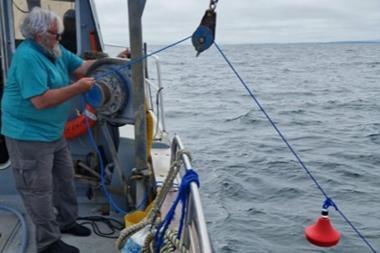
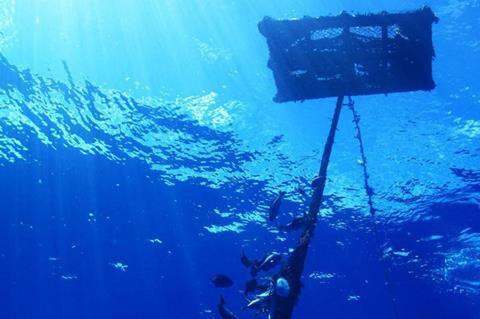
FADs typically consist of rafts with buoys attached for its location that could be drifting in the ocean or anchored at the sea floor to improve efficiency, reduce costs and emissions. All of the EU’s long distance tuna fleet uses this method.
Europêche Tuna Group said that while other fishing fleets catch more than half of the total tuna catches in the IOTC area, the whole burden is placed on purse-seine fleets. It highlighted that this comprises 46 vessels which employ hundreds of sailors, including from Africa and create employment in processing plants, shipyards and port facilities in the Indian Ocean.
The group stressed that the EU, Seychelles, Mauritius, Comoros and other contracting parties were not opposing the introduction of further FAD measures, saying these countries were only requesting specific scientific advice – to be delivered in the next scientific committee in December 2023, for the IOTC to take a science-based decision in 2024.
“No science to base the decision on, no consideration for local economies, and above all, no possibility given to the EU and other opposed developing countries to discuss and find a compromise,” Europêche Tuna Group Director Anne-France Mattlet said of the secret ballot meeting.
The vote’s outcome, arrived at in less than two hours, “will threaten the whole EU long-distance tuna fleet and the purse-seine dependent economies of the region”, she said.
“Can it be something else than a geopolitical issue? We are strongly asking the EU to challenge this decision, in line with the affected developing countries, to save the purse seine fleet and support its developing partner states. The contrary will hand over our tuna supply to non-EU fleets and foreign interests.”