




Ecuador, Peru fishing boost
As part of its efforts to combat illegal, unreported, and unregulated (IUU) fishing, the U.S. Agency for International Development (USAID) has launched Por La Pesca, a new public-private partnership to support artisanal fishing in both Ecuador and Peru.
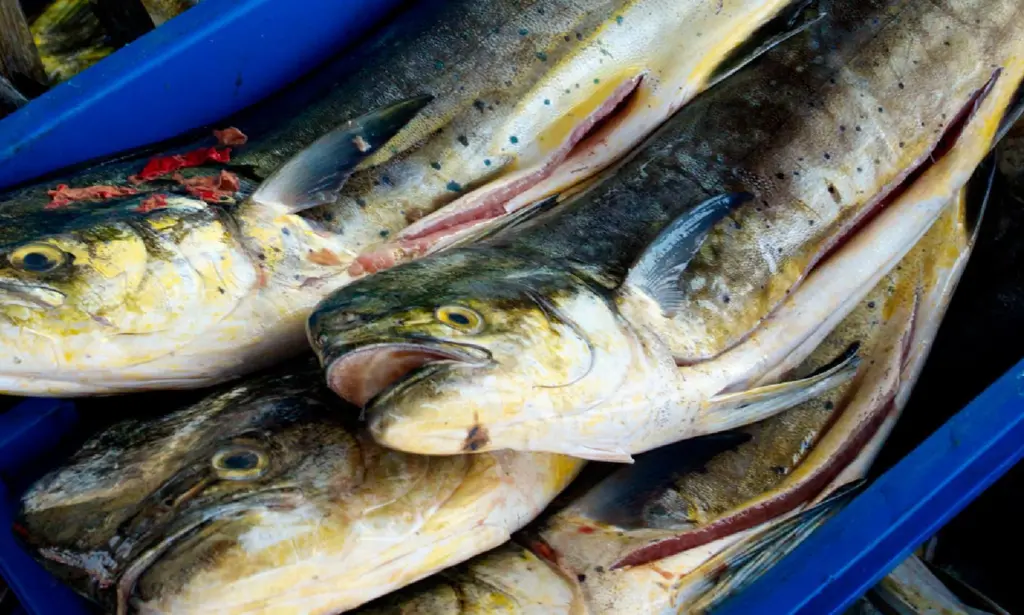
Por la Pesca is the result of a joint effort between the Walton Family Foundation, which contributed US$12.5 million, and USAID, which provided an initial $5.7 million. The project is seeking to empower and formalise artisanal fishing organisations that fish for flying jumbo squid, mahi-mahi, tuna and octopus in the two countries.
Announcing the project during a visit to Peru to participate in the 52nd General Assembly of the Organisation of American States, US Secretary of State Antony Blinken said, “Today I saw first-hand how IUU fishing threatens the health of our oceans and, as a result, the livelihoods and food security of coastal communities in Peru. It is because of this that the United States is committed to combating IUU fishing globally. The United States continues to support the ability of coastal countries and their communities to confront IUU fishing.
“Through this investment, the United States is championing an approach that balances conservation of marine ecosystems with equitable economic growth and the rights of small-scale fishers. We call on other countries to actively participate in and support the international community in fighting IUU fishing.”
The NGO Peruvian Society for Environmental Law (SPDA) will lead Por la Pesca’s implementation in alliance with Redes Fishing Sustainability, Pro Delphinus, the Environmental Defense Fund (EDF), Future of Fish, Sustainable Fisheries Partnership (SFP), The Nature Conservancy Peru, World Wildlife Fund (WWF) Peru, and WildAid.
During his visit, Secretary Blinken met Ricardo Laos, President of the José Silverio Olaya Balandra Association of Artisanal Fishermen of Caleta de Chorrillos; Elsa Vega, President of the National Society of Artisanal Fishing; Jessica Hidalgo, Project Director and SPDA representative; and Marcela Escobari, Assistant Administrator of USAID’s Bureau for Latin America and the Caribbean.
“There are fewer fish, and we must go out to sea for days to find fish. That creates economic problems for us. Many of our families make livings from fishing,” Laos commented.
Por la Pesca is seeking to empower and formalise artisanal fishing organisations that fish for flying jumbo squid, mahi-mahi, tuna, and octopus in Ecuador and Peru.
“Illegal harvesting of marine resources threatens the livelihoods of women and men who seek to operate honest and responsible fishing businesses. The goal is to ensure these seafood products are captured in a humane and environmentally-friendly way,” said Hidalgo.
With an estimated illegal financial flow of over $23 billion dollars annually, IUU fishing is often associated with other transnational organised crimes, such as drug and arms trafficking, forced human labour, and human trafficking.
Related Articles
 PROCESSING & REFRIGERATION
 FISHERIES
 FISHERIES