






85% of global tuna at healthy levels
Eighty-five per cent of tuna sourced worldwide is from stocks at a healthy level, according to the latest figures from the International Seafood Sustainability Foundation.
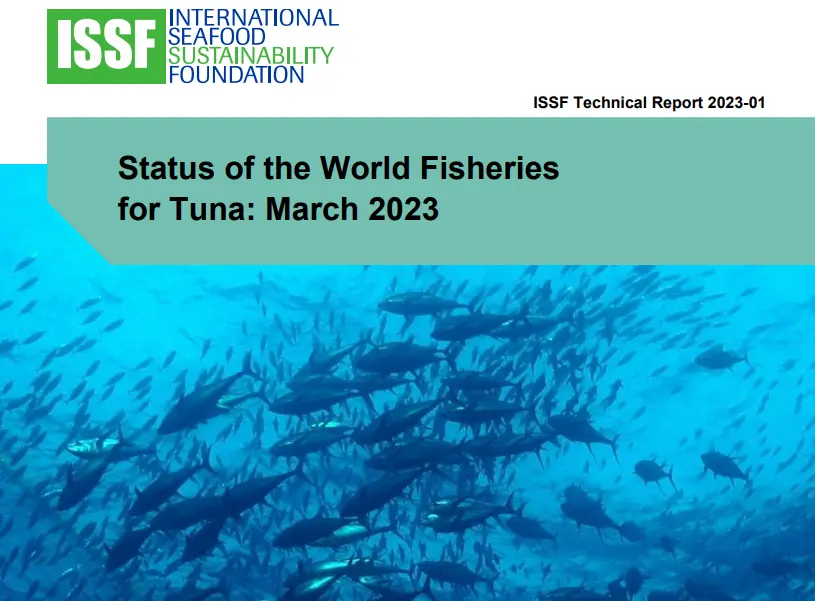
Its signature ‘Status of the Stocks’ analysis which looks at 23 commercial tuna species also reports that 11% is from overfished stocks and 4% from those at an intermediate level of abundance.
Several tuna stocks are considered overfished and/or subject to overfishing. These are the Mediterranean albacore, Indian ocean bigeye, Pacific Ocean bluefin and Indian Ocean yellowfin.
The report also notes several changes to stock ratings since the last update in November 2022, namely that the Indian Ocean bigeye stock’s biomass rating was downgraded from green to orange and the Indian Ocean albacore stock’s fishing mortality rate was upgraded from orange to green.
Key figures from the new report:
Globally, 61% of the 23 stocks are at healthy levels of abundance (down from 65% in November of 2022), 22% are at an intermediate level, and 17% are overfished.
78% of the 23 stocks are experiencing a well-managed fishing mortality rate and 13% are experiencing overfishing.
The catch of major commercial tuna stocks was 4.8 million tonnes in 2021. 56% was skipjack tuna, followed by yellowfin (31%), bigeye (8%), and albacore (4%). Bluefin tuna accounted for 1% of the global catch.
The five largest catches in tonnes, unchanged since the previous report, are Western Pacific Ocean skipjack, Western Pacific Ocean yellowfin, Indian Ocean skipjack, Indian Ocean yellowfin, and Eastern Pacific Ocean skipjack.
66% of the catch is made by purse seining, followed by longline (9%), pole-and-line (7%), gillnets (4%), and miscellaneous gears (14%). These percentages have changed only slightly since the previous report.
The Status of the Stocks report is reviewed by the ISSF Scientific Advisory Committee, which provides advice on its content. The report does not advise on consumer behaviour.
Related Articles
 FISHERIES
 FISHERIES
 FISHERIES