


First fish fed with mycoprotein reaches market
A Swedish large-scale initiative to develop the feed of the future has replaced soy and fishmeal with mycoprotein, mussels and insects raised on residues from the country’s forests, oceans and food industry. The project marks the first time consumers can buy fish raised on feed containing mycoprotein.
Produced through a fermentation process, mycoprotein is a meat-free, protein-rich food derived from naturally occurring soil fungus Fusarium venenatum.
Behind the innovation are the Swedish non-profit Axfoundation, the Swedish University of Agricultural Sciences (SLU), and 25 partners across the value chain, from researchers and farmers to feed and food companies.
“Together we have proven that it is possible to produce feed at industrial scale using Swedish side streams, reducing environmental impact and strengthening national food security, without compromising animal health or taste. This is the beginning of a major transition,” said Christian Sjöland at Axfoundation, Project Manager for The Feed of the Future for Fish, Pigs, Poultry and Laying hens.
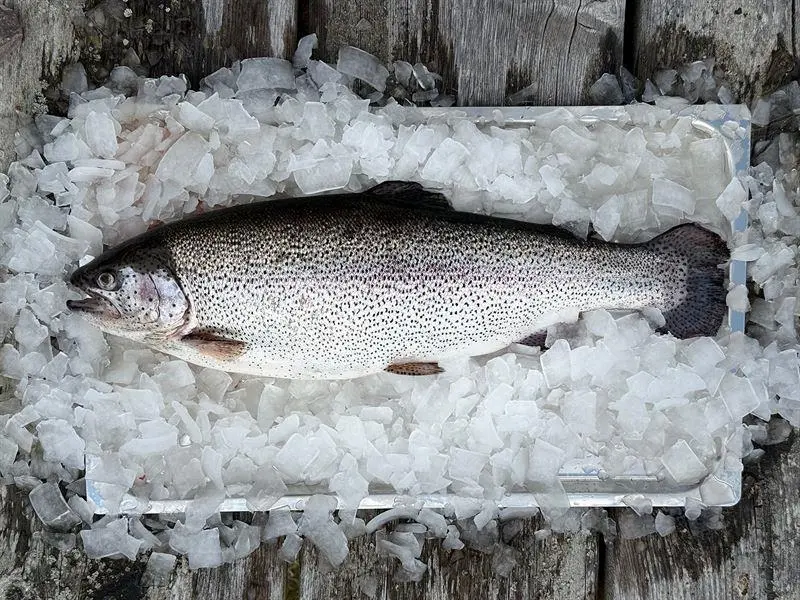
The rainbow trout now on the market from Swedish fish farm Älvdalslax represents the world’s first fish raised on feed with mycoprotein. The feed also includes insects that turn food waste into protein and mussels that reduce eutrophication in the Baltic Sea.
Axfoundation said that together, these ingredients replace soy and fishmeal and create a circular feed with protein ingredients that have lower climate impact, less land use, and ease the pressure on biodiversity.
The feed innovation stems from the Swedish project The Feed of the Future for Fish, Pigs, Poultry and Laying hens aiming to reduce both resource waste and environmental impact from feed production. The three protein ingredients are currently being evaluated in aquaculture in Älvdalen, Sweden, and will also be tested in pig, chicken, and egg production across Sweden during 2025–2026.
“Circular feed solutions for farmed fish perform just as well as conventional feeds. The feed contains ingredients more natural for fish to eat, which benefits fish health, the environment, and the quality of the final product. The hope is to see equally good results for pigs and poultry,” said Anders Kiessling, Professor of Aquaculture at the Swedish University of Agricultural Sciences.
Sensory tests conducted at the School of Hospitality, Culinary Arts and Meal Science at Campus Grythyttan (Örebro University, Sweden) show that the fish matches the quality of conventionally fed fish. Growth performance is equally strong, giving fish farmers both new business opportunities and a chance to drive the transition.
“From a taste perspective we are very satisfied, and customer demand is already strong. As fish farmers, it is meaningful to contribute to a solution that works for both us and the environment,” said Anders Beronius, CEO of Älvdalslax.
Starting September 2025, the product “Framtidens Fisk” (“Fish of the Future”) is available to consumers through selected Swedish retailers including Hemköp and Urban Deli, as well as to food service through distributor Fiskhallen Sorunda.
Products from pigs, poultry and laying hens fed with the new circular feed are expected to reach Swedish plates during 2025/2026.
The project The Feed of the Future for Fish, Pigs, Poultry and Laying hens scales up earlier pilot trials with insect-based feed for fish to now include additional animal species and new protein sources at industrial scale. Project partners include: Axfood, Boden Municipality, Cirkulär (mycoprotein production), Ecopelag EF (mussel meal production), Ecoloop, Fiskhallen Sorunda, Grönsakshallen Sorunda, Hemköp, Kötthallen Sorunda, Lantmännen (Swedish agricultural cooperative), Martin & Servera, NovaPro, Plant Protein Production, Ragn-Sells (waste management and recycling company with an insect protein facility in Sweden), School of Hospitality, Culinary Arts and Meal Science Örebro University on Campus Grythyttan, RISE Processum, Seaqure Labs, Stjärnägg, Svenska Foder, Urban Deli, Varva, Viking Fågel, and Älvdalslax.
The project is co-funded by Vinnova, Sweden’s innovation agency.
Related Articles
 AQUACULTURE
 AQUACULTURE
 FISHERIES