

CO2 equivalents on feeds
One Danish fish feed producer is now displaying CO2 equivalents to provide transparency in its emission data
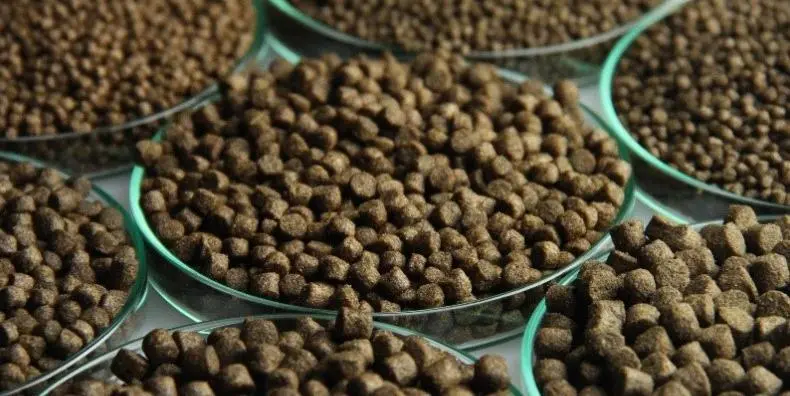
Aller Aqua is now labelling its feeds with their respective CO2 equivalent from its Danish, German and Polish factories, with the rest to follow shortly.
Henrik T. Halken, Group Vice President, CPO/CCO), explained that this is the end of a long process ending with verification by Bureau Veritas.
“It has been important for us to get this right, and to have a declaration that customers can relate to. We want to be transparent. We want to enable our customers to compare CO2 emissions between competing products.”
”Food and feeds already have many labels. We want to create value by ensuring that our chosen system is widely applicable. At the same time, it must be relevant for the end consumers. The CO2 equivalent calculated on all our feeds enables all that.”
Transparency
Mr Halken said that the verified CO2 numbers will act as a baseline and ensure the company’s continued focus on emissions.
”From here we can start making choices about our raw materials. Feed performance and price is our priority. However, when we can lower the CO2 equivalent without compromising on quality or increasing the price, we will. We took the first step by phasing out the use of South American soya for our European factories,” he said.
He pointed out that consumers increasingly request transparency about the food they buy and the cpmpany is proud to be ”first movers” and are looking to start a dialogue about the impact of production in the sector.
We hope to start a dialogue about emissions, that will spark interest and awareness in the sector and beyond. We want to help develop the entire aquaculture sector in a continuously sustainable direction. We know that sustainability is much more complex than choosing a low emission feed. However, in the aquaculture sector, we must discuss the parameters of sustainability as the foundation for the choices we make – including CO2 emissions.
Aller Aqua is a Danish family-owned group with headquarters in Christiansfeld, Denmark. It produces fish feed for more than 70+ countries worldwide from factories in Denmark, Poland, Germany, Egypt, China, Zambia and Serbia with a production capacity of 300,000+ tonnes and a total yearly turnover of around €185 million.
Related Articles
 AQUACULTURE
 AQUACULTURE
 FISHERIES