



A plankton supplier is breaking new ground with its cryogenically preserved plankton feed which it says reduces mortality rates at fish farms.
With its cryogenic technology, Planktonic claims to have found the answer to one of the greatest problems in marine fish farming - mortality rates that are too high and growth rates that are too low in fish that do not receive fatty acid rich live feed.
“To deliver live feed, rich in marine fatty acids, directly from the sea in a way that is simple to use for the fish farmer, changes all the premises for those who want to farm species like cod, halibut, shrimp and other marine species,” said Rune Husby, CEO of Planktonic.
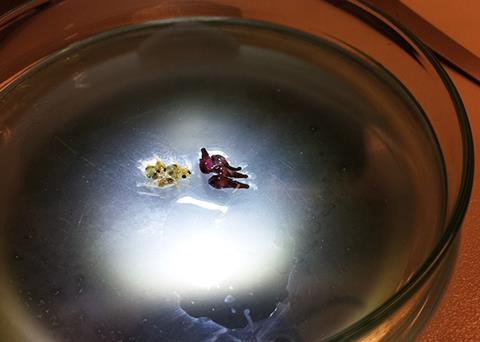
Before freezing, Planktonic plankton is mixed with a specially designed cryopreservation liquid, and then packed in flat bags which are stored in liquid nitrogen at -196 degrees Celsius. The bags weigh about 60g each and one bag contains about 30 million plankton.
At the fish farm, the farmer only needs to thaw the bag in salt water. The plankton is then revived and becomes a natural feed with the correct nutritional value for the fish juveniles.
The company has undertaken research and tested the feed on a number of different marine species and the results have been very encouraging.
Larvae and juveniles that are fed Planktonic feed show faster growth than the control groups. The fish farmers also register lower mortality, better pigmentation and in general a more robust and more healthy fish.
Industrial scale tests began in 2016 with feed supplied to Norwegian farmers of wrasse and lumpfish. The tests revealed that mortality had been reduced from 18% to 3% in some cases.
Another positive bi-effect of cryopreservation is that the freezing process kills most bacteria and viruses that is found in other live feeds, thus eliminating many sources of contamination and disease for fish farmers.
Planktonic is a finalist for Aqua-Nor’s 2017 innovation award.