



Çamli – on a mission to re-educate the Turkish market
For Çamli, it’s all about the firsts it has chalked up in the industry.
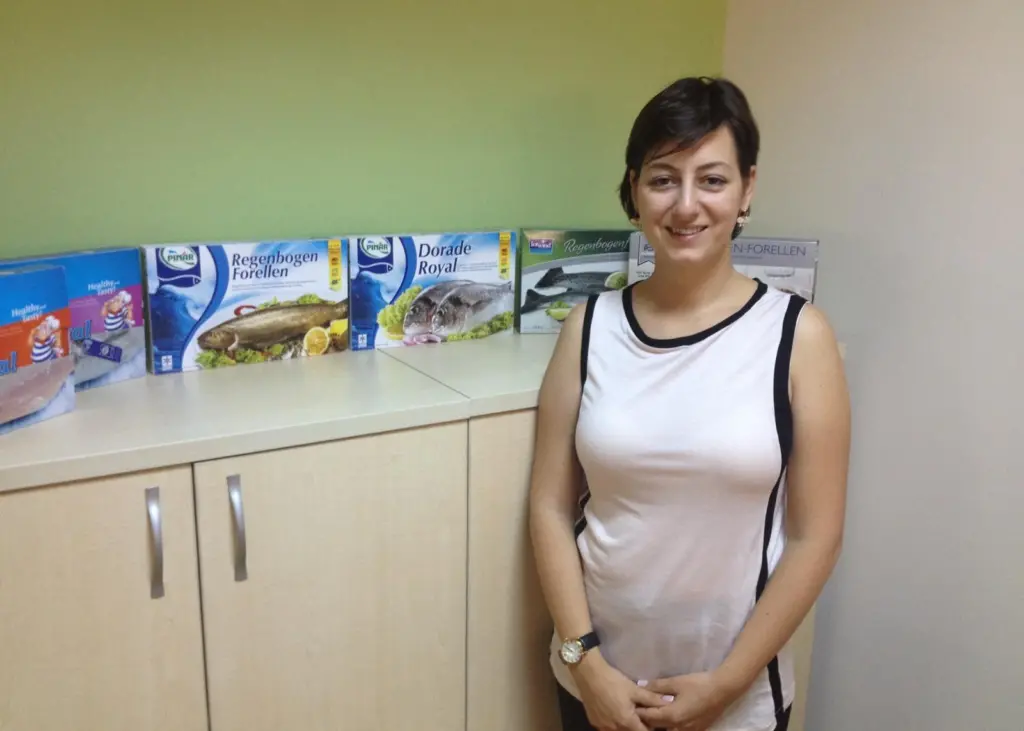
Izmir Based Çamli Feed Animal Husbandry Co is the agricultural arm of Yasar Holding AS. The company operates in the fields of animal nutrition, plant nutrition, animal husbandry (turkey and cattle) and fish farming through its brands, Çamli, Bioaqua, Biofarm and Pınar Balık.
It set up Turkey’s first integrated aquaculture installation and pioneered Turkey’s first farmed fish production all the way back in 1985 – the very beginning of the industry in the country. In 1987, it set up the country’s first fish feed production facility.
It was the country’s first feed manufacturer to adopt extruder technology in fish feeds.
In 1999 Çamli set up Turkey’s first hatchery and then there were two other firsts for the company in 2008 – Turkey’s first organic fish feed production and Turkey’s first branded farmed fish under the Pınar label.
Çamli’s main focus is on seabass and seabream. Of its total fish production, 70% is for the domestic market and 30% is bound for the export market to Europe, the USA, Middle East and China. It processes 10,000 tonnes through its processing plant in Izmir every year, 2,500 of which is processed, the rest is sold as whole round fish. Its turnover was TRK70m in 2011.
The company has three hatcheries producing a total of 74 million seabass and seabream fry.
It has two cage farms in two locations in Izmir with a production capacity of 5,000 tonnes at one and 2,000 at the other. The cages are equipped with high tech cameras and automatic feeding systems.
Increase capacity
Currently, around 4,000 tonnes is farmed by the company and another 1,500 is bought in from other producers for processing. The plan is to increase Çamlı’s capacity to 10,000 tonnes, but this is a process which can take up to three years to complete.
Çamli opened its brand new processing plant in Izmir last year – where the fish undergoes filleting, freezing, smoking and further processing into ready to eat products.
It can handle 10,000 tonnes of fish per year. The factory is certified to British Retail Consortium (BRC) and International Food Standards (IFS).
But Çamli is more than just the largest farmed fish producer in Turkey, it prides itself as a social institution by way of the activities conducted its holding group. Yasar Holding provides scholarship opportunities for young people, works with local universities, and has signed the United Nations Global Compact – a framework for businesses that are committed to aligning their operations and strategies with 10 universally accepted principles in the areas of human rights, labour, the environment and anti-corruption.
The company also has its own basketball team – Pınar Karsıyaka, and owns its own five star hotel, the Altin Yunus, in Çesme.
Ms Yasemin Özbakkaloglu, export team leader at Çamli, said to World Fishing & Aquaculture that it is currently experimenting with other species of fish in the Turkish market including two banded bream, sharp snout seabream striped bream and meagre – but a decision to start production with these new species “would very much depend upon market demand.”
Ms Özbakkaloglu talked to World Fishing & Aquaculture about her feelings on the very low consumption of seafood by Turkish consumers – which is currently only 8kg per year.
“Attitudes are slowly changing in Turkey. The domestic market is the majority of our business so we need to listen to our customers. The Turkish market requires fish to be whole and fresh, this is why we produce our frozen and filleted products for export. But we have noticed changes recently, some retailers have reported an interest in consumers for frozen and filleted products and have asked Çamli to supply them,” she said. So this could be another market opportunity Çamli will want to take advantage of in future.
Çamli’s other strategic plans are to increase volumes produced and find other export markets for new species.
The company is producing meagre in small quantities (100,000) and is trialling the fish in the domestic market and in the Greek and Italian markets to test the water.
And location is everything when it comes to the export market. The company already has had a presence in Germany, for over 30 years now, which is a central point from which to test the markets of Northern Europe. There are also plans to feel the market and establish working partnerships in the Middle East and in Russia in the near future.
Related Articles
 AQUACULTURE
 AQUACULTURE
 AQUACULTURE