Scotland’s pelagic fishing and processing sectors have heavily criticised the new advice from the International Council for the Exploration of the Sea (ICES) that recommends a 70% cut in the Northeast Atlantic mackerel total allowable catch (TAC) for next year, warning of the considerable damage it could cause if implemented.

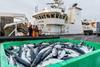
A crate of mackerel dockside at Peterhead

A crate of mackerel dockside at Peterhead

Source: Seafish

The Scottish pelagic sector employs around 2,000 people

On the catching side, Scottish Pelagic Fishermen’s Association (SPFA) Chief Executive Ian Gatt slammed ICES’ advice for, amongst other things, its guesswork and bad assumptions.  

“It seems that absurdly cautious assumptions have prevailed over hard evidence,” Gatt said. ICES advice has been highly variable in the past few years, and we understand that this year it reflects an arbitrary choice of a recruitment period into the fishery. It is unacceptable that the viability of our industry should be jeopardised by an ICES best guess decision plugged into a computer model. In short, the same science with better assumptions would lead to a much better outcome for our industry.”

Richard Williamson, the Shetland-based second skipper of the LK62 Research and Chair of SPFA, stressed the new advice bore no resemblance to what he and other fishermen were seeing across the mackerel fishing grounds in the Northeast Atlantic. 

“We don’t disagree that the stock is not as high as it was back in 2015-16, for example, but we believe that the stock is in better shape than it was two years ago,” he said. “We wouldn’t disagree either that a comprehensive, long-term sharing arrangement binding all players in the international mackerel fishery, based largely on zonal attachment combined  with a long-term management plan for this important stock, is long overdue.

“Fishermen are custodians of the sea. We have no interest whatsoever in demanding excessive quotas that would end up crippling our businesses and the communities that depend on them. That is why we have objected to ICES advice in the past when we felt it was too high, as we did when  the ICES advice for North Sea herring was increased by 32% in 2024, for example.”

The Shetland Fishermen’s Association’s Simon Collins pointed out that the pelagic fishing fleet had become a major and credible contributor to hard scientific data in recent years. 

“We believe in scientific guidance on catch limits when it is backed with real data and a rigorous scientific process. We utterly reject this new approach by ICES, in which reckless guesswork and fag-packet choices in analysing serious data result in recommendations that threaten a critical part of the UK’s fishing fleet and all the onshore businesses that depend on it. This is not how any scientific institution should conduct itself,” he said.

The quota cut would also have a crushing effect on Scotland’s mackerel processing sector, the Scottish Pelagic Processors’ Association (SPPA) warned.

The sector employs around 2,000 people, mainly in Peterhead, Fraserburgh and Lerwick, and jobs would be put in jeopardy if such a cut is implemented, said SPPA Chairman Robert Duthie.

As well as direct employment, there are many other support jobs dependent upon mackerel, including in logistics, packaging, engineering and port services. He also highlighted there’s a healthy domestic market for canned and smoked mackerel, and it’s also a major export product, including to premium markets in Asia, that could be put at risk.

“The advice from ICES is using a revised methodology on how much young fish enter the spawning stock biomass which is an arbitrary figure, and  we are certain doesn’t reflect the true situation of the mackerel stock and adopts a ‘worst-case’ scenario,” Duthie said.

“There are, of course, ongoing issues with mackerel management that need resolved, most notably the failure of coastal states to reach a comprehensive international agreement, which is something both UK catchers and processors have long been calling for. But despite this, the catch advice by ICES is unnecessarily harsh and is based on doubtful science. We urge for a common-sense approach when it comes to deciding upon the final quota allocations for 2026.”