





Bagci – an institution in Turkish trout farming
Established in 1981, Bagci Balik now produces 3,000 tonnes of rainbow trout per year.
Aydin based Bagci Balik is one of the oldest rainbow trout farms in Turkey and it claims to be the oldest in terms of smoked trout production.
Its first farm was established in Aydin in 1981 and today produces 900 tonnes per year to the value of US$2.5m.
The second farm was established in 1986 at Köycegiz together with a modern processing facility for 2,000 tonnes capacity. The company’s third farm in Bozdogan-Kemer was founded in 1999. The third production premises, with 700 tonnes capacity per year started production in Bozdogan-Kemer Dam in 1996. As a company, Bagci has a total production capacity of 3,000 tonnes per year.
Concrete runways
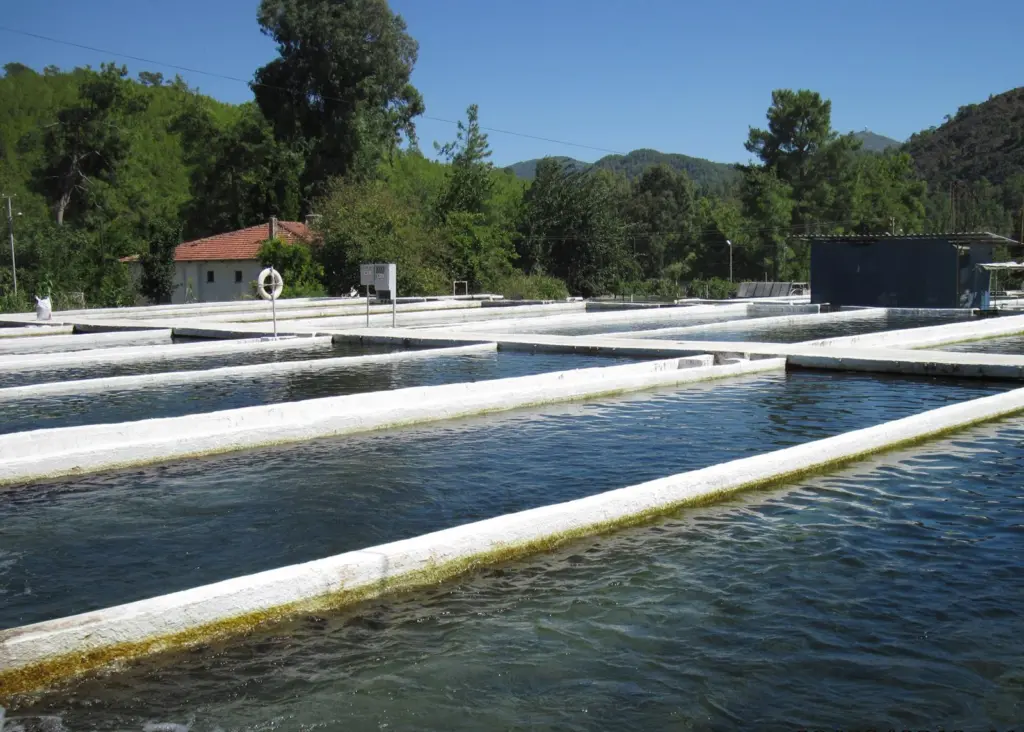
The facility at Köycegiz has 264 concrete runways where the fish are grown – there are around 15,000 fish in each runway – three million fish in total at the farm. The runways are fed by a spring 5km away from the farm, keeping the water temperature constant and enabling the fish to be produced all year round. The farm uses around 15,000 litres of water per second. When some of this water has been used it is recycled and used to generate electricity using a turbine and some is sold back to the national grid.
The facility has a hatchery, but the eggs are imported from the US. At 25 days old, the juveniles are moved into special covered pools. It’s important that they are sheltered from the sun at this stage because it makes them grow too quickly, according to Mr Nedim Katirci, production manager.
Processing facility
Three months later they are moved into the runways and when they reach 50-70g they are classed as adults. After five months, they are harvested when they weigh around 280-300g. But there are four runways where the fish are grown up to 1kg which are sold fresh and whole to customers.
The processing facility produces 80% fresh whole round and fillets and 20% smoked, which is either frozen or sold as fresh fillets. The bulk of the fish is bound for the export market (90%) with the rest destined for the domestic market. The smoked market is mainly in the Czech Republic, Germany, Holland and Singapore. The processing facility can handle more than the farm can produce so around 30% of the processing is done for external suppliers.
Around six tonnes per day (20,000 fish) are harvested, Mr Savas Keskin, quality manager, told World Fishing & Aquaculture. When they are harvested, the fish travel through pipes into facility where they are knocked out in an ice slurry – the gills are then slit using a machine and then they are cleaned. The whole round fish is then sized for packing which can be ready within a day, but otherwise the fish moves on to be filleted or smoked and then filleted and sold frozen or fresh.
Fillets are smoked using wood fired ovens burning oak rather than electric ones giving the fillets a unique taste.
The smoking process gives the fresh fillets a shelf life of 21 days fresh or 18 months frozen.
Related Articles
 AQUACULTURE
 AQUACULTURE
 AQUACULTURE