


Aquaculture’s motor-driven potential
High-efficiency motors combined with variable speed drives hold the key to higher productivity, lower costs and sustainability for aquaculture plants. Torben Poulsen, Business Development Manager, Drives and Pumps, at ABB Motion, explains why.
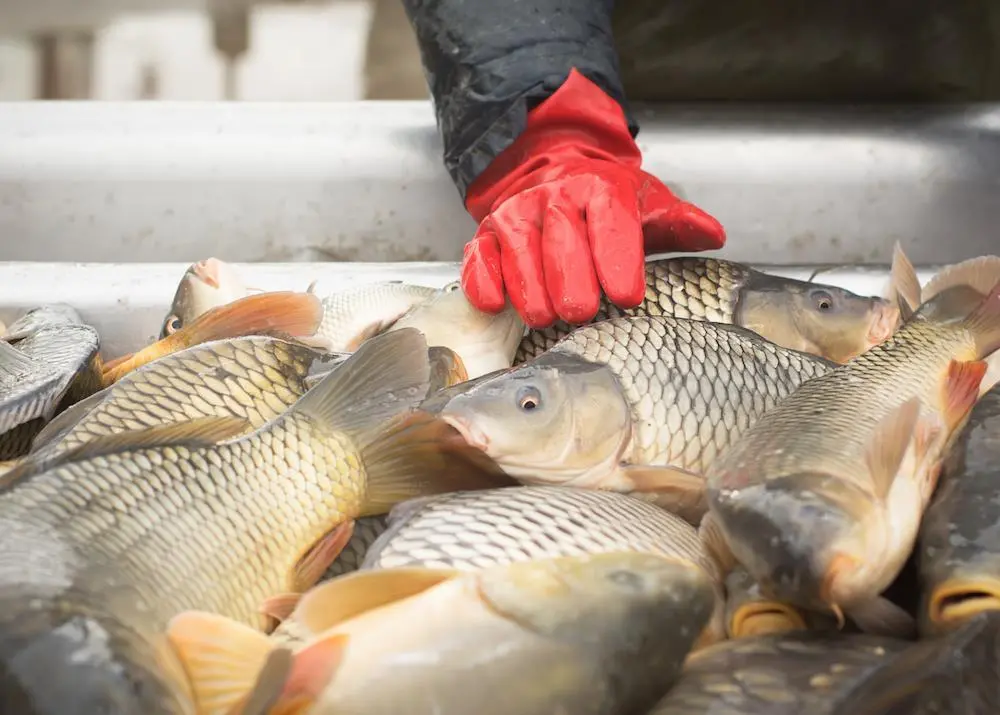
Onshore and offshore fish farms use electric motors in pumps and other equipment for water circulation, filtration, aeration and much more. Depending on the size and nature of the operation, a farm’s total motor count can range from dozens to many hundreds. Operators need their motor-driven equipment to work reliably and effectively, with low ongoing costs, so production and profits can be maximised. In addition, their machinery must operate sustainably.
Satisfying these requirements matters not only to producers but to the global community, with its growing appetite for the healthy, high-quality food that aquaculture provides. Over half of the world’s seafood output already comes from aquaculture. For some countries, food independence has been an additional driver for aquaculture development – reinforced by the effects of Covid on supply chains.
Fish farmers, feed manufacturers and fish processing companies have to manage many complex demands in parallel, including uncompromising safety, hygiene, traceability and continuous, reliable operations. Even a small lapse can result in the loss of hundreds of thousands of fish. At the same time, businesses must remain profitable while protecting the environment.
Variable speed drives (VSDs) support this industry by optimising the economy and performance of motors in various ways. Their cost reduction benefits relate not only to lowering energy consumption but to minimising maintenance and replacement expenses, and avoiding damage, waste and productivity losses. As well as shrinking carbon footprints, they help to achieve more sustainable and less wasteful use of resources, including water and feed, and avoid pollution.
Issues to address
The wide variety of aquaculture plants and conditions influences the technology they depend on and, in turn, their differing requirements for motorised equipment. Fish farms can be broadly divided into offshore and onshore. Offshore fish farming, typically focusing on salmon, remains a huge industry but onshore is the much faster-growing sector.
Although traditional pond-based operations still exist, the onshore segment is now characterised by high-tech recirculating aquaculture systems (RAS) in which water is continuously cleaned and recycled. No longer restricted to producing purely freshwater fish, modern onshore aquaculture can support salmon through every life stage – with artificially formulated sea water where necessary.
For offshore fish farms, pollution of the marine environment by leftover feed, fish waste products and medicines can be a problem. Environmental protection regulations are becoming stricter, and in some countries it is no longer possible to set up new fish farms at sea. However, great efforts are being made to increase the sustainability of offshore aquaculture, through technological advances, and the industry will undoubtedly continue.
It should be noted that traditional onshore fish farming can also be highly polluting, if untreated wastewater is discharged into rivers and coastal waters. Today’s RAS approach addresses ecological impacts and allows aquaculture to succeed even in the most landlocked of areas – in an extreme case even in the desert.
Fish farms using RAS tend to require much more motorised equipment than offshore operations. For example, they employ pumps in their water recirculation and treatment processes. Their demand for oxygenation and cooling equipment is also usually greater – especially in warmer parts of the world. More motors mean higher energy demands. A medium-to-large facility, producing 10,000 tonnes of fish annually, require 8 megawatts (MW) of power. Energy conservation is therefore a prime sustainability concern.
Where are motors found in aquaculture?
Movement of liquids and solids is fundamental, and this requires motors for pumps and other conveying systems. Materials moved include water, wastewater and sludge. There are also systems for transporting and dosing feed, medicines and water-conditioning additives, including salt for artificial sea water.
Wastewater treatment and recycling processes may use pumps, aerators, digesters, screens, filters, scrubbers, chemical dosing systems, centrifuges and sludge handling equipment. Cooling and oxygenation of water uses a combination of pumping and aeration equipment, like air compressors, blowers, bubble diffusers and agitators. Air conditioning, ventilation and heating systems may be needed for plant buildings, and for workers’ accommodation in some offshore or other remote sites. On-site feed preparation can involve hammermills, mixers, ovens, extruders, pelletisers, cooling fans, air conveyors, aerators and compressors. Delousing of fish using mechanical methods such as the Hydrolicer is another motor-driven activity. Some sites also include facilities for processing, freezing, packing and cold-storing fish – each with potential motor applications.
Why aquaculture needs VSDs
Essentially, VSDs control motors in a way which maximises their operating efficiency. One important aspect of this is their ability to adjust motor speed and torque, precisely, to meet a system’s changing needs. It allows a pump, for instance, to deliver exactly the right flow at any moment.
Without this control, equipment may be running unnecessarily fast. As the energy consumption of a motor is proportional to the cube of its speed, this situation is highly inefficient. Other approaches to regulating speed are possible, but they lack the accuracy, dynamic performance and sensitivity of VSDs. With a VSD you can be sure of delivering precisely the right amount of oxygen, chemicals, feed or ingredients, for example, rather than a wasteful and expensive excess. Connection of VSDs to sensors enables adjustment of motor speed and torque automatically according to monitored parameters.
VSDs also reduce wear, mechanical stress and damage in machinery and pipework by avoiding excessive speeds and extremely high or low pressures, smoothing out start-ups and speed changes, reducing harmonics and preventing pump cavitation. This saves on maintenance, repair and downtime expenses, and extends equipment lifespan.
Harmonics are voltage or current distortions generated in poor-quality power networks – often in remote locations – which can result in erratic behaviour or breakdown of equipment. VSDs can be specified with functionality for harmonic reduction and even continuing operation in the event of short-term disruptions in the power supply.
Cavitation is the formation of bubbles in liquid in areas of relatively low pressure around a pump’s impeller. As they collapse, these bubbles trigger shockwaves which can damage the pump. VSDs can be equipped with software which detects and counters this problem.
Additional VSD functionalities available include precise synchronisation and optimisation of the activation times and speeds of multiple pumps and conveyors. Another is pump self-cleaning to clear impeller blockages
Remote monitoring and control
There are strong arguments for remote monitoring and control in offshore fish farms, especially those far out at sea, as well as remotely located onshore sites. Instead of just raising an alarm when a fault occurs, integrated systems use sensors to monitor equipment activity and condition constantly. With remote drive control functions, operators can adjust motor activities and settings in response to information received. Often this avoids the need for a maintenance visit.
The same remote sensing and cloud-based communication technology enables condition-based predictive maintenance – the most cost-efficient approach to servicing equipment. Data gathered can also be analysed to identify problems and their causes, with a view to making improvements in reliability, efficiency, performance and safety. ABB Motion can advise on integrating all these functions to gain full benefit from today’s motor and drive technology.
Related Articles
 AQUACULTURE
 AQUACULTURE
 AQUACULTURE