



A new scientific study has identified a promising method for detecting and tracing fishmeal in farm-raised fish, offering the aquaculture industry a practical tool to verify feed ingredients and meet evolving sustainability standards and consumer expectations.
The research, led by the F3 – Future of Fish Feed initiative and published in the journal Fishes, analysed carbon and nitrogen isotope data from fish muscle samples collected during feeding trials involving seven aquaculture species.
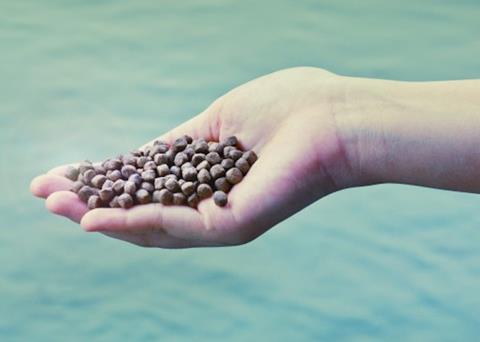
Researchers also examined feed samples from two trials to determine whether isotopic signatures could reliably identify the presence of fishmeal in aquaculture diets.
“As next-generation feed ingredients scale and aquaculture producers adopt formulation strategies that reduce reliance on marine ingredients, isotopic analysis could help validate sustainability claims, detect potential fraud, and strengthen consumer confidence,” said senior author Michael Tlusty, professor of sustainability and food solutions at the University of Massachusetts Boston and a judge of the F3 Challenge.
The study found that nitrogen isotope δ15N consistently distinguished fish fed fishmeal-based diets from those raised on plant-based feeds, with mixed diets producing intermediate values. Other ingredients, including fish oil, algal oil and poultry byproduct meal, had little effect on the isotope signature, suggesting δ15N is a robust marker for fishmeal inclusion.
Researchers said the technique is particularly effective at identifying significant differences in fishmeal inclusion, although further work is needed to establish the minimum detectable levels within aquaculture feeds.
The research team believes isotope ratio analysis could become an important verification tool for seafood supply chains, helping producers demonstrate responsible sourcing and strengthen sustainability reporting.
“This research provides the aquaculture sector with a science-based approach to verify feed claims, improve traceability and support more transparent, resilient seafood supply chains,” the researchers concluded. The technique will also be used to verify fishmeal inclusion during the current F3 Fish Farm Challenge.