




Farmed wolffish – a future alternative to salmon?
Farmed wolffish could start appearing on fish counters – offering consumers a new variety of tasty whitefish – but it does require somewhat different farming conditions from that of salmon, finds a new thesis from the University of Gothenburg.
The research acknowledges that salmon farms have created a steady supply of fish in our supermarkets and that the nutritional content of salmon, its rapid growth and low cost, have made it a popular fish in many households. But it also maintains that farming one species can create vulnerabilities in terms of food security and highlights that Sweden now imports more than 90% of the farmed fish that eat it consumes and that a very high proportion of this is salmon.
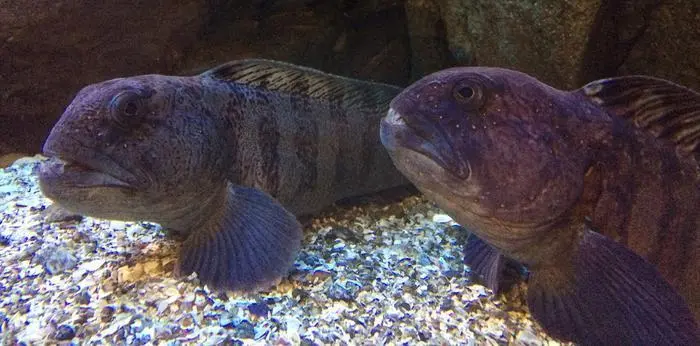
“Growing only one type of fish isn’t sustainable in terms of diversity, of the market and in terms of food security. My thesis shows that we could also farm wolffish (Anarhichas lupus). It is a species that is naturally found in confined spaces close to the seabed, where it forages. It is calm and can withstand stress, and from an animal welfare perspective, my studies indicate that wolffish has great potential for farming. However, it grows slightly slower and needs different feed,” said Dr Ida Hedén from the Department of Biological and Environmental Sciences at the University of Gothenburg.
Hedén looked at fish physiology to ensure animal welfare for farmed wolffish in sustainable aquaculture. This involved measuring the stress impact on the fish during handling. She also studied the intestinal function of the wolffish which can help to understand the types of feed that work best and also the times of day the fish should be fed to ensure optimum growth.
Having previously worked as a chef, Hedén also appreciates wolffish as a seafood product.
“It’s a fish with firm, white flesh that works well on the grill and with boiled potatoes and egg sauce.”
However, there are some challenges before large-scale commercial fish farming could be launched, among these, the optimum feed mix has not yet been established. In the wild, wolffish eat starfish and mussels, which points to their feed needing to be high in protein.
In her thesis, Hedén also studied a method for using shrimp and herring protein extracted from process water from the fish processing industry as feed ingredient to reduce the need for fishmeal. She found that feed containing shrimp protein in particular showed “promising results” for fish growth and also demonstrated how a waste product can be reintroduced into food production in a circular approach.
But the greatest challenge is that wolffish grow relatively slowly. With salmon, it takes 1-2 years from larva to harvest-size fish. For wolffish, it takes 3-4 years.
“Wolffish breeding programmes [are] needed to develop faster-growing strains of the fish, as was done with salmon. There is absolutely potential to farm wolffish, especially in land-based fish farms. Tanks on land offer good opportunities to control and create a good growing environment for the fish, and reduce the conflict with other coastal interests. But someone has to be the first and start a breeding programme. Thinking optimistically, that would give us commercial- farmed wolffish in our fish counters in five years’ time,” Hedén said.
Related Articles
 SEAFOOD
 AQUACULTURE
 SEAFOOD