
Fabric barrier against sea lice
Mowi Chile has successfully evaluated fabric developed by Garware as a mechanical barrier against Caligus larvae.
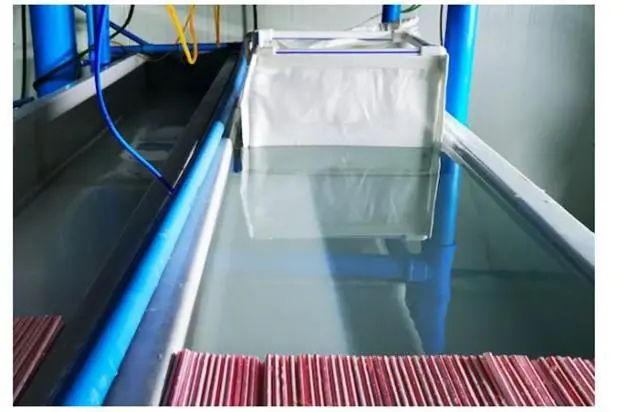
The analysis examines entry of these larvae at varying current velocities and the attachment to fish, and the result is a high quality fabric that makes it possible to contain infestations, while allowing for necessary natural oxygenation.
The Huenquillahue research centre in Mowi Chile has spent months analysing the larval retention capacity of Caligus rogercresseyi on Garware fabrics to be used as a barrier in salmon farms, evaluating aspects of performance; the capacity to retain C. rogercresseyi larvae, estimates of the percentage of larvae entering at different current speeds and checking fish for the attachment of the copepodites that manage to pass through the fabric.
“The effectiveness tests on the fabrics carried out in conjunction with the Universidad Austral de Chile, to combat Caligus, have given good results and we are considering them among the alternatives of non-drug management to harness this parasite,” stated the health department at Mowi Chile, indicating that X12 fabric blocks 99.6% of Nauplius larvae and 99.7% of Copepodite larvae.
The results of the study conducted by the Universidad Austral highlight the evaluation of cages containing fabric in a test channel for estimating permeability to larval passage, recording a 99.6% blockage of entry to the cage of Nauplius larvae and 99.7% of Copepodite larvae. In each case, the amount of water used was 340 litres with 3700 larvae per trial, totalling over 133,800 larvae, where water flow was applied at current velocities of 0.5, 2 and 3.5 cm*s-1.
So, the latest generation of Garware X12 fabric that is recommended as a mechanical barrier against C. rogercresseyi larvae has been shown to have high quality characteristics, also allowing for water flow without any major resistance at medium flow velocities, which should be favourable for maximising the natural oxygenation of the culture centre.
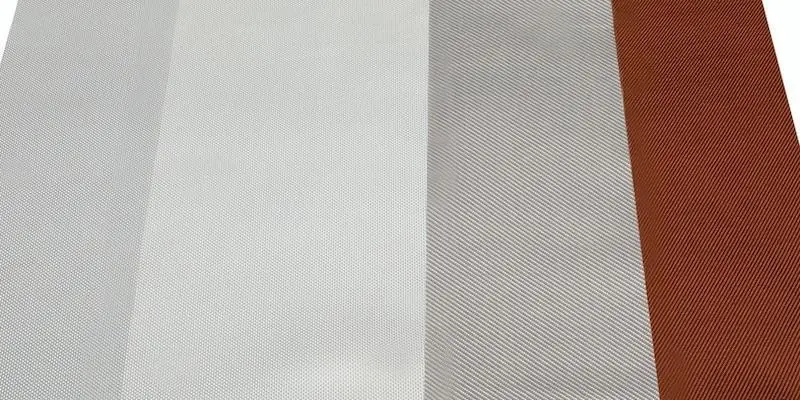
“The skirt designed to prevent infestation is a physical barrier surrounding the fish cage, based on X12 fabric that allows water to flow through, preventing lice from entering. It allows 80 times more water flow than a common anti-lice fabric designed for the same purpose,” commented Marcos Jofré at Garware Technical Fibres.
“The weave of the X12 fabric blocks the entry of the early stages of the parasite and allows for an adequate exchange of water. This is a non-pharmacological product, as part of strategies to reduce the use of drugs, with field experience showing a reduction in bathing frequency of up to 50%, with a reduction in lice of up to 60%. We developed a three-dimensional fabric with an opening of 80 to 150 microns for Norway, and a second generation of 60 to 100 microns for Chile, given that the local sea louse is smaller, resulting in a product adapted for the domestic market.”