

Ecuador safeguards habitats
WWF-Ecuador and Ecuador’s National Chamber of Aquaculture (Cámara Nacional de Acuacultura – CNA) have signed a new agreement to halt habitat conversion for shrimp farming.
The agreement marks the first national commitment for conversion-free aquaculture by any country.
It will utilise geospatial data generated by Clark Labs to analyse and classify land cover in coastal regions where shrimp farming is most common. Using this research and data, based on scientific-evidence, CNA will be able to set a baseline and repeat this analysis year-over-year to reduce and ultimately end all conversion for shrimp farming across the country in the near future.
“It is time for a change in the way we produce commodities such as shrimp, in a more environmentally friendly way, particularly respecting mangroves, and not contributing to their degradation. A large sector of the shrimp industry is now committed to moving towards more sustainable production and organisations like WWF are here to help make that happen,” said WWF-Ecuador Country Director Tarsicio Granizo.
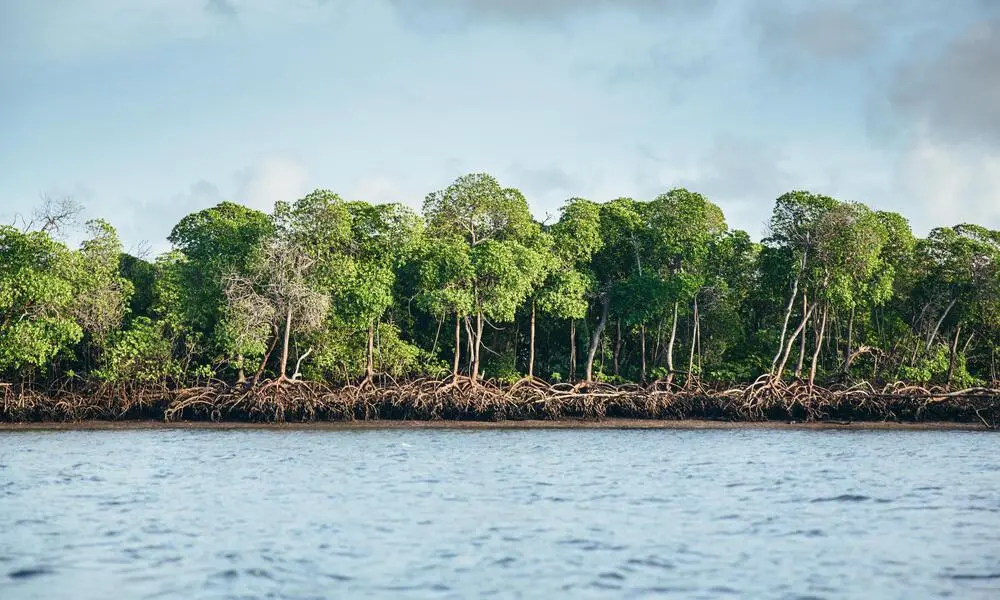
Ecuador is home to the largest mangrove forests in the Eastern hemisphere but has seen coastal habitat loss due to conversion for shrimp farming. Demand for the country’s shrimp has been rising consistently over the last five years, and the nation is currently the world’s largest shrimp exporter.
“The Ecuadorian shrimp sector has been characterised as an industry that cares for the environment and protects the surrounding ecosystems. This agreement will allow us to further strengthen our industry’s commitment to the conservation of ecosystems as valuable as mangrove forests and serve as an example for other industries in Ecuador and worldwide,” said Jose Antonio Camposano, Executive President of the National Aquaculture Chamber of Ecuador.
Granizo added that through this science-based research effort, WWF will seek to identify a baseline to support future monitoring and thus ensure the ecological integrity of these important ecosystems.
“Hopefully one day when people ask which is the country with the most sustainable shrimp production, they point to Ecuador as an example of good shrimp production practices.”
Related Articles
 SEAFOOD
 AQUACULTURE
 SEAFOOD