



Germ Cell Transfer (GCT) is emerging as a promising technology for aquaculture breeding programmes, offering producers new opportunities to improve productivity, profitability and sustainability beyond traditional selective breeding.
As breeding programmes increasingly target traits such as disease resistance, climate resilience, animal welfare and production efficiency alongside growth, GCT provides a practical tool for accelerating genetic improvement, say Samual May, genetic services lead – North America and Matthew Josephson, Genome Editing – commercialization manager at The Center for Aquaculture Technologies.
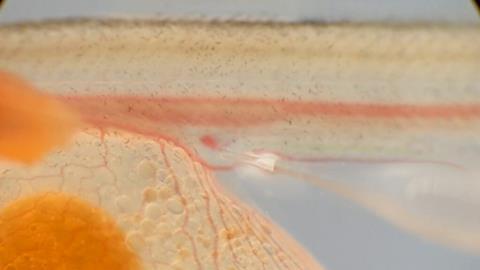
The technology works by transferring germ cells from elite donor fish into germ-cell-free surrogate hosts, allowing the surrogates to produce donor-derived sperm or eggs while separating genetic improvement from broodstock production.
For Atlantic salmon producers, the approach could help address costly production challenges including disease, parasites and early male maturation, all of which reduce harvest weights, increase mortality and affect product quality. Bioeconomic modelling suggests producing all-female salmon populations through GCT could increase net profit by approximately US$6.89 million per 30,000 tonne production cycle, representing a 10.1% improvement in profitability without increasing production infrastructure.
The technology also enables breeding programmes to focus on a smaller number of genetically superior animals while still producing sufficient broodstock through surrogate hosts. This increases selection intensity, accelerates genetic gain and allows valuable traits to be deployed more rapidly across commercial production systems.
Beyond genetic improvement, GCT offers practical benefits for hatchery operations by increasing juvenile production, supporting monosex populations, improving biosecurity through the transport of preserved germ cells instead of live fish and safeguarding valuable breeding lines against disease outbreaks or catastrophic losses.
Rather than replacing selective breeding, GCT is expected to complement existing technologies such as genomic selection, genotyping and genome editing. Together, these approaches can help producers improve biological performance, reduce production losses and strengthen the commercial competitiveness of aquaculture as demand grows for efficient and sustainable seafood production.