


Cordial post-Brexit relations are critical
Retaining market access and consumer confidence are of the utmost importance for both the UK and EU27.
1 February 2020 was a very important milestone in the Brexit saga. Three and a half years after the UK referendum result was announced, this was the date that Britain woke outside of the European Union, and crucially for the seafood economy, it marked the first time in 47 years that it didn’t fall directly under the EU Common Fisheries Policy (CFP) – a parting of ways that could have considerable implications well beyond fish catches and allocations.
The withdrawal agreement that’s now in play provides for a continuation of the status quo as both parties traverse the so-called “transitional period”, but with the ink on the divorce now dry, the decoupling begins in earnest. For fisheries and seafood, this is likely to be an arduous journey. Coining a phrase repeatedly used in the recent general election, Andrew Kyuk of the UK Seafood Industry Alliance, told the Norwegian UK Seafood Summit 2020, held in London, that the UK “had by no means got Brexit done”, stressing that a period of very complex negotiations now lies ahead, which could get “quite fraught, quite messy and quite quickly.”
Kuyk, who is also vice-president of the European Fish Processors Association (AICPE), said, “Economically, it’s tiny, but politically it’s huge – both for the UK and the EU.”
Emphasising the point, The Economist lead analyst, Matthew Oxenford, informed delegates that the present UK-EU trade relationship sees Britain export goods totalling £172 billion and £120 billion worth of services to the EU annually in return for £267 billion worth of goods and £92 billion in services from the bloc.
The UK’s seafood exports to the EU, meanwhile, account for less than £1.4 billion, with less going in the opposite direction.
“But fisheries is a politically hot button issue. Britain and the EU have really engaged on this, and it’s going to be a contentious area in the overall negotiation process,” said Oxenford.
Disparate agendas
Through the political declaration, the UK and EU are now committed to using their “best endeavours” (a legal term) to conclude and ratify a new fisheries agreement by 1 July 2020, including access to waters and quota shares. But this is to be done “within the context of the overall economic partnership” which links it to wider trade talks, said Kuyk.
Currently, Brussels is insistent that fisheries, particularly in terms of access to waters and the resources they contain, must be part of any future free trade agreement (FTA), while the UK wants access to fisheries and access to trade to be separate issues.
Behind these stances, the EU27 that wants to stay as close as it can to current arrangements, whereas the UK government’s public position is based on “taking back control” of its waters as a sovereign coastal state and its claims that to leave the CFP and being able to make its own fishery decisions would be beneficial to fishermen and fish stocks. Indeed, the latter’s new Fisheries Bill, released on 29 January, came with the promise that it contained the powers to ensure a profitable and sustainable future.
Consumer needs
While neither side wants to lose face, it’s clear that the seafood sector on both sides of the Channel needs much greater clarity on the future relationship, particularly with regards to access to markets. In this respect, Kuyk highlighted that the EU is the world’s largest fish importer and relies on global supply chains to meet nearly three-quarters of its total consumption needs – estimated at 12.4 million tonnes. Until now, the UK has been the bloc’s second largest processor with a total turnover of around £4.2 billion and employing some 14,000 people, a significant proportion of which are EU nationals.
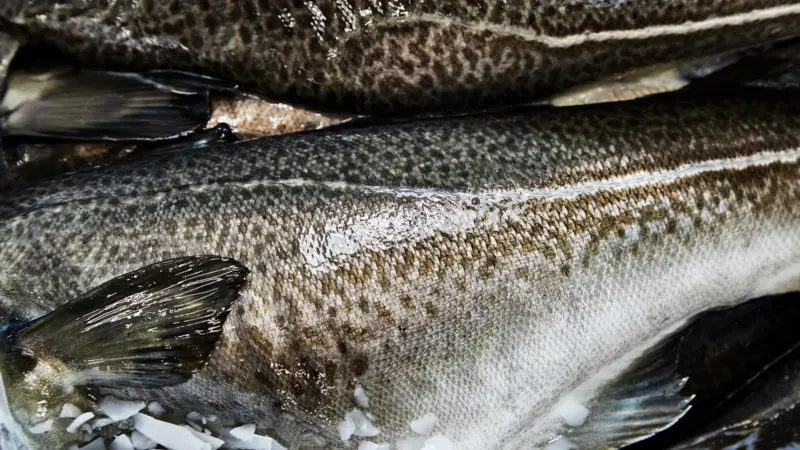
Imported raw materials (from outside the EU) account for the bulk of this industry. In the case of cod, this stands at 90%. Meanwhile, total EU whitefish catches are only around 500,000 tonnes – against a market need of 3 million tonnes.
“There’s a huge structural deficit. The fact is the consumer – the market – is much bigger than the resources in the EU. So regardless of who catches what in UK/EU waters, maintaining existing trade flows is essential to meeting consumer needs and to also maintain seafood’s market share against competing protein foods,” Kuyk said.
Based on the most optimistic assumptions about future stock recovery, the EU as a whole would remain a deficit market, he added. Meanwhile, any post-Brexit quota increases for the UK would mainly be for species that it currently exports because of low domestic demand. Even a doubling of cod and haddock catches for which there is demand would leave the UK market well short of its needs.
Furthermore, much of what the UK currently imports undergoes first stage processing elsewhere, and the country doesn’t have spare capacity to deal with any increased landings from taking back control of UK waters, he said.
“Even if [the UK] was to exclude all EU vessels, it wouldn’t have the market or the ability to process it without the capital investment or the workforce, because it’ no good having the factory if you haven’t got people to work in it. That’s something that has been overlooked in some of the political rhetoric about taking back control and regenerating the British fishing industry.”
The UK Seafood Industry Alliance estimates that UK imports total almost 1.3 million tonnes of seafood, valued at more than £2.6 billion, and exports 891,000 tonnes worth over £1.5 billion. France, The Netherlands, Ireland and Spain make up four of the UK’s top five markets, with European markets being traditionally important for small pelagic species, which are often landed abroad by UK-flagged vessels. At the same time, France, Spain and Italy are the main buyers of UK shellfish, which is often shipped fresh or live to obtain the highest prices.
Next steps
At the time of writing, there hadn’t been any discussions about what comes next for EU-UK fisheries. Kuyk expects the first stage to be “talks about talks”, setting out the principles, processes and timetable for discussions, and that detailed negotiations will have to await formal adoption of the EU27 mandate, which is unlikely before March.
Meanwhile, having an agreement concluded and ratified by the “best endeavours” date of 1 July so that it can be used to set fishing opportunities for 2021 is a big ask.
“I think that fish will either be front-loaded or back-loaded. There will either be a scramble for negotiators to get it out of the way, or if there is an impasse, it will get shunted to the back of the queue, ignoring the 1st July deadline.
“It isn’t a coincidence that 1st July is also the deadline within the withdrawal agreement for seeking an extension to the transition. That was quite deliberate,” he said.
Of course, the biggest question of them all is can an agreement be reached? “It is an enormous challenge,” said Kuyt, requiring “very clear fault lines” to be overcome. At present, the opening positions on both sides are a long way apart, especially on the issue of linkage between access and trade.
“But who gets what out of the negotiation is only part of the story,” he said. “Another issue is fish as a source of renewable, high-quality protein. Sustainably managed, it is a renewable resource. It is a natural, low carbon resource with enormous potential to make an even greater contribution to future food security.
“It is vital for the industry as a whole that any new arrangements drive further improvements in standards across supply chains and continue to grow consumer confidence in what we do and allow the industry as a whole to take a bigger share of the market.”