




Best year ever for Norwegian seafood exports
Norway exported a total 2.8 million tonnes of seafood in 2024, worth a record NOK 175.4 billion, with the volume corresponding to 38 million meals every single day. This was achieved despite the year being characterised by cod quota cuts, production challenges for farmed salmon, geopolitical fluctuations and economic turmoil in the global market.
Commenting on the performance, Norway’s Minister of Fisheries and Ocean Policy Marianne Sivertsen Næss said: “Once again, Norwegian seafood exports have set new records, and I am impressed by everyone who has contributed. The Norwegian seafood trade is a fantastic example of how sustainability can be combined with economic value creation.”
She continued: “The new year will bring new challenges, but also new opportunities, and I believe the seafood industry will continue to develop and create jobs and value across the country.”
Last year’s overall export value represented an increase of 2% or NOK 3.7 billion on the previous best – set in 2023.
“Norwegian seafood exports have experienced marvellous growth. In the period from 2020 to 2024 alone, the value increased by around NOK 70 billion. This shows what a strong global position our seafood has. Last year, we exported more than 60 different species to over 150 countries around the world,” Norwegian Seafood Council (NSC) CEO Christian Chramer said.
While in 2023 there was price growth for the very largest species, NSC’s analysis finds there was a more nuanced picture last year.
“Factors such as price and volume affected the species differently. Food inflation fell last year, and both salmon and trout experienced price declines. At the same time, quota reductions contributed to price growth for important wild-caught species,” Chramer said.
There were major fluctuations in value during the year, and the trend was particularly strong in the fourth-quarter. He explained: “This is because salmon, trout, prawn, herring and mackerel received a boost in the final months of the year. The currency effect, which has been an important contributor to growth in recent years, declined last year, but was still the main reason for the growth in value in Norwegian kroner. Measured in euros, which is our most important export currency, the value is unchanged compared to 2023.”
Salmon, cod shifts
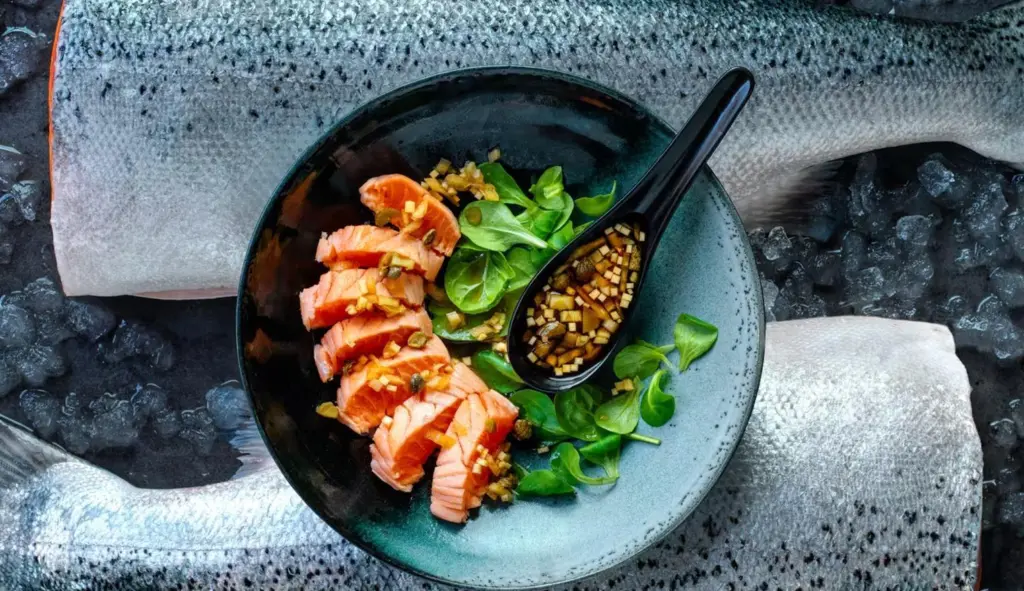
Norway exported salmon with a value of NOK 122.9 billion in 2024 – a new value record, which accounted for 70% of total Norwegian seafood exports. In volume terms, this trade equated to 1,255,654 tonnes, with Poland, the US and France providing the largest markets.
“The exciting and strong development for salmon continued in Asia, where it is considered an everyday luxury by consumers in countries such as Thailand, China, Vietnam and Korea. In addition, salmon has strongly established itself in the fast-food trends of sushi, sashimi and poke around the world and in the everyday food segment in Europe,” Chramer said.
However, 2024 was also demanding for many Norwegian salmon producers, with the sector impacted by higher sea temperatures in the summer. These posed biological challenges; increased costs; and earlier culling, which led to lower-than-average fish weights.
“There was volume growth last year, but at the same time salmon prices fell. The strong growth in value that we have seen in recent years came to a halt in 2024,” Chramer said.
The largest markets for Norwegian seafood exports in 2024 were Poland, Denmark and the United States. China had the highest growth in value, with an increase in export value of 10% or NOK 887 million, compared with the previous year.
For wild-caught species, 2024 was a challenging year for cod and king crab due to quota reductions. On the other hand, the export value of mackerel increased by 24% and the value of prawns by 30%.
“We are in a period of reduced access to the all-important cod, but lower volumes last year were to some extent compensated for by higher prices. This has happened thanks to a strong position for clipfish in particular. Together with the industry, we will continue to promote saithe as a good supplement to cod in countries such as Sweden, France and Germany,” Chramer said.
The value derived from Norwegian aquaculture accounted for 74% of total seafood exports in terms of value, while in volume terms, it accounts for 48%. The country exported 1.3 million tonnes (+3.4%) of these products, valued at NOK 130.6 billion (+2%).
At the same time, it sold 1.5 million tonnes of fisheries-based seafood worth NOK 44.9 billion from fisheries to overseas markets, with the volume falling 3.8% and the value rising 4%. These products accounted for 26% of Norway’s seafood exports in value terms and 52% of the volume.
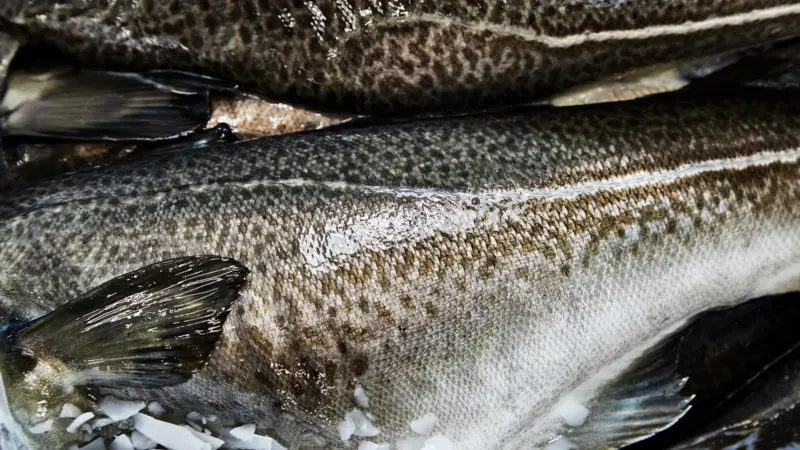
NSC’s data found that Norway exported 40,370 tonnes of fresh cod worth NOK 2.6 billion in 2024, with the volume down 18% – to the lowest level since 2011, and the value slipping 10% or NOK 292 million, compared with the previous year. Denmark, the Netherlands and Spain were the largest markets for fresh cod last year.
Norway also shipped 48,166 tonnes of frozen cod worth NOK 3.1 billion in 2024 – down 22% and 11%, respectively. The UK, China and Vietnam were the largest markets for frozen cod last year, with the greatest growth in value coming from the Chinese market. The volume exported to China ended at 14,715 tonnes, which was 2% higher than in 2023.
“China’s strong development must be seen in light of the US import ban on Russian cod. The Chinese processing industry has thus bought more cod from Norway to be able to continue offering cod to its American customers,” NSC Seafood Analyst Eivind Hestvik Brækkan said.
Meanwhile, the UK continued to be an important market for Norwegian seafood, especially cod and haddock.
“It has been 15 years since such a large proportion of Norwegian frozen cod was exported to this market. Cod and haddock are among the most popular seafood products with UK consumers, particularly through the iconic fish & chips sector. Overall, 2024 shows the strength of the seafood trade between our two countries,” NSC Envoy to the UK Victoria Braathen said.
New pelagic peaks
In the pelagic category, Norway exported 227,916 tonnes of herring worth NOK 4.2 billion in 2024. While this volume was 5% lower, the value was 5% or NOK 205 million higher than the previous year. Poland, Egypt and Lithuania were the largest markets for herring.
At the same time, the Scandinavian country sold 313,242 tonnes of mackerel worth NOK 8.3 billion to overseas markets, with the volume up 2% and the value increasing 24% or NOK 1.6 billion, compared with the previous year. Japan, China and South Korea were the largest markets for mackerel in 2024.
“As many as seven price records were set in 2024 for frozen mackerel under 600 grams, which is by far the most important product that is exported,” NSC’s Head of Pelagic Species Jan Eirik Johnsen said.
“Compared to 2021, export prices from Norway have increased by an average of 75%. For 2024, the currency has not contributed either, which is because the Japanese yen has developed more favourably than the Norwegian krone.”
Johnsen highlighted that China had a weak year in 2023 but made a solid comeback last year.
“The explanation for the weak exports in 2023 was that Vietnam was given a zero tariff on processed mackerel products to Japan, while China continued with 10%. China is primarily a processing market for Norwegian mackerel, and most of the processing was previously contracted out to Japanese companies that were responsible for imports,” he said.
In 2024, there was a significant change where the Chinese companies themselves began to import and process Norwegian mackerel and then sell it on to the Japanese market.
Mixed fortunes for shellfish
Last year was also a weak year for king crab, with reduced quotas and landings leading to exports of 1,503 tonnes worth NOK 832 million. This volume was down 39% year-on-year, while the value fell 31% or NOK 367 million. The US, Canada and Hong Kong SAR were the largest markets for the product.
In 2024, reduced quotas and landings led to lower export volumes and values for king crab. Exports of frozen king crab ended at 547 tonnes, with a value of NOK 320 million. This is a decrease of 28% in volume and 29% in value.
“Until 2022, Asia was the most important region for live king crab from Norway, but after the sanctions against Russian crab in the US and Europe, Russia has focused its exports on Asia at lower prices. This has led to a shift in Norwegian live king crab exports from Asia to North America,” NSC Head of Shellfish Josefine Voraa said.
There was, however, strong growth seen for snow crab, with Norway exported 6,399 tonnes of product worth NOK 723 million in 2024. This volume was 27% higher than in 2023, while value was up 42% or NOK 213 million. The US, Denmark and the Netherlands were the largest markets for snow crab last year
“The growth was largely driven by good fishing, with increased quotas and landings, which resulted in increased export volumes. An improved market situation compared to last year contributed to export prices increasing each month and ending at an average of NOK 112 per kg, which is 11% above the average price in 2023,” Voraa said.
NSC also noted that a good prawn fishery in the Barents Sea and declining cod quotas in recent years have led to an increased supply of the latter. Consequently, Norway exported 34,421 tonnes of prawns worth NOK 1.6 billion in 2024, with the volume up 68% and the value increasing by 30% or NOK 383 million, compared with 2023. Sweden, the UK and Denmark were the largest markets for prawns last year.
Peeled prawns remain the largest value product with a share of 49% and an export value of over NOK 800 million. The largest markets for peeled prawn are the UK, Sweden and Finland.