



From its very humble beginnings as a raw material trader 12 years ago, Aydin based Agromey has now burgeoned into a fully fledged food and feed trader.
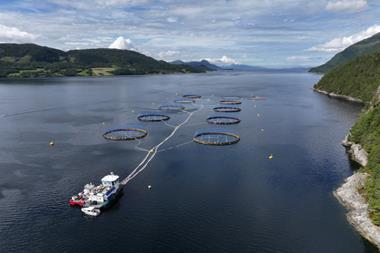
In 2002, the company set up its first fish farm in Izmir and in just a few years of fish farming, the company has become one of the largest producers of farmed fish in Turkey – it produces around 15,000 tonnes of seabass (65%) and seabream (35%) per year and its major market is for export across Northern Europe (80%).
Processing facilities
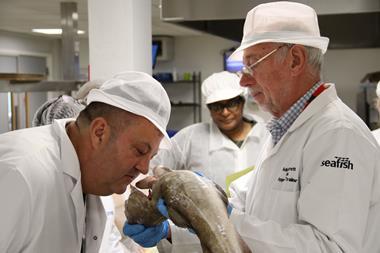
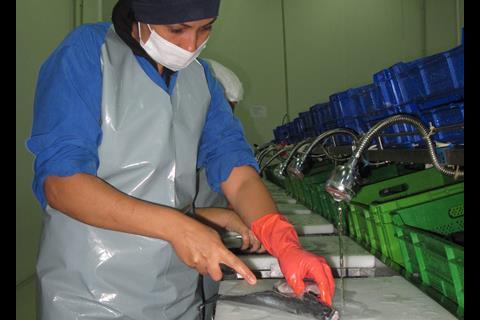
It has 12 fish farms – eight of which are around the bays of Izmir and four are in Bodrum. World Fishing & Aquaculture took a tour around its huge processing facility in Umurlu where fish from the farms is not only sized for the market, but also scaled, gutted, filleted, frozen and packed. Agromey has another processing facility in Izmir which caters for the Izmir farm production.
When it come to processing, fish for the domestic market is sold as whole round fish, whilst it is generally filleted and frozen for the export market. Interestingly, a large portion of Agromey’s export market is in the Netherlands and it has its own facility to cater for that because the Dutch are used to their fish being frozen and glazed by a different process.
As well as the processing facilities, the company also has two fish feedproduction plants in Aydin and in Torbali.
High season for Agromey is June, July and August for frozen export and October to December for fresh – and according to Agromey this is down to the temperature of the water, fish grow slowly from October to April. It takes 15-16 months for seabass and 12-13 months for seabream to grow to market weight, which for Agromey, is around 350-400g.
“The key is the location where the fish are fattened, bass love colder water so they are better placed in Izmir, and bream do better in the warmer waters of Bodrum. They are farmed in both but water temperature impacts on fish size and fish health as well as affects the timescale of the production cycle so you need to get things right”, Dr Can Saydam, group manager of packing facilities, explained to World Fishing & Aquaculture.
In fact, the only things that Agromey buys in are trout which is seasonal and the company has to buy in juveniles because it doesn’t have its own hatchery – but otherwise, the company is completely self-sufficient, which means that it doesn’t have to outsource work and manages its own production chain.
The main difficulty that Agromey faces at present is the two to three hour transit time from farm to plant – which affects both operations in Izmir and Aydin, Dr Saydam added. But there is exciting news from the company when it comes to addressing this issue – as this article goes to press, the company is launching a new processing ship – the first of its kind in Turkey. The ship, which is 60m long and 20m and will be able to take fish directly from the farms and do much of the processing onboard before reaching the plants, including grading. This means that the transit time will be reduced dramatically. Dr Saydam says that the ship will be able to process 40 tonnes in a day, or 10 tonnes of fish in five hours.
Competitive edge
One hundred new staff will be taken on to man the vessel – helping the local economy. Moreover, the vessel will give Agromey an edge over its competitors giving customers fresher fish and quicker delivery times.
Agromey, like many seabass and seabream farmers and processors inTurkey, is being helped along by the economic problems Greece has faced over the last few years, meaning that they can acquire larger portions of the export market for these fish species.
In the last two years, the company has grown immeasurably. Dr Saydam puts this down to the fact that it was taken over by the Akel Group two years ago, who introduced a structured approach to growth and tightened up procedures making the company much more efficient and productive.