



A new impetus for European aquaculture development?
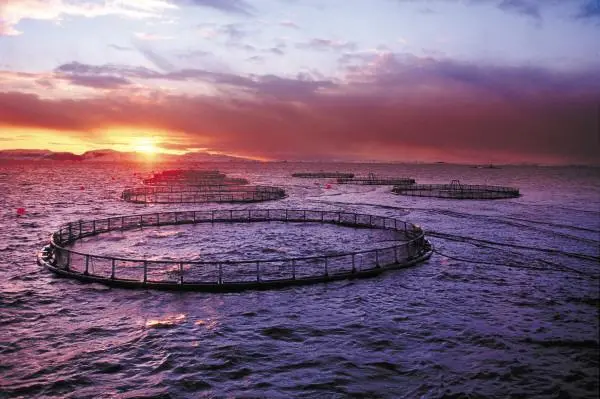
Both sectors can be described as ‘traditional’ and are mostly comprised of small and medium sized companies, employing less than 10 persons or family businesses.
With EU enlargement, an additional contribution of close to 100,000 tonnes to freshwater aquaculture production (with carp species and trout) was brought into the mix and providing both opportunities and challenges. This was then the basis for the 2002 Communication from the Commission2 – the first strategy specifically for European aquaculture – and it was widely welcomed by the sector. It provided the first specific objectives for the European aquaculture sector, principally focussing on the ambitions of:
- Creating long-term secure employment, in particular in fishing-dependent areas
- Assuring the availability to consumers of products that are healthy, safe and of good quality, as well as promoting high animal health and welfare standards
- Ensuring an environmentally sound industry
Following an extensive stakeholder consultation in 2007 that effectively concluded that the first of the 2002 objectives had been only marginally successful and that aquaculture development was being kept back by not being an equal partner in marine and maritime development, the Commission set to work on a new strategy, focussing on the role of public authorities in future development.
The vision of the new strategy is that “The EU aquaculture industry of the future should be at the forefront of sustainable development. The appropriate measures must be put into place to ensure that our industry can take a lead role in the “blue revolution”, whether this concerns the production of aquatic food itself, technology and innovation, or the setting of standards and certification processes at EU and international level”3.
The Federation of European Aquaculture Producers (FEAP4) quickly endorsed the new strategy, agreeing that the European aquaculture industry should be at the forefront of sustainable development, providing healthy and safe food of the highest quality to the consumer. The FEAP added that:
- Its efforts to achieve this should be recognised through the establishment of appropriate certification systems that reflect these aspects and that support the concept of a level playing field in respect of competitive food products. It is clearly unacceptable that the application, and respect by the sector, of European policies and legislation render it less competitive with imports that are not subject to the same conditions.
- Future aquaculture growth within the European Union has to resolve issues such as competition for space, licensing and stringent legislation and support of this Communication requires that proactive actions are taken by the Member States, at national, regional and local community levels. As an example, the simplification of licensing procedures would certainly facilitate the development of new fish farming businesses that provide valuable economic contributions and employment in rural and coastal areas.
- Promoting and increasing the sector’s competitiveness is an essential concept within the new Communication and a recognised and strengthened position of European aquaculture within the future reforms of the Common Fisheries Policy and the Market Organisation Regulation are requisite to achieve this.
The European Aquaculture Society, through its general activities bringing together the scientific community with the production sector and through its coordination of the CONSENSUS project5 – to develop indicators for sustainable aquaculture development – strongly supports the Commission’s proposed action to pursue efforts in aquaculture R&D, and allocate a sufficient EU budget to aquaculture projects to further develop the knowledge-base for sustainable and competitive aquaculture practices.
It is also primordial to raise the profile of the aquaculture industry, by creating forums for dialogue between the European Aquaculture Technology and Innovation Platform6, the Commission and Member States’ research programme managers to facilitate the programming of research activities at Community and national level and by continuing the work started in CONSENSUS to provide balanced, science-based information to European consumers and their representative organisations on aquaculture.
EU aquaculture is part of the Common Fisheries Policy but is also closely dependent on developments in other policy areas – environment, maritime spatial planning, animal welfare, animal health, food safety, research etc. The Commission has brought together all these policies in its communication, to show the necessary measures that need to be taken at EU, national and regional level to give new impetus to the sustainable development of aquaculture. The aim is not to create new legislation specifically for aquaculture, but to give a strong political impetus to its development. The Commission wants to make sure that the particular needs of aquaculture are taken into account in the development of sectoral legislation and seeks to address the different bottlenecks that fall under the responsibility of public authorities.
The green paper on the reform of the CFP “lays it back to its bare bones” and asks many fundamental questions. Those addressing aquaculture “What role should aquaculture have in the future CFP: should it be integrated as a fundamental pillar of the CFP, with specific objectives and instruments, or should it be left for Member States to develop on a national basis? What instruments are necessary to integrate aquaculture into the CFP?” are important ones – with the two sectors being complimentary in providing European consumers with high quality, safe and responsibly-produced/fished seafood.
Meanwhile, the success of the 2009 aquaculture strategy will only be evident if it is communicated by the European institutions as being of high importance to national policy makers and to EU citizens. A November 2009 Hearing at the Committee on Fisheries of the European Parliament included the presentation of three studies on the impact of the 2002 strategy; EU competitiveness in the sector and recommendations for a legal framework, coordinated and presented by EAS, the University of Stirling and Ocean Law respectively. The Committee is currently considering the options and its recommendation for a new aquaculture ‘framework’ and it will be interesting to see how that links to the reform process of the CFP and the Common Market Organisation.
References:
1. www.easonline.org
2. COM (2002) 511 final
3. COM (2009) 162 Building a sustainable future for aquaculture. A new impetus for the strategy for the sustainable development of European aquaculture.
4. www.feap.info
5. www.euraquaculture.info
6. www.eatip.eu
Related Articles
 AQUACULTURE
 AQUACULTURE
 AQUACULTURE