




Half of the world’s farmed Atlantic salmon have hearing loss which could be compromising critical restocking programmes, according to new research.
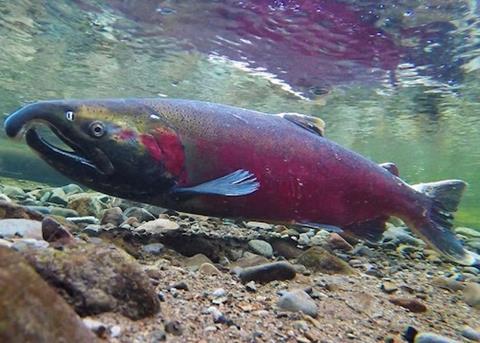
The report published in the journal Scientific Reports has revealed for the first time that the farmed salmon are ten times more likely than fish in the wild to suffer from a deformity of the earbone thought to be leading to the hearing loss.
The salmon’s ears are essential for hearing and balance, so the findings are significant for the welfare of farmed fish as well as the survival of captive-bred fish released into the wild for conservation purposes.
The University of Melbourne-led study found that half of the world’s most farmed marine fish, Atlantic salmon, have a deformity of the otolith or ‘fish earbone’, much like the inner ear of mammals. The deformity was found to be very uncommon in wild fish.
Tormey Reimer, lead author of the University of Melbourne-led study, said: “The deformity occurs when the typical structure of calcium carbonate in the fish earbone is replaced with a different crystal form. The deformed earbones are larger, lighter and more brittle, and the way they perform within the ear changes.”
“The deformity occurs at an early age, most often when fish are in a hatchery, but its effects on hearing become increasingly more severe as the fish age. Our research suggests that fish afflicted with this deformity can lose up to 50% of their hearing sensitivity,” she added.
Deformed earbones could also explain why many fish conservation programs are not performing as expected. Every year, billions of captive-bred juvenile salmon are released into rivers in North America, Asia and Europe to boost wild populations, but their survival is ten to twenty times lower than that of wild salmon. Hearing loss may prevent fish from detecting predators, and restrict their ability to navigate back to their home stream to breed.
Study co-author Professor Steve Swearer from the University of Melbourne said that the poor performance of restocked fish has been a long-standing mystery.
“We think that compromised hearing could be part of the problem. All native fish re-stocking programs should now assess if their fish have deformed earbones and what effect this has on their survival rates,” he said.
“If we don’t change the way fish are produced for release, we may just be throwing money and resources into the sea.”
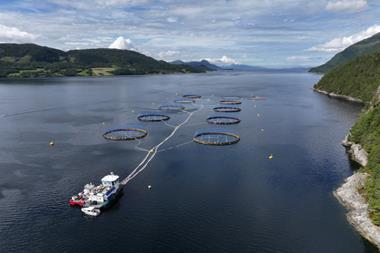
The findings have raised questions about the welfare of farmed animals. Over two million tonnes of farmed salmon are produced every year, with more than a billion fish harvested.
“We don’t yet know exactly how this hearing loss affects their performance in farms. However, producing farmed animals with deformities contravenes two of the “Five Freedoms” that forms the basis of legislation to ensure the welfare of farmed animals in many countries,” concluded Ms Reimer.