


Dear readers, A lot has been said, and much more heard, on the subject of sustainability lately. Politicians, scientists and stakeholders are becoming more and more aware about the importance of responsible fishing. Keeping the stocks healthy, at sustainable levels, is a sine qua non condition in any fishing policy at the moment.
Last August, during my trip to Norway, a country that claims to have an efficient fishing policy reflected on well-managed fish stocks, I was handed a letter: Sustainability, what does it mean? What should it mean? And what they want us to believe!
The author, Ian Kinsey, is a member of the Norwegian Coastal Fishermen's Association and although he expressed his personal views on the paper, I am sure his perceptions can also be shared by many people from small fishing communities around the world.
Due to the interest of the content, I would like you to be also able to have access to the main issues. Due to the length of the letter, I will show you and edited version.
This month, Ian Kinsey's comments will take over our usual Global Forum section. In the future, the World Fishing team will still be in contact with key industry leaders to bring you the latest opinions on hot topics from those most directly involved with a topical issue. I would also like to hear from you. I encourage you to e-mail us with your opinions on the topics argued in the magazine or on any other issue that you would like to discuss regarding the fishing industry. I hope you enjoy this letter as I did!
Best regards
Pilar Santamaria
There seems to be a rush to attain the Marine Steward-ship Council (MSC) 'seal' of approval, by the Norwegian Association of Ocean-going Fishing Vessels.
This is a wise move considering an ever increasing consumer consciousness concerning bio-sustainability of fish stocks on a global level. We have experienced in the past how quickly and effectively environmentalist and animal-rights groups can damage sales of marine products. This threat will not go away. We have an imminent need to paint a prettier picture for an ever-more informed/disinformed group of consumers.
There is a greater need for factual information than a need for a seal of 'final approval', for a lot of damage can be done in only 6 months. The question is what kind of information and what it is to be based upon. Take cod for example, a fish that is very much in the media as being on the verge of extinction.
A cod is a cod in the ears and eyes of most consumers, not knowing that there are several strains of cod in the N. Atlantic and it's adjoining seas, some of which are in very good condition as is with stocks round the Faeroe Islands and the Norwegian & Barents Seas.
Humble pie
On the question of sustainability we have the need for a much deeper and wider understanding of the word. Research scientists Ransom Myers and Boris Worm have spent the last 10 years on a study, which shows that some mayor fish species have been reduced by overfishing to 10 per cent of that they were for 50 years ago. It is now time to eat 'humble pie' and repent. The global consumer has still fresh in its memory the near extinction of several whale stocks in the Antarctic, due to over-exploitation by large whaling companies in the period 1900 - 1960. More recently we have experienced the collapse of the one time enormous cod stocks on Canadian coast; this collapse was effectuated by large fleets of factory trawlers from various parts of the world. In 1992, a moratorium was imposed on Canadian cod. Cod stocks in both the Baltic and North Sea are deemed under the level of bio-sustainability, and have been subject to much negative publicity during the last 5 years. The situation for sand eel stocks in the North Sea is so critical that industrial trawlers have turned their attention to blue whiting.
The blue whiting experiment
Stocks of capelin in the Barents Sea are on the verge of collapse. Norway has imposed a total ban in Norwegian waters on capelin for 2004. Capelin is mainly fished for the fish-meal industry, and much used in the salmon farming business, a business which is meeting quite a lot of protests in the USA and the U.K. Capelin is one of the primary food sources for Artic cod. This over-fishing of capelin stocks has resulted in cod stocks in the Barents Sea turning their attention to Arctic shrimp. Stocks of Arctic shrimp seam to be in a poor state due to increased pressure from both cod and a capital intensive fleet of shrimp trawlers. There are signs of an acute shortage of food in the Barents sea, this shortage affecting the eco balance of both marine mammals and fish.
The year 2003 marked the start of the 'great blue whiting experiment', an experiment in seeing how far one 'species can take another before it collapses. The 'species' conducting the experiment was a fleet of large high-powered pelagic trawlers from the Norway, Iceland, Faeroes, Russia and the European community. It is estimated that the total catch of blue whiting for 2003 will have exceeded 2.25 million tons. A TAC of 600,000 tons was recommended by ICES.This being ignored due to the fact that the involved nations are not able to reach an agreement concerning how big an allocation of future TAC's each land is entitled to. There is an on-going race to establish track records on which to base future claims of stock entitlement. This unregulated 'track record race' based up-on a non-agreement is being used to legitimate what could be the beginning of the end for NE Atlantic blue whiting stocks. This unregulated fishery has also generated large incomes for the vessels concerned. Now back to the question of 'sustainability', what does it mean?
Sustainability
For most people and economists it means having a harvest which does not exceed nature's capability of replenishing itself. This of course is true apart from the fact that it is an all too simple explanation for a subject that is immensely complex. Is would be wise to include PEOPLE as opposed to companies ,division of wealth and well-being instead of corporate profit , bio-dependability of fish stocks /marine mammals and again HUMANS that directly depend on marine resources for their existence. It is a paradox that the UN is striving to increase the existent level of the world's poor, when at the same time many of it's wealthy member states are privatising their natural resources and putting them in the hands of finance institutes and capital strong players. The system of individual transferable quotas (ITQ) has failed miserably as a means of resource management. This system has led to heavy financial burdens for second generations ITQ owners, resulting in their owners in reality fishing for the financial institutions. This system of 'fishing for the banks' generates little income to coastal societies. Take Iceland for example, a fishing nation that has on numerous occasions in the past defended its coastal waters from fleets of large foreign trawlers, predominantly British and later culminating in 'the great cod war'. Now with Iceland having sovereignty over its diminishing fisheries resources the scene was being set for a new 'war', a war of access to Iceland's hard won resources. Iceland along with other countries imposed a system of quotas as a means of stocks management, this system being made individual and transferable. Today's situation is that over 50 per cent of the Icelandic fish resources are in the hands of 10 large companies located centrally on Iceland resulting in the impoverishment of many small coastal communities. Fishing, what was once the means of sustenance for the many, has become an acquisition of the few and an object of the stock-exchange.
The 'Common Fisheries Policy' (CFP) in the EU has resulted in whitefish stocks being at an all time low. This all time 'low' coming in despite the fact that coastal fishing fleets have been decimated in recent years to the advantage of a fleet of 'CE approved' hyper effective fishing vessels. One third of all fish landed by the British fishing fleet is caught by British fishing vessels under Spanish ownership.
Common's tragedy
Denmark was once renowned for it's fleet of small eggshell blue cutters ,crewed by innovative fishermen using 'light-weight' gear as opposed to heavy bottom trawls. Those days are long gone along with most of the inshore fishing fleets and the communities they once supported. Paradoxically the anticipation of 'the tragedy of the commons', and the means used to avert it have materialised as the 'tragedy of the common fisheries policy'.
The fishing industry in Norway has experienced yet another turbulent year with liquidity problems in both the white fish and pelagic sectors this crisis has affected both catchers and producers. Norway is blessed by having some of the world's richest fishing resources literally on its 'doorstep' and swimming in (for the time being) some of the cleanest waters on the planet. Why should Norway experience an economical crisis when it has sovereignty over its waters and reasonably sound fish stocks? Norway has experienced in the past almost a total collapse of several of its primary species i.e. herring, capelin and cod, three fishes that closely interact with each other. Stocks of herring and cod have taken up again and are at acceptable levels whilst capelin have been fished down again to the extent that there is a ban on this fishery for the time being.
Is big beautiful?
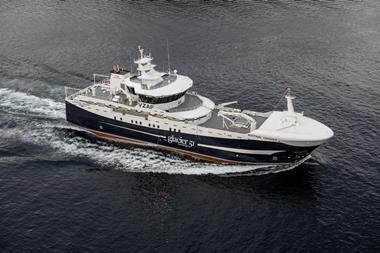
The Norwegian Fisheries department has addressed the problem of diminishing stocks by the means of TAC's and a reduction in the number of vessels. Unfortunately this has failed to secure a sustainable fishing industry, the very life-blood of many coastal communities in the north of Norway. Along with other fishing nations Norway has adopted the policy of 'BIG is beautiful', 'small is inefficient and stands in the way of capital growth'. This has resulted in massive reductions of cost effective coastal vessels to the benefit of a fewer large vessels. This method of fleet reduction has not contributed at all to the reduction of fishing capacity as was intended, but to put even more pressure on fish stocks by a fleet of vessels that is more and more in the hands of the finance institutions.
The Norwegian government passed a bill aimed at reducing the number of fishing vessels under the length of 15 metres. A bill was also passed to legalize the sale of transferable quotas, up to this time the sale of quotas was illegal and quota sales were done 'under the table' with the blessing of the Fisheries department. To finance this reduction of coastal capacity, a levy was imposed on landings along with a krone for krone funding from the government. This bill was forwarded by The Norwegian Conservative Party and was narrowly passed. This move towards ICQ's and flee reductions has recently met a lot of protests from local Conservative Party groups situated in the most fishery reliant communities. This bill is only helping to accelerate the demise of many coastal fishing communities, as it has done previously in other countries with the same systems of fisheries management. It is madness to decommission the most cost effective and ecological friendly vessels in favour of those that are capital intensive and ecologically aggressive.
The future
On the whole the Norwegian system of stock management is commendable in respect of its attitude to discards and the closing of fishing grounds with the presence of too many juvenile fish or the over presence of species that exceed by-catch regulations. There is an urgent need to redefine what a coastal vessel is and what an ocean- going vessels is. Today we have modern high powered coastal vessels of the 28 metre class fishing literally along the beaches, whereas for less than 20 years ago they fished as far away as Greenland and West of Rockall. Even more disturbing is to see a large fleet of hyper-modern pelagic vessels of the 60 -- 75 metre class fishing herring far up the numerous small fjords of Northern Norway. Now that cod stocks seam to be healthy in the Barents Sea it is imperative to focus on harvesting larger fish rather than codless than 2.5 kilos, as which is the case with the trawler fleet. This harvesting of immature fish leads to a higher number individuals per ton and is detrimental to sustainable management. The Norwegian system of fisheries management has also a tendency to REGULATE itself away from eco-economic viability resulting in high pressure on fish stocks and an absence of wealth for coastal communities.
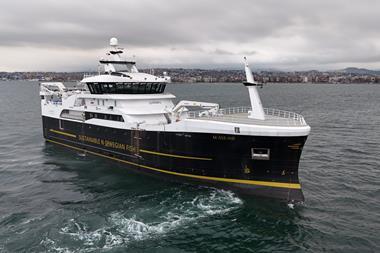
Norway's former Minister for the Environment, Børge Brende had a leading role in the United Nations program for Sustainable Development. It is a paradox that a country like Norway can be seemingly trying to alleviate the plight of the world's poor when at the same time it privatises fisheries taking away coastal peoples rights to support themselves, leaving them subject to the need for social benefits. What is the point of giving aid to Africa when at the same time one has subsidised 10 per cent (44 mill NOK) of the building costs of the worlds largest fishing vessel, only to have it in conflict with coastal fishermen in one of the worlds poorest countries!
Ian Kinsey, Member of The Norwegian Coastal Fishermen's Association