






Seafood industry adopts carbon profiling tool
UK seafood businesses are increasingly adopting a new tool designed to help measure and reduce their carbon footprints.
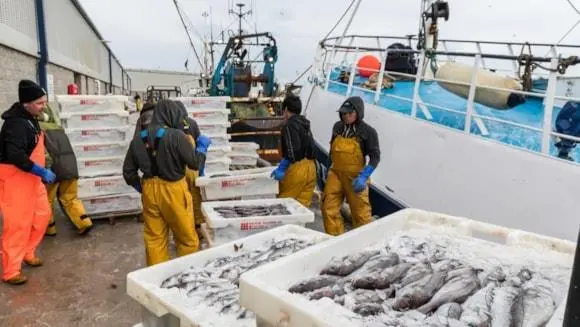
The Seafood Carbon Emissions Profiling tool (SCEPT), launched earlier this year by Seafish, provides a powerful resource for calculating carbon emissions in wild capture and aquaculture seafood products.
“The SCEPT is designed to be intuitive, eliminating the need for an instruction manual,” explained Seafish’s head of responsible sourcing, Dr Stuart McLanaghan.
“The tool’s integration across UK seafood supply chains is essential to generate high-quality industry averaged datasets for benchmarking and public disclosure purposes.”
Prominent seafood companies, including Hilton Foods, New England Seafood International (NESI) and Arctic Traders, are already using the tool. Hilton Foods, which partners with major retailers and food-service brands, is applying the tool to assess the carbon footprint of seafood products, such as basa fillets.
“The tool exemplifies the kind of innovative collaboration needed to make real progress on sustainability by supporting a more efficient approach to reporting and creating more time for the actions that concretely reduce carbon emissions,” said Emer Fardy, Group Sustainability & Human Rights director at Hilton Foods.
NESI, which committed last year to setting science-based targets for net-zero emissions by 2050, is using the tool to identify greenhouse gas emissions across its supply chain and validate its climate goals.
“We have found the tool simple to use,” commented Ruth Hoban, NESI’s head of sustainability. “The layout guides the user through the information required in a structured way.”
Arctic Traders, a major supplier of fresh and frozen seafood, is using the tool to evaluate CO₂ emissions associated with transport options, including road and sea freight of seabass from Turkey.
Related Articles
 AQUACULTURE
 SEAFOOD
 SEAFOOD