





India voices export worries
Certain countries have set “unreasonably high” standards for importing commodities as part of precautionary norms, causing concern for marine exporters from developing nations and raising production costs, one of India’s top government officials has warned.
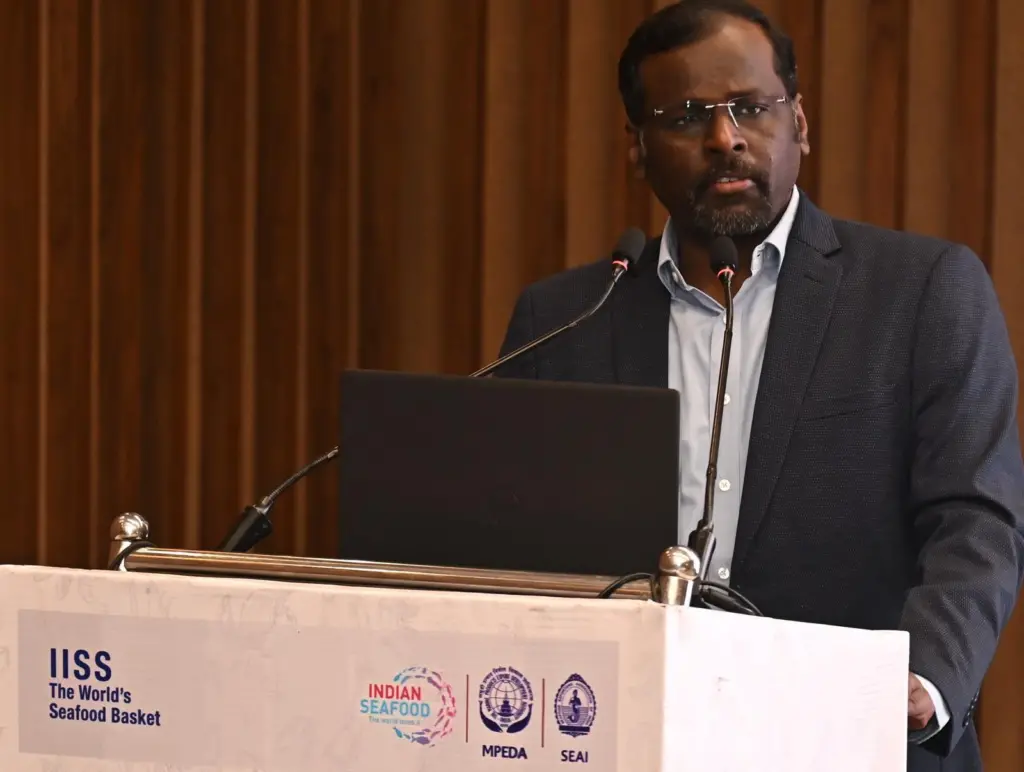
More and more countries are coming out with restrictive measures that are not in tune with the framework of World Trade Organisation (WTO), Dr M Balaji, Joint Secretary, Department of Commerce, Ministry of Commerce and Industry, told the India International Seafood Show (IISS), held in Kolkota between 15-17 February 2023.
Speaking at a session on “Seafood Trade Regulatory Measures in Selected G20 Nations” at the 23rd edition of IISS, Balaji explained that the Sanitary and Phytosanitary Agreement (SPS) primarily relies on two fundamental cornerstone principles: “One, it has to be based on a scientific principle. Two, it has to have a reasonable evidence-based justification,” he said. “But more and more countries are trying to move away from transparency in the past 10 to 15 years.”
Around 45,000 specific trade concerns (STCs) have been placed on the SPS side alone since 1995, he said. “This is one of the serious concerns for a developing country like India.”
The EU’s precautionary residue level of 0.01 ppm in the exporting commodity was unmeasurable and unviable for exporters and manufacturers, Balaji said.
At IISS, he urged stakeholders to work on innovation, branding and collaboration.
“We must compete and make our product completely integral to importing country and make it indispensable. It is the only way that we can burgeon our export chain in the future.”
Related Articles
 FISHERIES
 SEAFOOD
 SEAFOOD