




Russian processing crisis
The much-needed development of Russia’s fish processing industry has been derailed by the war in Ukraine.
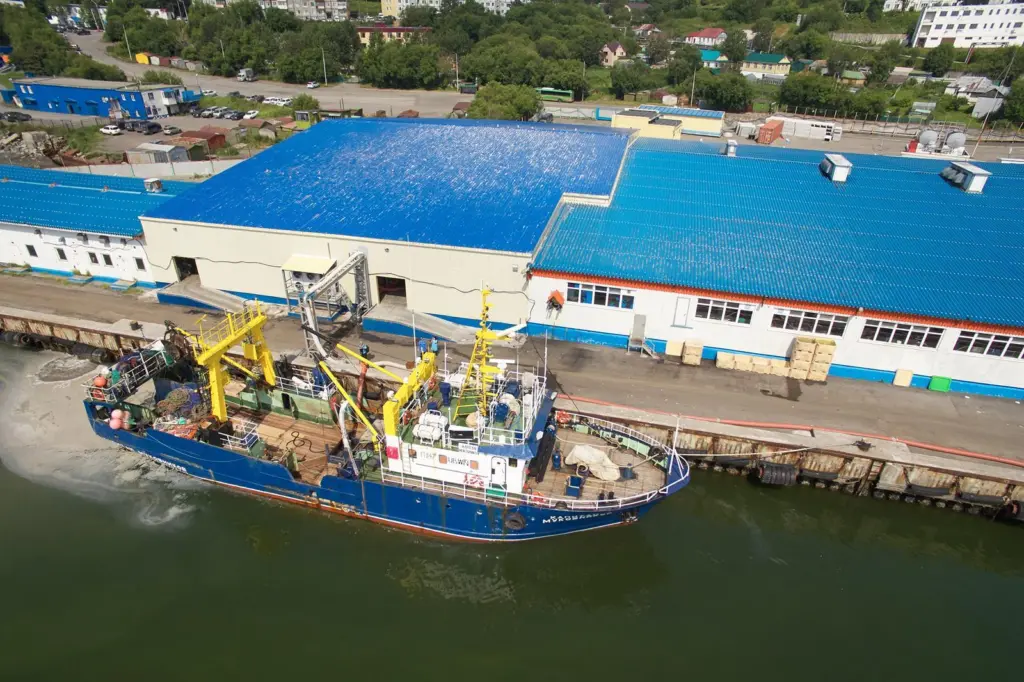
Before the invasion of Ukraine, the Russian government had planned to establish a brand new, multi-billion-rouble fish-processing industry. In the new reality, however, this target seems highly unrealistic, with the conflict potentially heralding a very dark and isolated economic era for the country.
Russia is the world’s fifth-largest producer of wild fish, catching approximately 5 million tonnes of fish per year. Some 75% of the industry’s production takes place in the Russian Far East. Historically, this region has mainly exported its fisheries raw materials as the local population stands at a very modest 8 million, and the main consumption regions of European Russia lie nearly 9,000km west.
In terms of its raw material exports, Russia has traditionally relied on neighbouring China as its main fish market, with 70% of all Russian production imported by the country. However, the long-term trade relations between these two nations were compromised in December 2020, when Chinese authorities elected to introduce major restrictions on the Russian fish.
China cited coronavirus concerns for the move, explaining that several routine inspections conducted on batches of fish delivered to Chinese ports had found the presence of the Covid-19 virus.
The Russian pollock and Pacific salmon catching segments were especially affected by China’s new regulations. In the initial months following their introduction, the wholesale price of pollock in the Russian market fell to historic lows.
Rosrybolovstvo, the Russian Federal Agency of Fisheries, estimates that in the Far East in early February 2021, the price of pollock declined by 36% to just RUB 65 (80 US cents) per kg, compared to the same period of the previous year.
It is further approximated by the Russian Association of Pollock Catchers that its members lost $400 million in 2021 due to the Chinese import restrictions, and that the trade to China decreased nearly five-fold.
Similar impacts were seen in other segments of the Russian Far East fisheries industry. Although, more substantial losses were avoided as some trade flows were redirected to new markets, including South Korea, Japan and even Indonesia.
Herman Zverev, President of the Russian Union of Fishermen – Varpe, described the decision of the Chinese authorities as the beginning of an “undeclared trade war”. He suggested that Chinese traders had sought better prices under contracts with the Russian fisheries.
Raising self-dependency
In recent years, when Russian businesses have been faced with overseas trade problems, the country’s authorities have called for the domestic substitution of imports. The Russia-China trade dispute was no exception, and several Russian government officials urged the fisheries sector to develop the nation’s fish processing sector, including the manufacturing of products with higher added-value, in order to reduce the dependence on China.
Against this backdrop, Far Eastern regional authorities rolled out plans to launch 14 new fish processing plants with an overall value of RUB 50 billion (US$ 800 million) by 2025. If realised, this would ramp-up the domestic share of fish processing from the current level of 12% to 40%. At the same time, several new fishing vessels currently under construction in Russia under the ongoing investment quotas programme, have been designed with a factory deck.
Inna Golfand, Partner at the Russian consultancy NEO Centre, estimates that the average price of Russian exported fish is $2.50 per kg, compared to $3.50 per kg from China, and $4.50 per kg from Norway. This means that Russia has been losing a large share of its export margins simply by exporting most of is fisheries raw materials to Asia, instead of delivering packed fish to Europe and other wealthy markets.
“Where does China get redfish? It is our fish, which we caught and sold at a price of raw material to China, where they processed it, produced fillets, and delivered to Europe at higher prices,” Golfand said, and highlighted that a government programme was put in place to promote Russian fish on the global market, with the main emphasis on processed products.
Sanctions take their toll
In 2019, Russia earned $3.27 billion from exporting fisheries raw materials to China, according to Russian Federal Customs Service figures, while the new strategy envisaged processing Russian-caught fish using new domestic capacities and exporting the resultant products to wealthy high-end markets in Europe and North America.
However, it’s already feared that these plans could now be scrapped.
Since the start of the Ukraine invasion, and at the time of writing, as many as 330 western companies had publicly-announced decisions to leave the Russian market. Hundreds more have suspended imports to Russia. Furthermore, 70% of the Russian banking sector is now subject to sanctions, and most western banks are refusing to process transfers even to the banks that have not fallen under the financial restrictions.
In modern history, a similar exodus of western businesses has only been seen once: during 1980s apartheid in South Africa, when hundreds of companies pulled out in protest against segregation.
Citing sources in several fishing companies, Russian newspaper Konkurent reported that the sanctions had already brought severe problems to the sector, as many businesses hadn’t collected payments for the products that they had delivered before the Russian invasion started.
Problems have even been seen with countries that had refused to support the anti-Russian sanctions, specifically China. All payments for fish delivered through China and passing through a correspondent bank in the United States, are getting blocked, sources told the publication.
Fishermen have warned about a possible collapse of their businesses if payments for exported fish failed to make it through.
One source in the Russian fishing industry agreed that things are “unprecedentedly” tough, and offered that nobody in the industry had foreseen the current problems or had made any preparations. In these circumstances, it’s likely that the fish processing industry development plans will be completely abandoned.
“All [fish] processing plants were designed to run on foreign equipment, and the dependence is not partial – it is absolute. It is yet to be seen to what extent foreign companies would refrain from making business with Russia, but in case of complete isolation, I don’t think we can build anything. We simply don’t have technologies,” the source said, adding also that bank loans in Russia have become unaffordable.
Domestic fishing opportunities
Some Russian officials, meanwhile, have tried to put an optimistic spin on things. For instance, Vladimir Galitsin, Chairman of the Association of Salmon Producers of Kamchatka, has said that the country’s isolation has the potential to help the Russian fishing industry.
“Everybody understands that we have only one task – to meet the country’s demand for fish. We are braced to catch 1.5 million tonnes of fish [in Kamchatka] this year,” Galitsin said. He also suggested that the new reality opens huge opportunities to fishermen.
“Now, we have got a unique opportunity – since foreign suppliers leave the Russian market, we can replace [imports] with our high-quality, cheap products on the Russian market,” Galitsin said.
However, he also admitted that problems have been caused by several countries, such as Japan, suspending imports of Russian fish.
Processing infrastructure issues
For the Russian food processing industry as a whole, the sanctions mean significant problems because the country is fully reliant on overseas processing equipment as there are no such Russian equivalents, warned Maria Yashenkova, Chairman of Russian consultancy Bright Consulting.
“Processing equipment is one of the bottlenecks in the entire system,” Yashenkova said. “In this regard, it is not clear where our industry will take machines from.”
She suggested that if European countries like Germany, the Netherlands or France cut off the supply of high-tech food production equipment to Russia, the industry will be left with just two options. The first is to buy processing equipment from China, even though the quality of these machines often leaves much to be desired.
What also needs to be considered in this case is that Western countries have warned China there could be secondary sanctions if it helps Russia to avoid the restrictions.
The second option is to try to revive equipment production in Russia, which is a long and expensive solution, Yashenkova said.
“The problem [there] is that it will take time to develop technologies, and no one will sell ready-made solutions to us. In addition, the segment of food machines is not wide in itself, so developing the food machine industry in Russia is an idea with dubious profitability. So, it is not yet clear what lies ahead.”
Alternatively, Russian companies could try to buy some German equipment through illegal channels – the so-called “black dealers”, Yashenkova said.
But she stressed that such a strategy would be both risky and likely to involve high costs. Notwithstanding that, in a bid to stop the free fall of the Russian rouble, the Russian Central Bank has raised the key interest rate on loans to 20%, making bank loans unaffordable for most companies.
This alone promises to stop all new projects in the field of fish processing even if the absence of technologies is not taken into account.
“I expect a large number of investment projects to stop. Only those companies that are able to meet their needs on their own or with minimal borrowing will remain afloat. And only the biggest ones can do it. Everyone else works with banks, and all investments are made with loans. Today, these financial services are unaffordable,” Yashenkova said.
Related Articles
 PROCESSING & REFRIGERATION
 SEAFOOD
 SEAFOOD