


New longline system to increase quality and profits
The Norwegian company Delitek was awarded with the Nor-Fishing Innovation Prize for developing an automatic longline hauler system (ALH), a puller mounted on the side of the vessels that helps to improve both fish quality and working environment and encourage the use of conservation orientated fishing methods in the name of responsible fisheries and sustainable harvesting of the oceans. The prize was NOK 100,000 and a print by the Norwegian artist Ornulf Oppdahl.
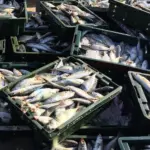
Roger B. Larsen*, a scientist from the Norwegian College of Fisheries Science at the University of Tromso, was involved in the development of this new technology. Larsen is also related to Delitek. He is brother of the company’s owners, Asbjørn and Bjørn-Ivar. He reports for World Fishing readers on the benefits of the new system and the initial idea behind the ALH. The coastal longline fisheries have a special and long tradition in Norway, and it is usually associated with conservation- oriented fishing methods and landing of superior quality of the fish. The only major drawback has been, apart from the use of natural bait, the use of a gaff to bring the fish safely on board during de-hooking. The gaff is a worldwide used tool in all types of longline (and most hook and line) fisheries. Gaff-marks in the fish flesh (fillets or abdomen parts) reduces the quality a lot and also leads to a substantial reduction in outcome during production as all damaged parts with traces of blood must be removed during processing resulting in the loss of produced weight and more effort and costs in production.
The automatic longline hauler system (ALH) removes the need for a gaff and improves the quality of landed fish and outcome in production, making the system beneficial for both fishermen (higher prizes on landing) and the processing industry (no reduction during processing).
The new system also improves working environment for fishermen by reducing the hardship of the ‘gaffman’ which involves a lot of effort on arms and shoulders and avoiding dangerous positions and operations for fishermen when de-hooked and gaffed.
Helping small communities
Behind the idea of the new automatic longline hauler was to prevent small coastal communities from dying. The new system gives the traditional coastal longline vessels better argument to win larger quota shares in the growing fish market, encouraging, therefore, local industry and create jobs in local communities by increasing profitability. If needed for economical survival, the number of crew involved in the de-hooking can be reduced.
Live caught wild fish
The AHL creates rational possibilities for the landing of live caught wild fish. In modern coastal longline fisheries, the gear is retrieved after very short soaking time (i.e. they start hauling 4-5 hours deployment) ensuring that most fish are brought alive on board. Some fish will be slaughtered at once to remove the blood as fast and soon as possible. Recent experiments showed that a very high proportion of the longline caught fish (mainly cod) could be held on water tanks on board and later transferred to holding pens close to the shore for several weeks. Despite a sore mouth during the first days the fish recovered very fast, showing no signs of problems.
The future
The next step for the ALH will be to test a prototype for the large, offshore autoline vessel. The response from this international fleet was immense during the exhibition. An ALH system for the autoline fleet is planned to be launched during next summer. The main focus in that project will again be to increase quality and outcome of the landings by removing the gaff, and importantly to reduce a rather large loss of fish during the hauling proces. Fish are lost from the hooks as they leave the water entering the longline hatch. The distance from the surface could be 3 m+.
The new system is easy attached to the vessel. It uses the hydrolic system of the boat not needing extra adjustments on the vessel. At the moment there are 4 Norwegian boats using the AHL, which took two years to develop.
Related Articles
 FISHING TECHNOLOGY
 NEW VESSELS
 FISHING TECHNOLOGY