


Major longlining project
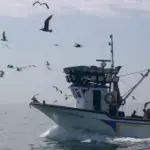
At Norshipping in June Mustad Longline and Havyard their cooperation in a project designed to revolutionise longline fishing on a global scale. The two companies will now work together on the development and construction of fully integrated, tailor-made vessels that they say will set a new standard for all future longline fishing.
Mustad Longline is a leader in longline systems and technology, while Havyard has a wealth of experience and expertise in the design and construction of fishing vessels.
“This is all about the closest possible cooperation from day one of the development stage, where every equipment component, every single process and every part of the vessel will be thoroughly assessed, twisted and turned assessed anew until we have achieved the ultimate in catch equipment”, says Managing Director of Mustad Longline, Christian Hedløv Engh. He continues: “One thing is to improve the efficiency of catch equipment technology, but we are aiming at also improving the quality of the actual fish handling process, and not least ensuring the safety of the crew to the highest possible degree”.
Both of the project participants have a wealth of experience gleaned from a series of research projects that will be integrated in the final solutions. “That our two companies cooperate so closely together is of major importance. The other major factor in ensuring success is that we both work in very close cooperation with the fishermen, which means that we can ensure that the quality of the innovative solutions is not just optimum on the drawing board but that they also function as intended in practice”, says Ole Zahl, General Manager of Havyard International.
The companies add that sustainability in fisheries is more important now than ever before. They say it is about catching the fish you are aiming for, and ensuring that stocks are preserved and protected in the best possible way while at the same making the lowest possible impact on the environment, flora and fauna. Recent research shows that longline fishing produces CO2 emissions that are only one-fifth of those resulting from other commercial fishing methods. Longline fishing also results in considerable improvements in the quality of the raw material, thus providing a basis for differentiation in prices for the fisherman. New technology improves the ease in which quality handling is implemented.
Related Articles
 FISHING TECHNOLOGY
 NEW VESSELS
 FISHING TECHNOLOGY