


There has already been plenty of interest in new electric longline systems, even with the new equipment is still in its trial phase on board some of the most successful Norwegian longliners.
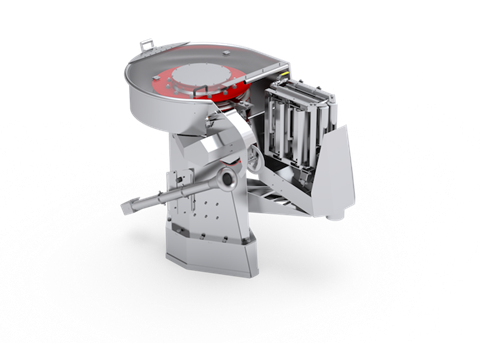
The new Mustad Autoline equipment represents a shift to electric longline deck hardware, with the EL-hauler being trialled on board Loran since September last year and a new generation EL-Hookcleaner being rigorously tested on board Seir.
Environmental considerations are partly behind the move to electric technology, reducing carbon footprints and contamination risks, and offering lower sound levels, but a central aspect of this is the volume of data that becomes available through embedded electronics. Major European manufacturers, including Siemens, Bosch and Wittenstein, integrate sensors in the motor and even use the motor itself as a sensor.
“In our new components, we use the same industrial level of data collection that’s in an industrial robot or in an electric car. We are using technology that is top of the range in Europe today,” said Mustad Autoline’s VP Sales & Service Svein Erik Bakke.
“An electric system provides accurate measurements of the hauling process. There is responsive and accurate tension control and you generally get more information, and faster. While we can count maybe twelve pulses per revolution on a hydraulic motor, we will be able to count about 36000 positions per revolution of an electric motor. We get a greatly improved response time and again higher accuracy on the mooring function compared to the hydraulic system, and as the line is hauled in a more or less constant speed, this increases the chance of saving more catch on board.”
According to Loran’s skipper Ståle Dyb, the greatly improved response time that the electric system offers compared to conventional longline hardware is that the hauler adjusts accurately for ship movement, slowing down to almost nothing as the vessel lifts, and accelerating as it drops down the wave. As a result, the catch is better and the fish are bigger, as with a constant pull on the line, fewer fish are lost.
“This new system compensates to a much greater extent for vessel movement,” said
Svein Erik Bakke added that Mustad Autoline’s investment in developing new technology is rooted in the company’s strategy and environmental policy, and its determination to be the leading supplier of technology for one of the most sustainable techniques.
“The new E-line product range is developed in co-operation with our customers. The new machines are produced in our factory in Gjøvik, and tested over a long period of time in actual operation at sea,” he said.
As well as reducing overall energy consumption, there are also options for connecting the system to send data to the cloud, where it can be stored and displayed through an app.
“This allows engineers, owners and Mustad Autoline’s service department to monitor the system's condition and events,” he said.
“The app displays important data such as error codes, temperatures, tail speed, tail power, bait percentage, and more. We can also set up alerts in the app which means that our service can receive e-mail or push notification as soon as an error code occurs, so they can provide preventive maintenance pointers, and detect faults before they lead to downtime.”