




IceFish 2024: Championing blue food – from sea to plate
Preparations are now well underway to again welcome thousands of visitors – spanning the entire fisheries, aquaculture and seafood processing landscape – to the 14th edition of the Icelandic Fisheries Exhibition. Being staged in Kópavogur on 18-20 September 2024 and organised by Mercator Media, this is already promising to be the most comprehensive and industry inclusive IceFish to-date.
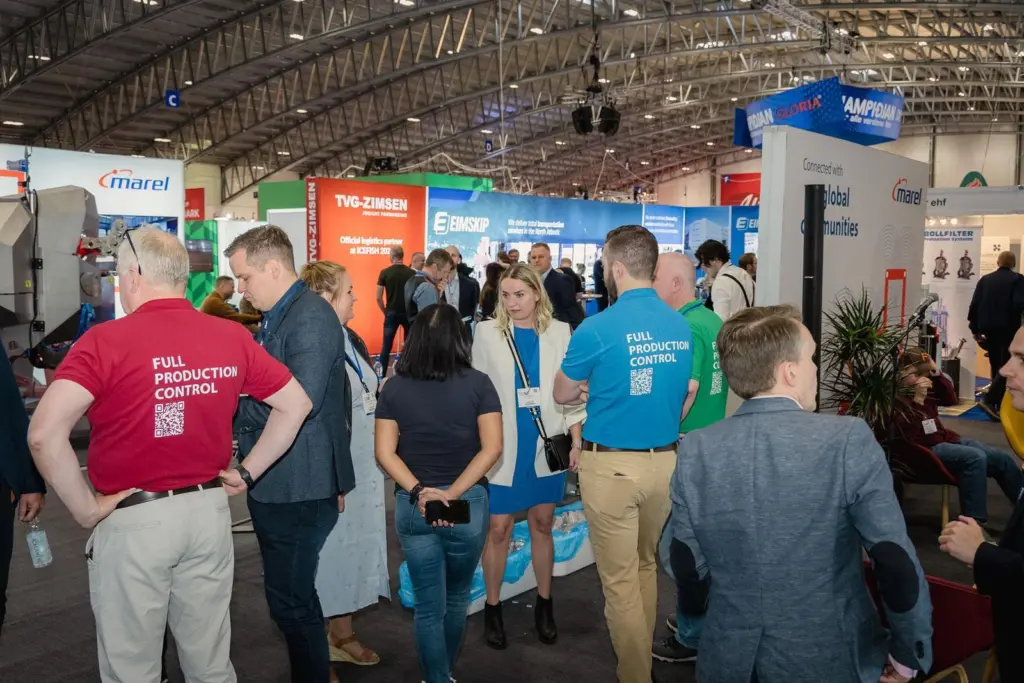
“We are excited to be relaunching IceFish back into its traditional September dates in 2024 after a turbulent Covid period. Celebrating its 40-year anniversary and with so much activity in the sector, IceFish 2024 will be a ‘from the sea to plate’ showcase,” said Marianne Rasmussen-Coulling, Events Director at Mercator Media Limited.
The event also continues to have the support of the Icelandic government, with the Minister of Food, Agriculture and Fisheries Svandís Svavarsdóttir commenting: “Fisheries is one of the cornerstones of the Icelandic economy. We can proudly state that due to the responsible management of our valuable fisheries stocks, we are able to maintain our position as one of the leading fishing nations in the world today. Collaboration between the fishing and processing companies, Icelandic technology and knowledge-based companies has created the conditions for the seafood sector to enhance its competitive advantage and continuously increased value. Events like IceFish 2024 are an important part of this synergy that has put the Icelandic fishing industry at the forefront when it comes to fisheries-related innovation and full utilisation.”
Value chain growth
With the focus firmly fixed on navigating the future and expanding the possibilities of the value chain, Icefish has always profiled the latest innovations and services coming to the commercial fisheries sector, covering everything from catching and locating fish to processing and packaging, and through to the marketing and distribution of final products. IceFish 2022, held in June that year, again featured hundreds of companies, products and brands from dozens of countries – proving that it’s a must-attend event for all commercial fisheries organisations and associated businesses.
The IceFish 2024 team confirmed that with the deadline for the early booking incentive expiring shortly, reservations are coming in on a daily basis. New companies from the processing and aquaculture sectors have signed up having identified the importance of Iceland and IceFish in their marketing strategies.
According to the organisers, this also illustrates the evolution of the wider seafood economy and the acceptance that value chains need to keep on top of shifting consumer and market demands and progressively introduce new technologies and innovations as they become financially feasible, whilst also demonstrating their sustainability credentials.
Furthermore, with healthy eating having become a dominant trend in food consumption, the long-term global demand for seafood is certain to continue to rise at an increasing rate. And with any substantial increase to terrestrial food production unlikely due to declining yield rates and general land and freshwater scarcity, the seafood economy knows the onus is on it to provide much, much more healthy and sustainable food.
Recognising the increasingly critical contribution that so-called “blue foods” – those products we consume that are derived from aquatic animals and plants which are caught or cultivated in marine and freshwater environments – can make in terms of global food and nutritional security, the IceFish team says it’s going all out to ensure next year’s edition is also a platform for young companies, start-ups and entrepreneurs to showcase their latest products, solutions and technologies and take the next important steps in their respective journeys.
Full fish utilisation
The delivery of innovative solutions is also a running theme for IceFish’s hugely popular Fish Waste for Profit conference, which will take place 19-20 September 2024.
A lot of work is going into the conference’s programme, with the final details and an exciting line-up of speakers to be announced in due course, but what’s clear in the months that have passed since the conference’s 2022 edition is that the interest from the industry and beyond in the opportunities that fish by-products and side streams offer has soared, with potentially 10 million tonnes of additional products to create economic, social and environmental value from.
There are a vast number of products that can be made from these raw materials, with more opportunities opening up all the time, and there’s also a lot of revenue to be made from it, last year’s delegates heard.
Through heavy investment in education and R&D a lot of young people with fresh ideas joining and revolutionising the country’s seafood sector over the past few decades, Iceland is regarded as perfect home for this event. Indeed, it’s widely acknowledged as a world leader in full-fish utilisation. For example, in 2017, it was using 72% of its cod in conventional products, but by 2021, 90% of the country’s cod catch was being used, including the production of side products.
But Iceland is not resting on its laurels, with the acceptance that it can do more with some of the other species it’s producing, including its very fast growing farmed Atlantic salmon sector. And with regards to the bigger picture food security challenge, the conference was reminded that while 71% of the Earth’s surface is covered by water, fish production only accounts for 158 million tonnes of the total 4 billion tonnes of food produced annually. It also heard that to feed some 10 billion people in 2050, the challenge is to use all of the resources available to their sustainable limits.
Awarding excellence
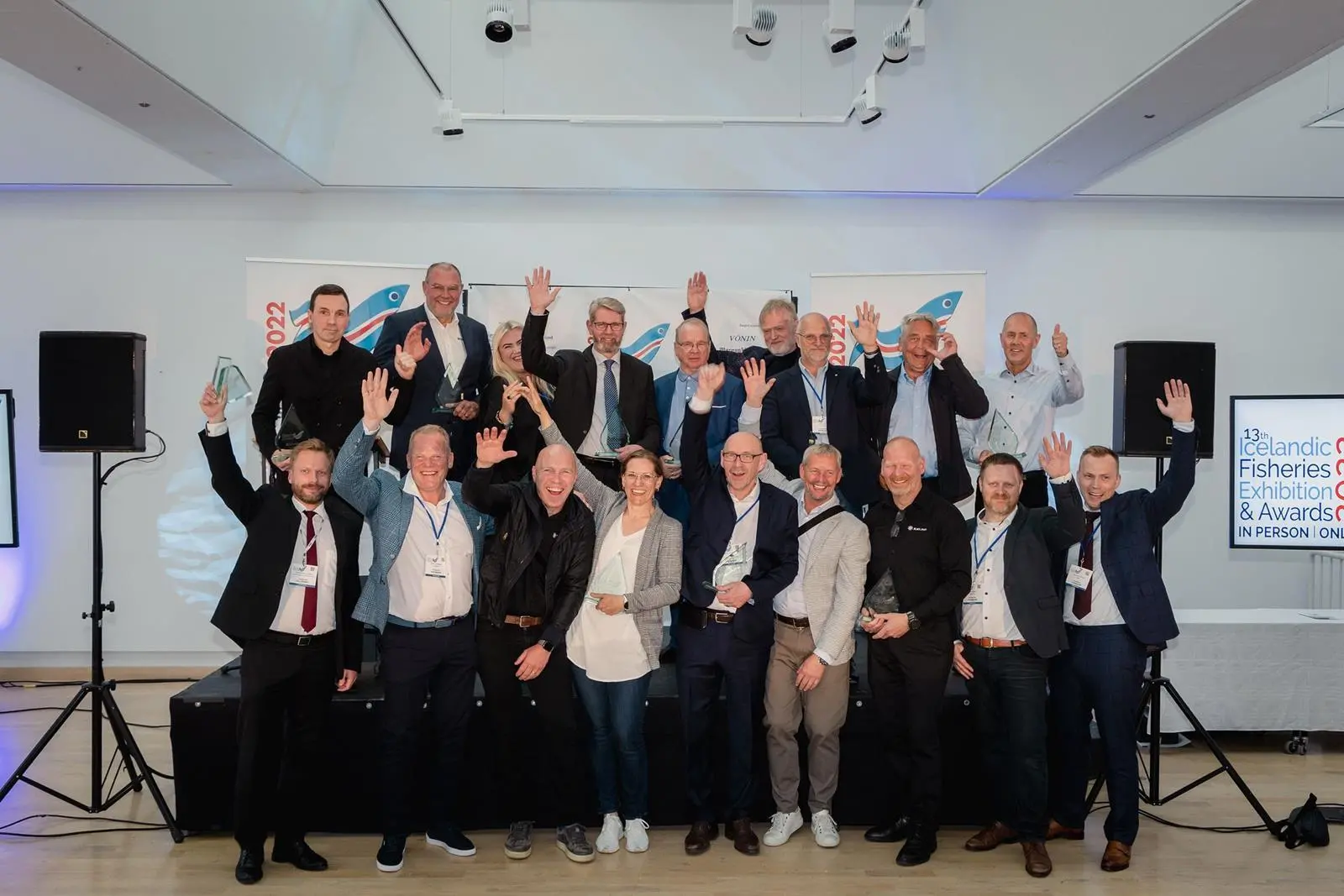
Also returning to the IceFish programme next year will be the 9th Icelandic Fisheries Awards. Last year hosted by the Icelandic Ministry of Industries and Innovation and the City of Kópavogur, the ceremony bestowed some 13 awards.
First introduced in 1999, the accolades distinguish excellence within Icelandic and international fisheries, highlighting the most innovative and ground-breaking products and outstanding service. Among 2022’s winners were: Hampiðjan, which won the award for the Best New Product launched at the show for its new fibre-optic cable that’s delivering unprecedented gear-to-ship data transfer rates; Bakkafrost scooped the Outstanding European Processor award; the two Processing Sector Value Creation awards went to Sæplast and ALVAR; while WiseFish and Olen landed the two Efficiency in Fishing and Aquaculture accolades; the Smart Award for By-product Innovation went to Marine Collagen; and the Overall Outstanding Supplier prize was won by Vonin.
Two other important awards were handed out in praise of career contributions to the sector: Gísli V Jónsson was presented with the Outstanding Icelandic Skipper prize, while the Outstanding Achievement honour went to Guðmundur Gunnarsson in recognition of his long career at Hampiðjan. Gunnarsson is known around the world as the godfather of the Gloria, having been at the centre of the development of the Gloria pelagic trawl that has since the 1990s been through a great many versions for a variety of fisheries.
Stakeholder engagement
The delivery of IceFish recognises that not only does wild-caught and farmed seafood now provide more than 3 billion people with at least 20% of their animal protein, the high nutritional profile, considerable species diversity and abundance of these blue foods mean they are also ideally-positioned to help establish resilient and sustainable global food systems.
The production and harvesting of these products also often have a much lower carbon footprints and fewer biodiversity impacts when compared to the production systems of most livestocks. Additionally, many supply chains stand up to close consumer scrutiny in terms of their environmental responsibility, ethical sourcing and production processes, as well as offering heightened levels of transparency and trust. As such, fish and shellfish are increasingly being identified for their role in food security, while most health organisations have long advocated including them in the human diet a minimum of two to three times a week.
With the global demand for seafood climbing to new levels with every passing year as more and more consumers come to appreciate the many benefits the category offers, IceFish 2024 and its busy programme of events will aim to establish an even tighter alignment with this critical food production sector – providing industry professionals with greater insights on incoming and outgoing trends and supply chain innovations and disruptions, as well as the environment in which to establish valuable, collaborative relationships.
Related Articles
 FISHERIES
 FISHERIES
 FISHERIES