



A field trial has begun off the coast of Alicante, Spain, to test an innovative fishing technology designed to reduce the environmental impact of bottom trawling without affecting commercial catch performance.
The project compares semi-pelagic, or ‘flying’, trawl doors with conventional trawl doors. Unlike traditional equipment, the new doors operate slightly above the seabed, potentially reducing direct contact with the ocean floor and limiting sediment disturbance while maintaining the stability and opening needed for efficient fishing.
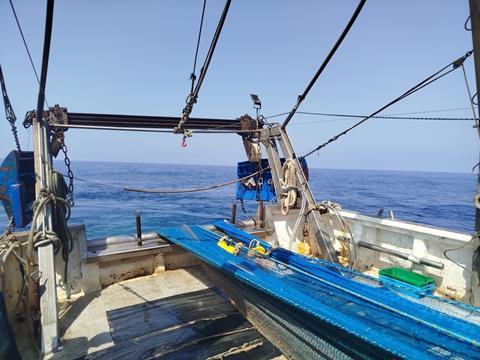
The initiative brings together Spain’s General Secretariat for Fisheries, the General Fisheries Commission for the Mediterranean (GFCM), the UN’s FAO and the Spanish Institute of Oceanography, which is leading the field activities.
“During the fishing operations, researchers will assess catch rates, catch composition, gear geometry, trawl door behaviour and operational efficiency,” said Sergi Tudela, fishery officer and coordinator of the GFCM Western Mediterranean Technical Unit.
“The objective is to determine whether semi-pelagic doors can reduce environmental impacts without compromising fishing performance or the practicality of day-to-day commercial operations.”
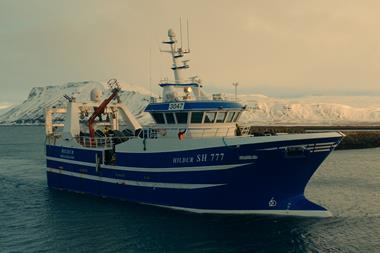
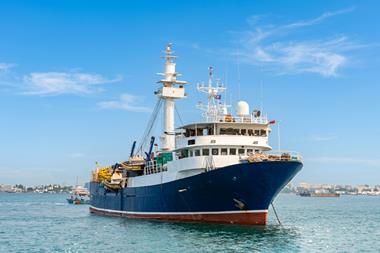
To ensure reliable results, researchers are using a single commercial bottom trawl vessel fitted with each type of trawl door in succession across the same fishing grounds. This approach minimises seasonal and environmental differences that could influence the findings.
The trial focuses on fisheries targeting commercially important Mediterranean species, including European hake, deep-water rose shrimp, red mullet, blue and red shrimp, Atlantic horse mackerel, mantis shrimp and common pandora.
The fisheries and oceanographic research vessel Emma Bardán will map the seabed before and after trawling with both door types and monitor water clarity to measure sediment disturbance.
The project forms part of the GFCM’s MedSea4Fish programme and supports the GFCM 2030 Strategy.