





Warming seas put shrimp at risk
The northern shrimp population off the east coast of North America is under threat from warming ocean temperatures.
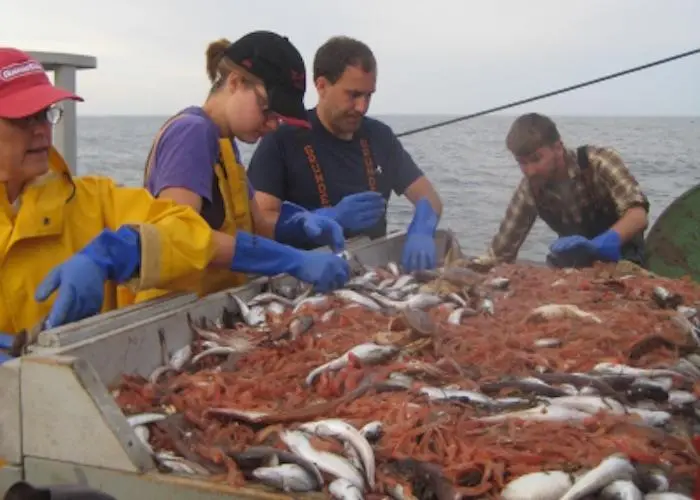
An extreme heatwave in the Gulf of Maine in 2012 resulted in a stock ‘collapse’ – a rapid decrease in numbers that can not be attributed to normal stock fluctuation. Scientists studying the collapse have found that warmer temperatures were linked to increases in longfin squid, a major shrimp predator.
”Our results suggest that longfin squid may have been a major player in the collapse of Gulf of Maine northern shrimp during an extreme heat wave event,” said Anne Richards, a biologist at the Northeast Fisheries Science Center’s laboratory in Woods Hole, Massachusetts, who co-authored the study with Margaret Hunter from the Maine Department of Marine Resources Division of Biological Monitoring and Assessment.
Northern shrimp need cooler temperatures and higher spawning biomass to produce strong, healthy young. In 2012 waters in the region were 2°C above the 1982–2011 average, however scientists do not think the high temperatures alone are causing the decline in numbers.
Analysing data from between 2003 and 2017, Ms Richards and Ms Hunter believe that an increase in longfin squid numbers is also affecting numbers. An increase in other northern shrimp predators—spiny dogfish, redfish and silver hake—may also be contributing to a decline in the stock.
Related Articles
 FISHERIES
 FISHERIES
 FISHERIES