






Tuna stocks improve, management lags
The latest stocks report from the International Seafood Sustainability Foundation (ISSF) highlights steady progress in tuna stock health, but warns that a persistent lack of effective harvest control rules is hampering sustainability.
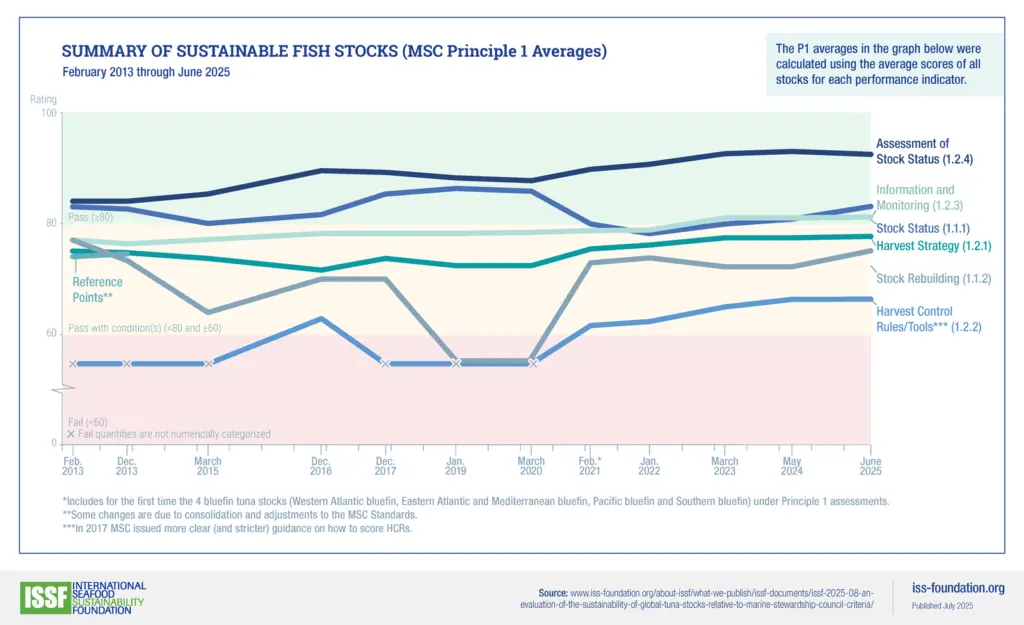
According to An Evaluation of the Sustainability of Global Tuna Stocks Relative to Marine Stewardship Council (MSC) Criteria, 12 of the 23 major commercial tuna stocks now meet MSC’s Principle 1 benchmark, indicating they are not being overfished and are maintaining healthy population levels. That’s a slight improvement over 2024, when 11 stocks passed. South Pacific albacore was newly rated as sustainable this year.
However, only seven tuna stocks have fully implemented well-defined harvest control rules — mechanisms that pre-emptively manage fishing pressure to prevent stock declines or to guide rebuilding when needed.
“While it’s encouraging to see more stocks meet MSC’s stock health criteria, that progress risks stalling without broader adoption of harvest control rules,” said ISSF president Susan Jackson. “Healthy fisheries require both sound science and robust governance. Right now, the governance side still lags.”
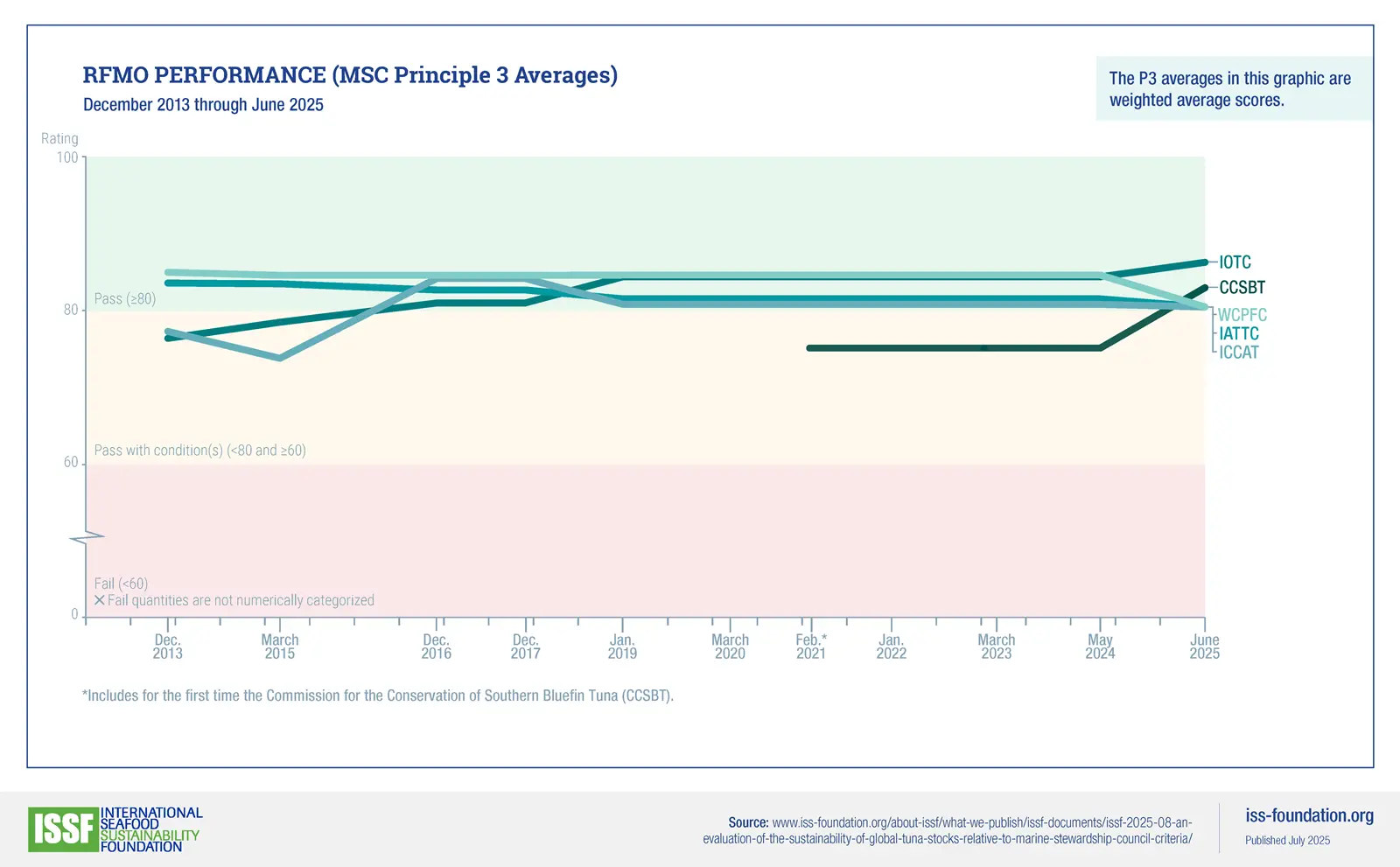
The report applies the updated MSC Fisheries Standard v3.1, which places greater emphasis on proactive management measures like harvest strategies. Despite passing scores for all five tuna regional fisheries management organisations under MSC Principle 3 (effective management), concerns remain about compliance and enforcement.
“These findings give fisheries and policymakers a clear signal – meeting stock health benchmarks is only part of the sustainability equation,” said Dr Victor Restrepo, ISSF vice president of science.
“Without pre-agreed, science-based harvest control rules, long-term sustainability – and MSC certification – will remain out of reach for many stocks.”
The 2025 report offers updated scores and insights up to March 2025, and remains a critical tool for guiding sustainability improvements in the global tuna sector.
Related Articles
 SUSTAINABILITY
 FISHERIES
 FISHERIES