




Multispecies assessments
MarinTrust has developed a multispecies fisheries framework to cater for complex fisheries that don’t fit the conventional approach to fishery assessment.
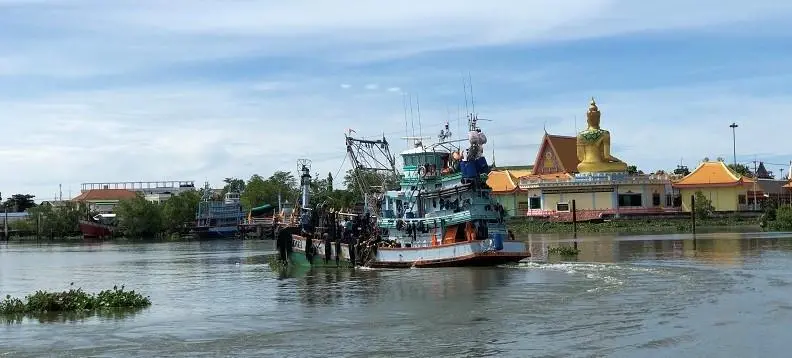
The set of multispecies criteria is a direct response to the complexities that make fisheries, including trawl fisheries in Southeast Asia, difficult to manage.
“The emergence of this assessment methodology is truly something to celebrate. MarinTrust, its fishery experts and these pioneer fisheries are to be commended for their determination to find workable solutions to complex, real-world fishery problems,” said Dan Lee, Standards Coordinator at Global Seafood Alliance and chair of the Multispecies Pilot Steering Group (MPSG).
Workable solutions
Major adaptations are required for these regions and their fisheries if they are to meet expectations for the sustainable supply of fish for both direct consumption and for fishmeal and fish oil.
The objective of the multispecies criteria is to enable the assessment of highly complex fisheries in which as many as 300 species may be regularly caught.
It aims to measure improvements in multispecies fisheries and enable producers of marine ingredients to demonstrate progress and a commitment towards responsibly sourced raw materials.
There are currently two fisheries that have applied the MarinTrust Multispecies Fishery Assessment and have used it to develop fishery improvement projects (FIPs) – the Gulf of Thailand mixed-trawl fishery in Thailand and the Vung Tau multispecies fishery in Vietnam.
Both FIPs are accepted on the MarinTrust Improver Programme as part of the multispecies pilot project and they will have to meet a series of time-bound improvement milestones, specific to the Fishery Action Plan, demonstrating positive improvements within the fishery.
“Managing multispecies fisheries of over a hundred species together is very challenging. The MarinTrust multispecies assessment criteria guides us through the areas we need to focus so that we become more confident on the right pathway for improving Thailand’s fishing sector, restoring aquatic resources, raising stakeholders awareness, and protecting our ocean,” said Vorapong Iamtrakul, project director- Gulf of Thailand Trawl Fishery Improvement Project (FIP).
The multispecies pilot project is enabling the methodology to be tested in active fisheries so it can be fine-tuned and ultimately constitute a fully tested, robust and realistic set of criteria, included within the full MarinTrust fishery assessment and MarinTrust Standard.
Related Articles
 FISHERIES
 FISHERIES
 FISHERIES