



Mackerel quota outrage
European fishing industry bodies have again called for EU action against Norway and the Faroe Islands after the two Northeast Atlantic coastal states unilaterally set “unacceptable” mackerel quotas.
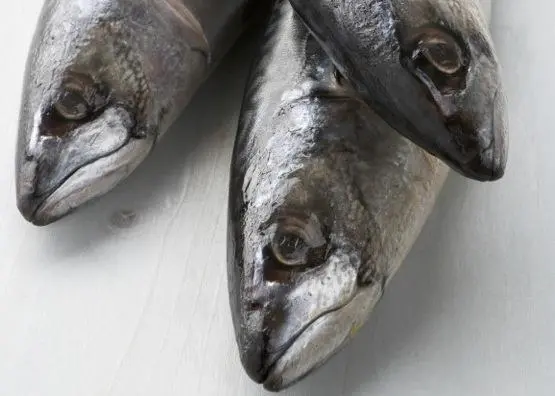
Having seen the Faroe Islands and Norway decide to unilaterally set large excessive quotas for their share in the mackerel fishery in 2022, at 35% and 19.6% of the scientific advice for total catches respectively, the European Association of Fish Producers Organisations (EAPO) and the Association of National Organisations of Fishing Enterprises in the EU (Europêche) are urging the EU Commission and Council to make use of instruments at their disposal for “concrete action”, such as trade measures.
EAPO and Europêche say that responsible EU businesses are at risk of being disadvantaged for doing the right thing, while Norway and the Faroes “continue to fish at the same irresponsible, unrealistically inflated levels as in the past year, when both countries increased their shares by 55%”.
They highlight that the basis for Norway’s decision, the zonal attachment approach, was in this case recently judged by scientists from all involved coastal states as highly flawed, since the data on geographic distribution is incomplete and gives room for multiple interpretations.
Although coastal states have set the total fishing opportunities for 2022 in line with scientific advice (794,920 tonnes), total catches will again be much higher due to the fact that most parties are fishing substantially more than would be allowed on the basis of the last agreed shares.
“This overfishing remains entirely unjustified and at odds with the sensible and sustainable fisheries management that the world supports and demands. It puts unacceptable pressure on a stock that is of great importance for many European fishing nations,” said Tim Heddema, chair of the EU pelagic fishing industry, organised by EAPO and Europêche.
Heddema said that while appealing to Norway and Faroe Islands to work in partnership for the benefit of all, strong action was now needed from the EU.
“The solution is not to sit back and leave it to the EU to compensate for the recklessness of others by fishing less ourselves, which in turn is further disadvantaging the EU industry’s market position. Instead, the EU has plenty of options available to counteract and deter this unacceptable behaviour, such as – but not limited to – using its power as the main market for the other coastal states’ seafood exports.”
With regard to further negotiations on the sharing arrangement, Heddema said the EU needs to make it 100% clear that it will not accept the current overfishing to count towards an increased fishing track record for those parties concerned.
Related Articles
 FISHERIES
 FISHERIES
 FISHERIES