




ICES issues pelagic advice
Large cuts should be made to Northeast Atlantic herring and mackerel quotas for 2023, but next year’s blue whiting catch can increase, according to the latest advice from the International Council for the Exploration of the Seas (ICES).
For herring (Clupea harengus) in subareas 1, 2, and 5, and in divisions 4.a and 14.a, and for Norwegian spring-spawning herring (Northeast Atlantic and Arctic Ocean), ICES advises that when the long-term management strategy agreed by the European Union, the Faroe Islands, Iceland, Norway and the Russian Federation is applied, catches in 2023 should be no more than 511,171 tonnes.
This is down from 2022’s estimated catch of 827,963 tonnes, with ICES saying that its advice for next year is 15% lower because the stock size is declining as a result of low recruitment since the large 2016 year-class.
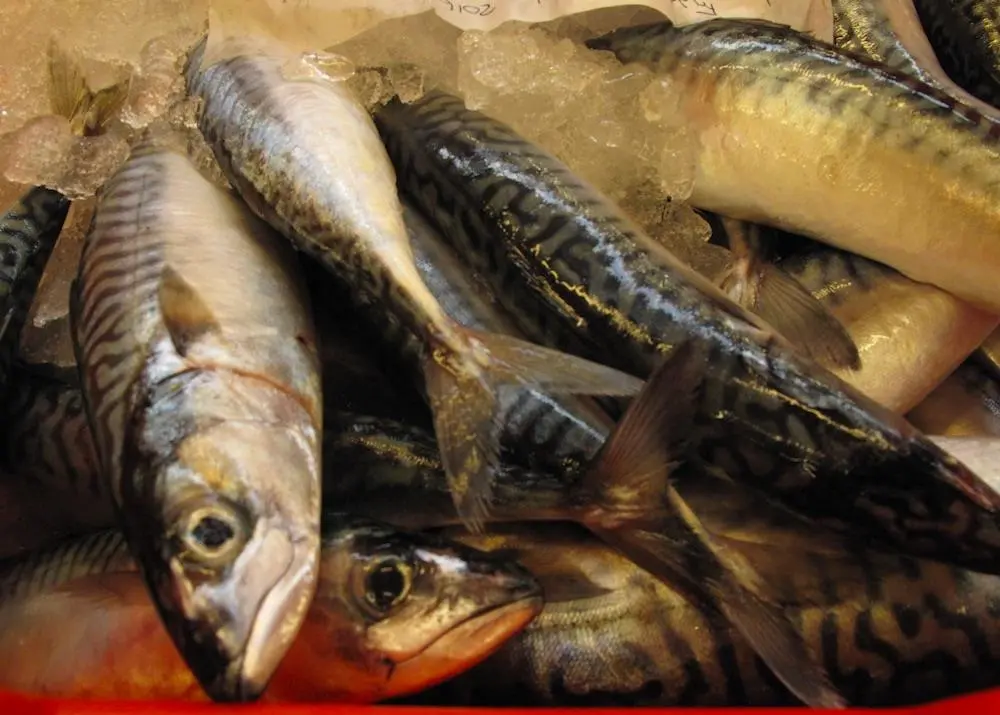
The council is also recommending that the 2023 mackerel (Scomber scombrus) catch in subareas 1–8 and 14, and in Division 9.a (Northeast Atlantic and adjacent waters) should be no more than 782,066 tonnes.
With no internationally agreed total allowable catch (TAC) in place, 2022’s estimated mackerel catch is 1,131,416 tonnes.
ICES also highlighted that the sum of the unilateral quotas for mackerel and the resulting catches have exceeded the scientific advice by on average 41% since 2010.
For horse mackerel (Trachurus trachurus) in Subarea 8 and divisions 2.a, 4.a, 5.b, 6.a, 7.a–c, and 7.e–k (Northeast Atlantic), it advises that when the maximum sustainable yield (MSY) approach is applied there should be zero catch in 2023.
Meanwhile, for blue whiting (Micromesistius poutassou) in subareas 1–9, 12, and 14 (Northeast Atlantic and adjacent waters), ICES advises that when the MSY approach is applied, catches in 2023 should be no more than 1,359,629 tonnes.
This year’s catch advice is for a limit of 752,736 tonnes of blue whiting.
ICES said the advice for 2023 is 81% higher than that for 2022 because of a large upward revision of estimated recruitment in 2021.
Related Articles
 FISHERIES
 FISHERIES
 FISHERIES