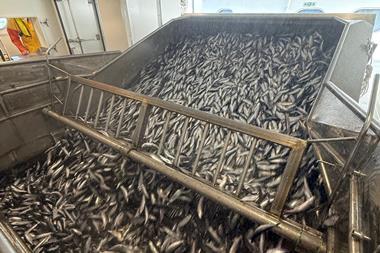



The EU fishing industry has criticised a new partial agreement on Northeast Atlantic mackerel reached by the UK, Norway, the Faroe Islands and Iceland, warning that it sidelines the EU, entrenches overfishing and creates an uneven playing field for European fishers.
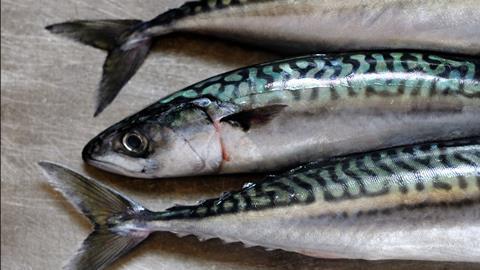
The four parties concluded the agreement on 16 December, setting a total allowable catch (TAC) of 299,010 tonnes for 2026 and agreeing on a revised sharing arrangement. Europêche, which represents the EU fishing industry, said the deal formally excludes the EU from the allocation framework, despite the bloc continuing to follow scientific advice from the International Council for the Exploration of the Sea (ICES).
Under the agreement, the combined share of the four coastal states amounts to 79.45% of the mackerel stock, leaving insufficient scope to accommodate what the EU considers its historical fishing rights and legitimate economic interests. The arrangement also excludes Greenland and does not address overfishing by Russia, Europêche said.
The EU has taken a different approach to setting fishing limits for 2026. The bloc’s TAC and Quota Regulation includes a provisional catch limit of 156,921 tonnes for the first six months of the year, equivalent to 90% of ICES headline advice, pending the outcome of broader coastal state negotiations.
According to Europêche, the higher TAC agreed by the four parties rewards years of unilateral quota setting by non-EU countries and undermines efforts to manage the stock sustainably. The organisation said EU fishers are now facing a sharp reduction in fishing opportunities for 2026, as well as long-term damage to their competitiveness in key mackerel markets.
The EU pelagic sector has called on the European Commission to act swiftly to address the imbalance and to push for a comprehensive, multilateral agreement involving all coastal states. Europêche said the EU should use its leverage as the primary market for seafood exports from other mackerel-fishing nations and consider concrete measures, including trade-related actions, if overfishing continues.
Tim Heddema, spokesperson for the EU pelagic fishing industry, said the agreement raised serious legal and political concerns.
“This development causes deep concerns and raises many questions,” Heddema said. “Does this represent a breach of the EU-UK Trade and Cooperation Agreement by the UK? How will the EU deal with the differences in catch limits and protect EU fishing rights?”
Heddema also warned that the EU’s influence in the negotiations appeared to be weakening, despite formally chairing the mackerel consultations.
“It is extremely distressing to note that while the EU is still the chair of the mackerel consultations, it has lately not managed to be involved in actual negotiations,” he said. “We are in a deep crisis.”