



Europêche says it is encouraged by strong backing in Brussels for a clearer, more secure financial future for the EU’s commercial fishing sector.
A large majority of the European Economic and Social Committee (EESC) has adopted an opinion calling on EU institutions to ringfence at least €6.1 billion for fisheries under the Common Fisheries Policy (CFP) in the 2028–2034 budget cycle.
That figure mirrors the current CFP budget and, according to the EESC, is the minimum needed to keep fisheries on solid footing. The concern is that without a mandatory allocation fisheries funding could end up competing with other priorities under the future National and Regional Partnership Fund.
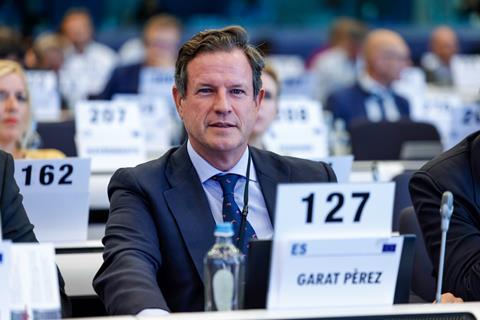
The opinion was led by Europêche president Javier Garat, who acted as rapporteur, with managing director Daniel Voces supporting the work as advisor. Together, they pushed for fisheries to be treated as a priority in their own right, not folded into broader funding frameworks.
“The EESC is sending a clear message to EU institutions – fisheries need a stable, dedicated and predictable financial framework that provides legal certainty for fishers and enables the effective delivery of the CFP’s legally binding objectives,” said Javier Garat.
Beyond the headline budget number, the opinion digs into the practical challenges facing the sector. It underlines the need for public support to help fishers invest in safer vessels, cleaner technologies and innovation, while also making the profession more attractive to younger generations. It also flags the ageing EU fishing fleet – now averaging more than 31 years – and ongoing labour shortages.
The EESC raises concerns that too much attention is being paid to non-binding initiatives, such as the European Ocean Pact, at the expense of the legally binding CFP. It calls for stronger investment in data collection, control and fisheries management, as well as more flexible rules for small-scale coastal fisheries.
On funding rules, the committee supports simpler systems, faster procedures for small grants and fair access across regions. It also stresses the importance of legal certainty, warning that reclaiming aid years later creates confusion and discourages uptake.