






EU fish stocks improving, overfishing down
Overfishing in the European Union has decreased according to the latest figures from the European Commission.
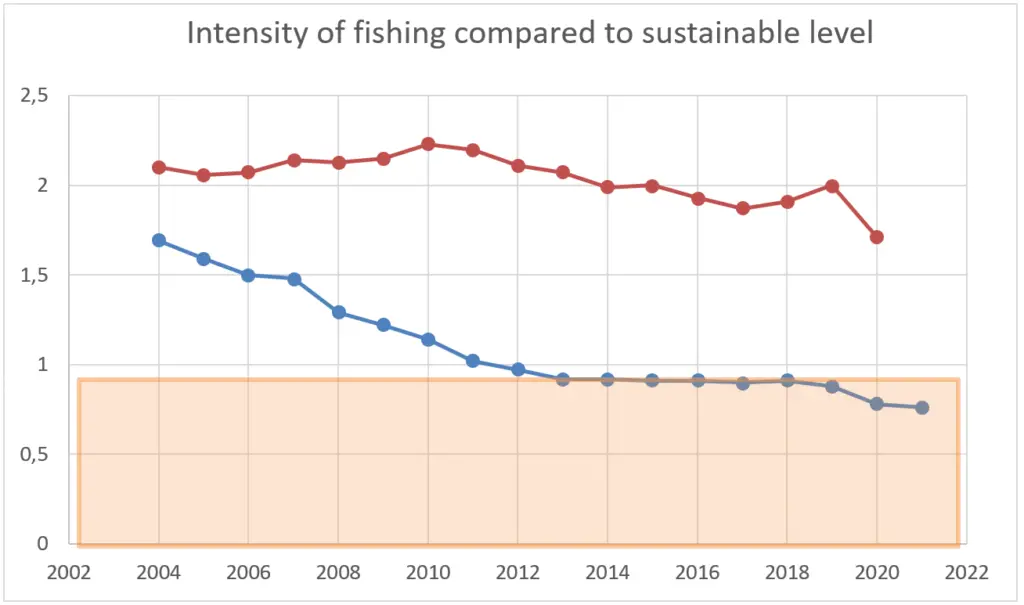
The Commission’s ‘Sustainable fishing in the EU: state of play and orientations for 2024’ is based on independent scientific research and reports how overall sustainability has improved with fewer overfished stocks.
However, it warns that more effort is needed to ensure progress continues.
Levels ‘generally within healthy ranges’
Stocks in the Northeast Atlantic are generally within healthy ranges, with the latest assessment pointing to the best so far sustainability results.
In the Mediterranean and the Black Seas, while stocks are slowly becoming healthier, fishing mortality continues to pose difficulties. The rate for 2020, the latest available data, is the lowest so far, but is still 71% above the recommended sustainability rate.
Moreover, climate change is causing some species to decline, leading to uncertainty for the communities which depend on them. Illegal, unreported and unregulated fishing is also a threat to fishing communities, as is the state of ecosystems within the Baltic Sea and the impact of the Ukraine war on fisheries in the Black Sea.
Next steps
The Commission proposed a package of measures last February to improve the sustainability and resilience of the EU’s fisheries and aquaculture sectors and is now encouraging member states, industry and NGOs to share their views as part of an online public consultation.
Following the consultation, the Commission will table three proposals for consideration by the Council of the European Union to help inform fish quota decisions for 2024.
Related Articles
 PROCESSING & REFRIGERATION
 FISHERIES
 FISHERIES