






Alaska bycatch boost
NOAA Fisheries has identified a new way to deliver more timely genetic information to help resource managers and fishermen in their effort to reduce the salmon bycatch in commercial groundfish fisheries.
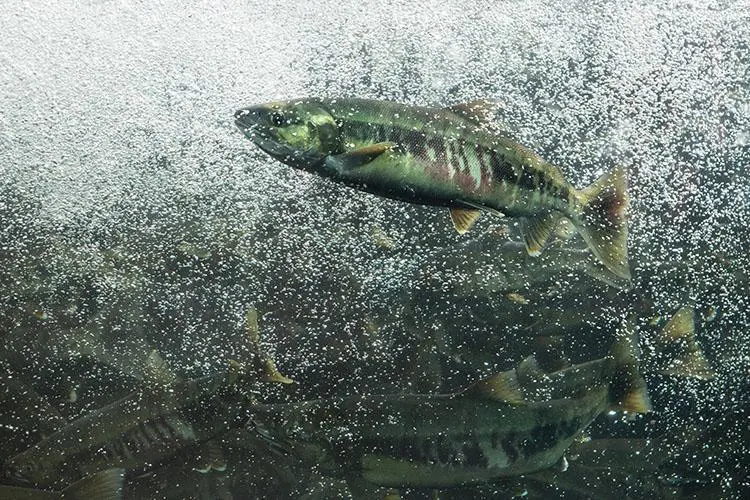
According to the US government authority, having faster access to such information is particularly important given some concerns that salmon caught incidentally as bycatch may be contributing to a decline in Chinook and chum salmon runs, especially in western Alaska.
The Magnuson–Stevens Fishery Conservation and Management Act (MSA) requires that bycatch be minimised to the extent practicable. In the Alaska region, the North Pacific Fishery Management Council and NOAA Fisheries have adopted measures to limit the catch of species taken incidentally in groundfish fisheries.
Certain salmon species, such as chum and Chinook, are designated as “prohibited species” in groundfish fishery management plans because they are the target of other, fully-utilised domestic fisheries.
The incidental catch of salmon in groundfish fisheries is closely monitored to ensure that all salmon are counted, and representative samples are analysed using genetic tools to estimate what stocks are being caught.
Scientists at the Alaska Fisheries Science Center have been working to speed up genetic analyses and share results with industry to integrate stock-specific information into bycatch avoidance strategies.
“We’ve been working hard to deliver more comprehensive information faster so that it can be more efficiently integrated into the management process,” said Wes Larson, programme lead for the Science Center’s Genetics Programme.
The Science Center’s Genetics Programme works to determine where salmon caught as bycatch originate. Scientists also are exploring ways to help the fishing industry avoid catching specific stocks through integrative analyses that combine large datasets to predict stock specific distributions.
In studying the salmon bycatch, scientists hope to:
- Determine the geographic origin of salmon caught in federally managed groundfish fisheries that are collected by NOAA Fisheries observers to estimate stock-specific impacts of bycatch
- Determine the number of adult Chinook that would have returned to their natal rivers if not caught as bycatch (adult equivalency analysis)
- Merge stock identification with other data to predict stock-specific distributions and potentially help fishing fleets avoid certain stocks (e.g., western Alaska stocks)
Genetic stock identification of the salmon bycatch from commercial trawl fisheries in the Bering Sea and Gulf of Alaska is completed each year to determine which salmon stocks are most affected by the fisheries. Stock composition reports are completed annually for chum and Chinook in the Bering Sea and Gulf of Alaska.
Scientists use genetic information from chum and Chinook bycatch in the pollock trawl fisheries to estimate the number and proportion of these salmon being caught.
During the past year, NOAA Fisheries geneticists have worked with Alaska Fisheries Information Network (AKFIN) to develop comprehensive databases for chum and Chinook. These databases link observer collected information with genetic and age data.
Scientists have integrated new Genotyping-in-Thousands (GTseq) chemistry into the laboratory workflow. This method simultaneously generates genotypes (the genetic makeup of an organism) for thousands of individuals, subsequently increasing the statistical power needed to distinguish salmon sub-populations or stocks. As a result, they have been able to decrease turnaround time. They have also piloted the collection of dried DNA by fisheries observers for more efficient sampling and higher sample quality.
Additionally, Patrick Barry, a NOAA Postdoc, developed tools and software to more quickly process data, conduct additional analysis and streamline reports.
These advancements have allowed the genetics laboratory to deliver data much faster. For example, the lag time between bycatch occurrence and reporting of data has decreased by nearly a year for chum. These advancements will be available for Chinook starting in 2023.
NOAA Fisheries offers that this means that managers and industry have information from the most recent year when starting to fish. This should facilitate more effective stock-specific avoidance strategies. The stock-specific impacts of bycatch also can be estimated more quickly, which is important for informing management of different stock groupings.
Salmon bycatch levels vary from year to year due to changing environmental conditions, run sizes, fleet behaviour and other factors.
In 2021, in the Bering Sea/Aleutian Islands pollock directed fisheries bycatch mortality was an estimated 546,043 chum and 13,783 (in pollock directed fisheries) and 15,895 (in all groundfish) Chinook.
Genetic analysis indicated that 51,510 of the 545,883 chum caught as bycatch in 2021 originated from rivers in western Alaska including the Yukon and Kuskokwim. These western Alaska fish represented 9.4% of the total chum bycatch.
During 2020, 18,195 of the 32,294 Chinook caught in the Bering Sea/Aleutian Islands groundfish fisheries were from western Alaska stocks including the Kuskokwim and Yukon. These fish represented 56.4% of the total Chinook bycatch.
Related Articles
 FISHERIES
 FISHERIES
 FISHERIES