




2023 cod quota cut
In spite of the ongoing sanctions that are in place due to the conflict in Ukraine, Norway and Russia have reached an agreement on joint-fishing opportunities for 2023, with the online negotiations setting a 20% reduction for Northeast Arctic cod, with the new quota in line with scientific recommendations.
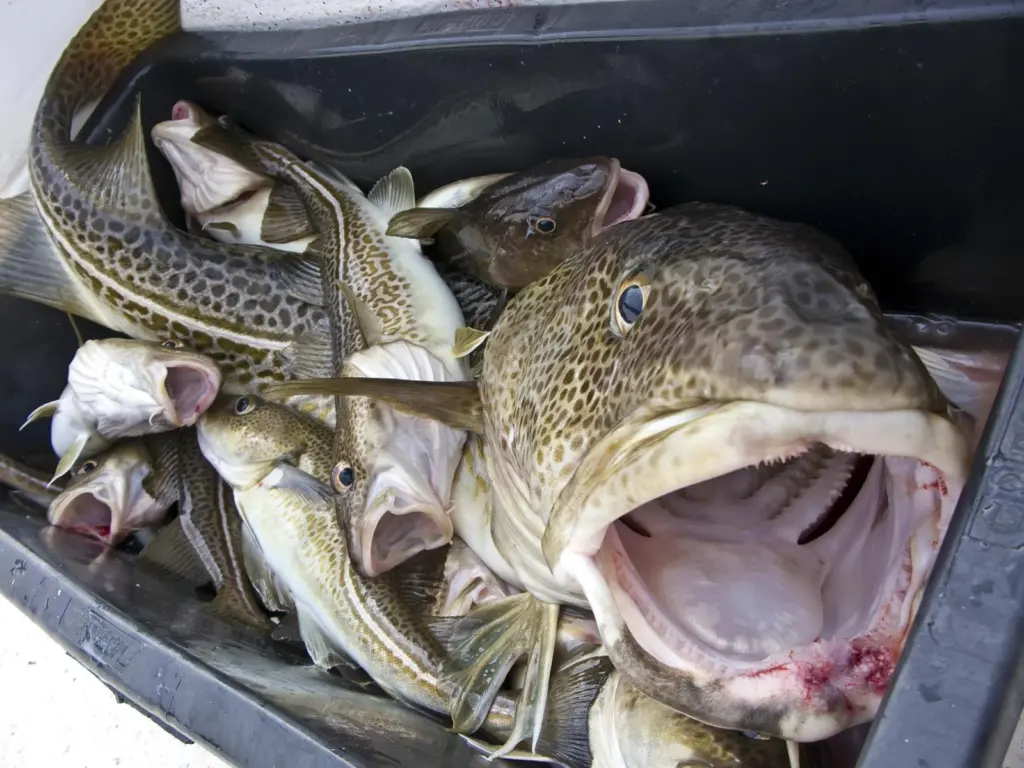
Next year’s total quota for Northeast Arctic cod was set at 566,784 tonnes. This will be distributed between Norway, Russia, and third-countries as per the same pattern as in previous years, with Norway’s quota set at 260,782 tonnes.
“It is good that we have concluded a fisheries agreement with Russia, despite the fact that we are in an extraordinary situation. The agreement ensures marine management in the northern areas that is both long-term and sustainable, and in this way, we take care of the world’s largest cod stock and the other species in the Barents Sea,” said Norway’s Fisheries and Oceans Minister Bjørnar Skjæran.
The total quota for haddock has been set at 170,067 tonnes, with Norway share amounting to 84,177 tonnes.
Meanwhile, a 2023 capelin quota of 62,000 tonnes gives Norway a 37,150-tonne share.
The total quota for blue halibut in 2023 was set at 25,000 tonnes, with Norway getting 12,735 tonnes.
As well as reducing Norway’s transfer of pollock to Russia by 605 tonnes, the transfer of blue halibut from Russia to Norway was reduced by 240 tonnes for 2023.
The two parties also agreed to continue work on a management plan for prawns.
Because Russian scientists are temporarily suspended from the International Council for the Exploration of the Sea (ICES), 2023’s joint stock quota recommendations were drawn up in a bilateral working group between the Institute of Marine Research and the Russian research institute VNIRO.
This working group followed the ICES methodology and framework for stock assessment and advice.
Related Articles
 FISHERIES
 FISHERIES
 FISHERIES