


Project to optimise feed efficiency
Scientists and industry are joining forces in a new project to improve feed for commercial fish farming in order to improve protein digestibility.
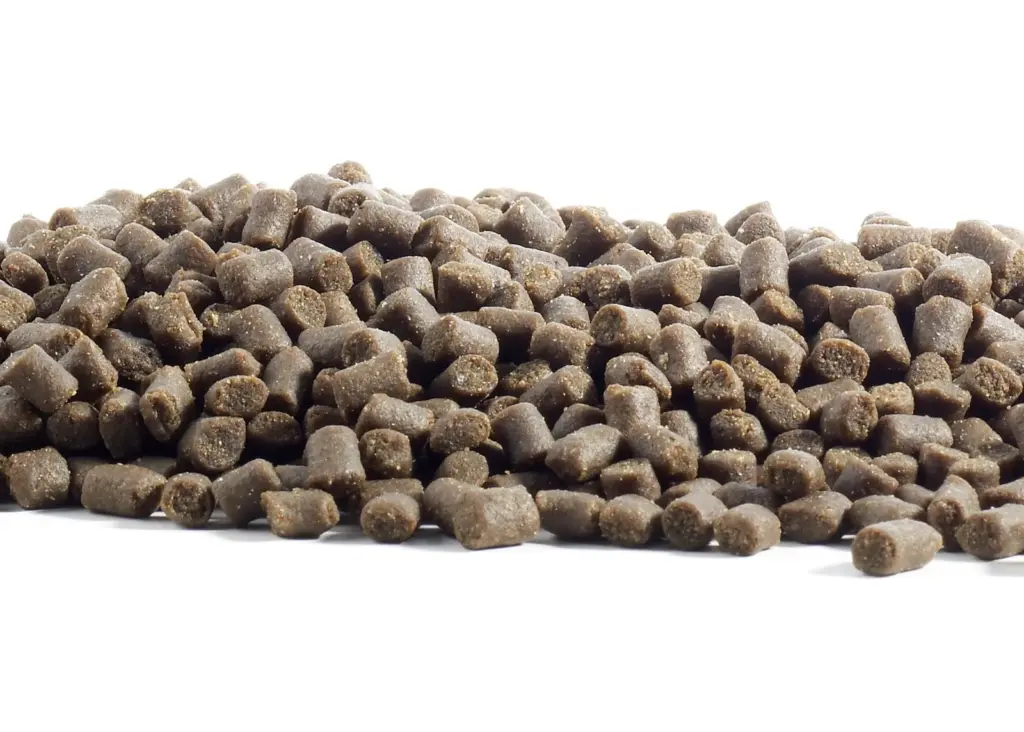
In the ExiPro project – funded by Innovation Fund Denmark – scientists from Aarhus University, University of Copenhagen, the Technical University of Denmark, and fish feed producer BioMar, hope to reduce the impact on the aquatic environment, improve fish growth and save the industry DKK50m a year.
The scientists say that if the protein is not fully utilised then surplus nitrogen will end up in the aquatic environment, and therefore protein digestibility needs to be optimised.
The project partners expect to increase protein digestibility by at least one per cent and protein intake by at least five per cent. This means a total reduction of nitrogen excretion to the aquatic environment of at least nine per cent. They says that improved protein digestibility of one per cent may help the industry save DKK50m a year in raw materials.
The project aims to optimise the specific part of feed production known as the extrusion process. During this process the feed is heated and mechanically processed under high pressure – as a total mass – through an extruder, in order to achieve a final product with a specific homogenous form, which is suited for the specific fish and easy to handle. The process involves heat and pressure, both of which may destroy the quality and digestibility of the protein. There is, however, limited knowledge about what happens to the protein during the extrusion process.
“The extruder is like a ‘black box’ as we only have limited knowledge on the chemical reactions and physical processes that take place in it”, associate professor Trine Kastrup Dalsgaard, Department of Food Science at Aarhus University, explains.
The scientists at Department of Food Science are, together with co-workers, currently mapping the effects of extrusion on the physical and chemical properties of fish feed protein sources and examining how these changes affect fish growth, metabolism, protein intake, and nitrogen excretion.
An improved understanding of the extrusion process and its effects on feed protein will allow the project partners to develop extrusion tools for different protein feeds, ensuring that each type of protein source will have the optimum treatment when producing feed.
The four-year project has a budget of DKK14m.
Related Articles
 AQUACULTURE
 FISHERIES
 AQUACULTURE