


India looks to revolutionise fisheries with drones
From early detection of algal blooms, to precise feed broadcasting in mariculture, to rescue operations during emergency situations, drone technology is being looked at as a way to transform India’s marine fisheries sector.
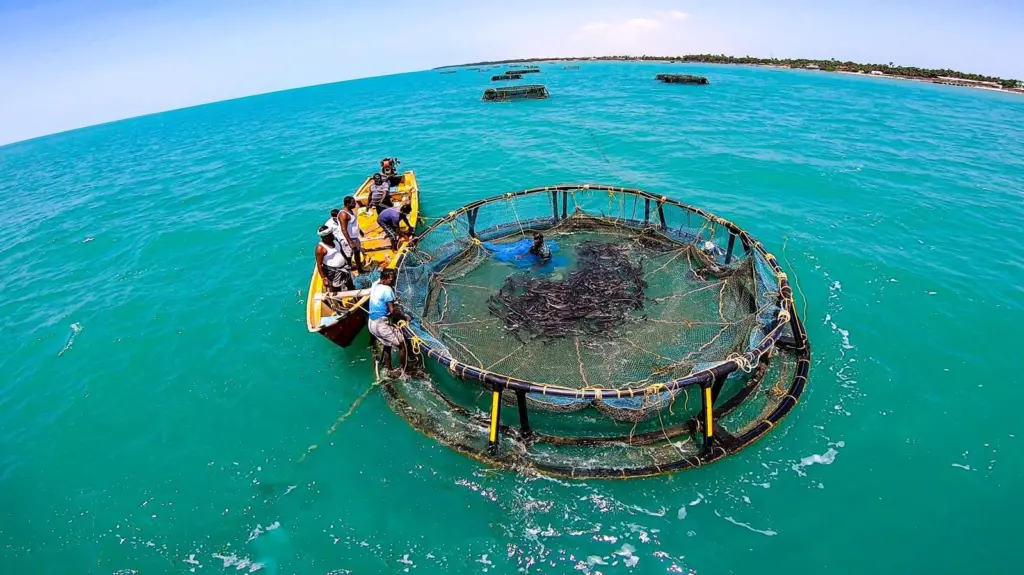
A joint effort of the Union Ministry of Fisheries, National Fisheries Development Board (NFDB) and ICAR-Central Marine Fisheries Research Institute (CMFRI) is seeking to promote and popularise drone applications in the country’s marine fisheries. Amongst other things, the initiative is aiming to significantly enhance the efficiency of fisheries management, sea cage farming, disaster management and ecosystem conservation.
As part of the project, an awareness workshop and drone demonstration for fishermen and fish farmers is being held at CMFRI on 8 November 2024 to showcase the prospects of drone applications for various purposes, including aquaculture input dispensing, live fish transportation, rescue operation, water sampling, underwater imaging, water body monitoring and mapping, and marine mammal stock assessment.
Referring to the prospects of drone applications, CMFRI Director Dr Grinson George said the technology will significantly enhance efficiency, reduce labour costs and minimise environmental impacts.
“It could be used in cage fish farming operations both in coastal and offshore waters for monitoring fish health, assessing water quality parameters, and optimising feed distribution. Drones can also aid in early detection of algal blooms and other environmental threats to the farming,” he said.
George added that the technology could be used for monitoring paddy seedlings in Pokkali farms.
Another benefit of this technology is enabling fish farmers to get reasonable market prices for their high-value, cage-farmed fish. Drones can efficiently transport live fish from remote aquaculture sites to markets according to requirements, ensuring freshness and reducing transportation time, he said.
Application of drones could also be helpful to improve marine mammal stock assessment, easy surveillance of their interaction, including strandings. The technology could be used for deploying life jackets for rescue operations during emergency situations.
Marine scientists are hopeful that using drones would help locate pelagic fish shoals, optimise fishing efforts and reduce fuel consumption.
Related Articles
 FISHING TECHNOLOGY
 FISHING TECHNOLOGY
 COMMENT