





Electronic monitoring of tuna longliners
The Secretariat of the Pacific Community (SPC) has initiated an electronic monitoring project which aims to improve data collection on the catch of albacore, yellowfin and bigeye tuna in the Western and Central Pacific.
The Western and Central Pacific Fisheries Commission (WCPFC) calls for 5% observer coverage onboard longliners operating in the region, however, lack of space onboard smaller vessels, logistics and costs have limited human observer coverage to around 2%. Third party data are, therefore, lacking on longline target catch, non-target catch and overall operations – data that is necessary to improve scientific understanding of these fisheries, strengthen management tools, and promote better enforcement of existing national and regional conservation measures.
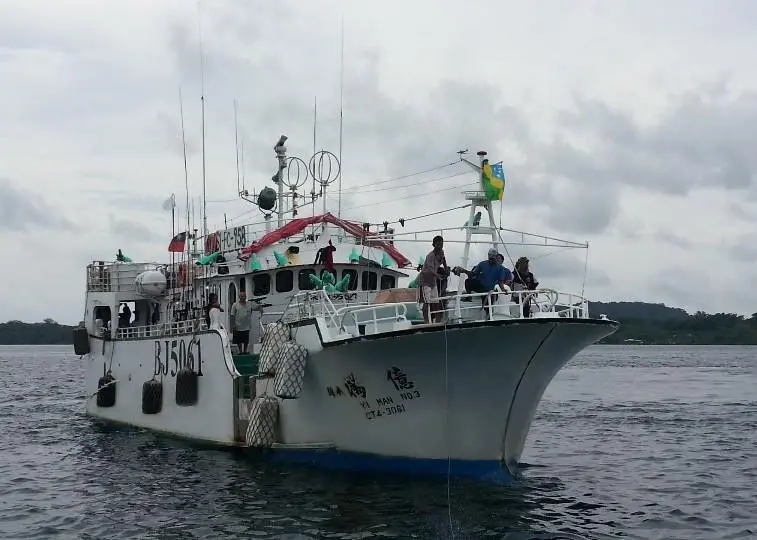
Two CT4-class tuna longliners left the port of Noro in the Western Province of Solomon Islands in March with the latest video technology onboard, in a project that will see if the use of modern technology to supplement the role of human observers can offer real opportunities to overcome these challenges in tuna longline fisheries.
This project was developed and launched by Tri Marine, National Fisheries Developments (NFD), Yi Man Fishery Company, Satlink, the Forum Fisheries Agency (FFA), SPC, and Solomon Islands Ministry of Fisheries and Marine Resources (MFMR).
Tri Marine and NFD contributed to project management, and installation, maintenance and cost of the electronics. FFA, via the EU-funded DevFish 2 project, shared the equipment costs and played a major role in overall coordination. Satlink provided and partially covered the cost of the electronics, while also designating staff to installation, data monitoring and review. The Yi Man Fishery Company volunteered two vessels, allocating valuable time to facilitate installation, and providing vessel space and resources to accommodate the equipment and human observers. MFMR provided human observers to overlap with the electronics, while SPC assigned a field coordinator to assist with observer placement, data review, and project evaluation and reporting.
This multi-stakeholder effort will assess whether or not video cameras, electronic storage, and vessel monitoring systems (VMS), combined with at-port inspections, can generate information sufficient to fulfil the requirements of the WCPFC Regional Observer Programme minimum data fields. Imagery collected will be reviewed after each vessel trip by MFMR, with FFA and Satlink involvement, using customised reviewer software. Human observers will also be onboard, conducting regular observer duties, with results to be compared against those collected electronically. Early results of the project will be presented at the WCPFC Scientific Committee meeting in August 2014, followed by a full report summarising the findings.
Although tuna resources face growing pressure, the SPC says that collaborative efforts like this one between industry and fisheries managers provide tangible results that can guide improvements. Modern fishing technology is often blamed for negative impacts on the marine environment, but strategic application of new innovations can also contribute to improved science, and the monitoring, control and surveillance needed for a more sustainable future.
Related Articles
 FISHING TECHNOLOGY
 NEW VESSELS
 FISHING TECHNOLOGY