




Bering Sea closed to bottom trawling
The National Marine Fisheries Service recently announced that nearly 180,000m2 of the Bering Sea will be closed to bottom trawling to protect important seafloor habitats and marine life, effective from August 25 2008.
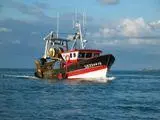
These in-the-water protections reflect an approach first developed by conservation organisation Oceana that freezes the current area, or ‘footprint’, where trawling already occurs in the Bering Sea and prevents trawlers from expanding into previously untrawled areas.
The final regulations establish a northern boundary for trawling in the Bering Sea to protect the marine life and ecosystems of the northern Bering Sea and Arctic from the impacts of bottom trawling.
“The Bering Sea is among the most productive and spectacular ocean ecosystems in the world,” said Jon Warrenchuk, ocean Scientist for Oceana. “Considering the current and future impacts of climate change, these regulations are an important step towards giving our oceans and fisheries the best chance for survival.”
The Bering Sea is home to 26 species of marine mammals, including the critically endangered northern right whale; millions of seabirds hailing from all seven continents; more than 450 species of fish; and some of the world’s largest submarine canyons. Blue, humpback, gray and bowhead whales travel through the Bering Sea each year. The northern Bering Sea shelf is critical habitat for endangered spectacled eiders, with the entire population of these large seabirds coming to the Bering Sea each winter to feed on the clams and invertebrates that live in and on the seafloor. Clams and seafloor invertebrates are also a significant source of food for Pacific walrus.
According to the National Academy of Sciences, fishing boats that trawl on the bottom destroy important seafloor habitat, decimating corals, sponges and other sensitive areas. Many of these seafloor animals and habitat areas can take centuries to recover, if they recover at all. Much is still not know about the possible impacts of bottom trawling in the northern Bering Sea, and the fishing industry has been aggressively expanding in recent years.
“Bottom trawling is an outdated and wasteful way to try and catch fish,” said Mr Warrenchuk. “This ecosystem is already being figuratively hammered by climate change. It doesn’t need to be literally hammered by bottom trawls.”
This latest action by NMFS joins a host of other regulations to protect Pacific marine animals and ecosystems from bottom trawling. Combined with closures that adopted the Oceana approach in the Aleutian Islands and other parts of Alaska and in state and federal waters off Washington, Oregon and California in 2006, this newest rule brings the total area of U. Pacific waters protected from bottom trawling to more than 830,000m2.
“This is the latest in a series of actions that show the tide is turning in ocean management away from managing for collapse and towards a science-based, ecosystem-focused approach to protect our oceans and sustainable fisheries,” said Mr Warrenchuk.
Related Articles
 FISHING TECHNOLOGY
 NEW VESSELS
 FISHING TECHNOLOGY