




Urchinomics teams up to keep sea urchins on the menu
Urchinomics has struck a pair of partnership deals aimed at restoring kelp forests and mitigating the decline in wild sea urchin populations.
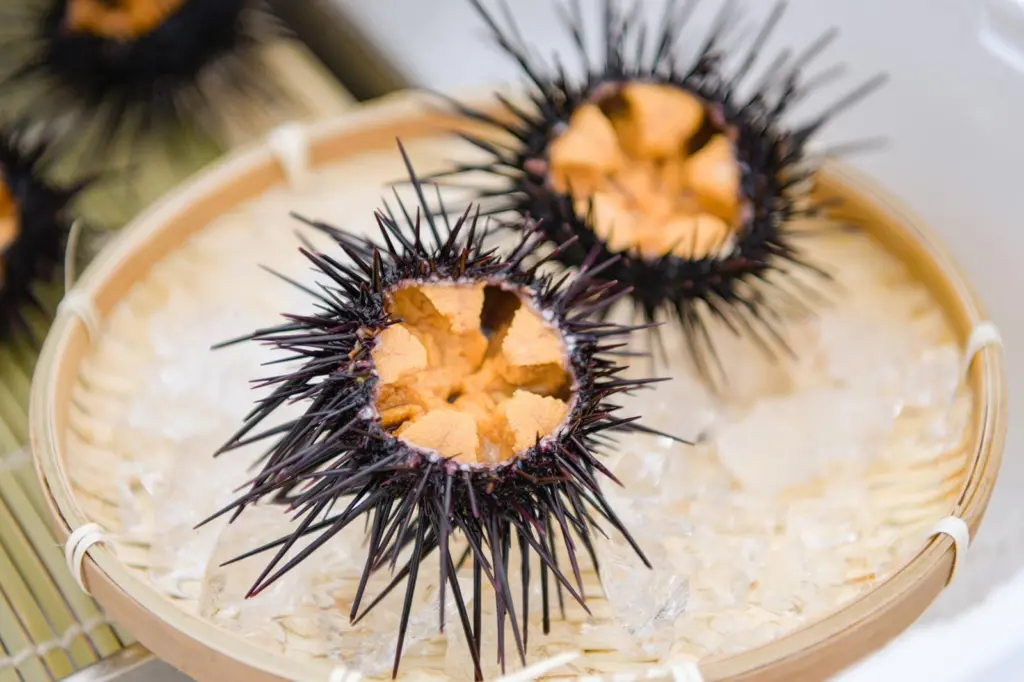
As kelp forests have disappeared, the number of edible urchins has also reduced, causing a reduction in the domestic wild catch in Japan. The urchins that remain are considered ‘barren’, with little ‘uni’ – the edible part of the sea urchin which is prized as a delicacy.
Urchinomics turns barren urchin populations into quality produce through land-based farming technology and specialised feed. The Norwegian aquaculture firm has teamed up with NYK and Food & Life Companies – both based in Japan – to put this delicacy back on menus around the world.
“These partnerships will enable us to enhance our capacity to deliver high-quality sea urchins to consumers, all while making a positive environmental impact,” said Perry Bevin, chief executive of Urchinomics.
“Working with partners who share our commitment to nature-based solutions is key to our success.”
Shinichi Yanagisawa, NYK executive officer said the company was continually seeking ways to add value to its activities. “Through this investment in Urchinomics, NYK would like to vigorously pursue solutions to the social issue of rocky-shore denudation and the new challenge of creating blue-carbon credits,” he said.
Koichi Mizutome, president and chief executive of F&LC said the company had previously had to rely on wild catch. “Through collaboration with Urchinomics, I hope we will be able to establish planned manufacture and a secure stable procurement base of sea urchins.”
“Also I have high hopes to cause positive effects of restoring kelp forests, through effective use of natural resources by using barren urchins which has been difficult to consume as food.”
Related Articles
 AQUACULTURE
 AQUACULTURE
 AQUACULTURE