



Offshore farming promise
An innovative floating structure which takes advantage of the ocean’s natural conditions could unlock an additional £4.2 billion in turnover for Scotland’s aquaculture sector.
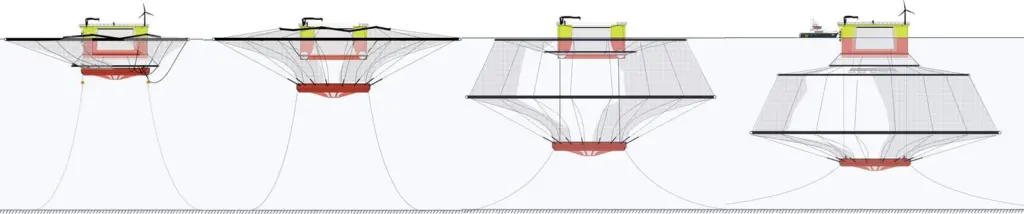
The Net9 system, developed by start-up Impact-9 Net9 system is one step closer to becoming a commercial reality, with a proven design concept now ready for large-scale testing.
The system uses a flexible structure which is designed to move with the waves and weather any storms, rather than fighting against the water, reducing the potential stress on fish. This makes the system suitable for siting further away from shore.
“A move further offshore can pave the way for a new sustainable seafood industry of scale, worth billions of pounds in the UK alone,” explained John Fitzgerald, chief executive of Impact-9.
“The economic potential is similar to that of offshore wind, however, it will occupy a relatively small amount of ocean real estate and could fit in with existing and planned offshore wind turbine arrays.”
Once at full scale, a single Net9 pen could be used to produce up to 2,500 tonnes of salmon per year. An area of around 12 by 12 kilometres within existing and planned offshore wind energy zones would be enough to house 280 pens and quadruple Scottish production.
The breakthrough marks the end of the latest phase of the £200,000 Inflatable Marine Products for Aquaculture Containment Technology project (IMPACT), which was funded by the UK Seafood Innovation Fund (SIF) with additional support from the Sustainable Aquaculture Innovation Centre (SAIC).
Next year, the research team plans to begin building a unit suitable for technical demonstration at the European Marine Energy Centre in Orkney.
Related Articles
 AQUACULTURE
 SEAFOOD
 SEAFOOD