


EU organic aqua growth
The EU-27’s total organic aquaculture production reached a level of around 74,032 tonnes in 2020 and accounted for 6.4% of the region’s total farmed output, according to a new report from the European Commission’s European Market Observatory for Fisheries and Aquaculture Products (EUMOFA).
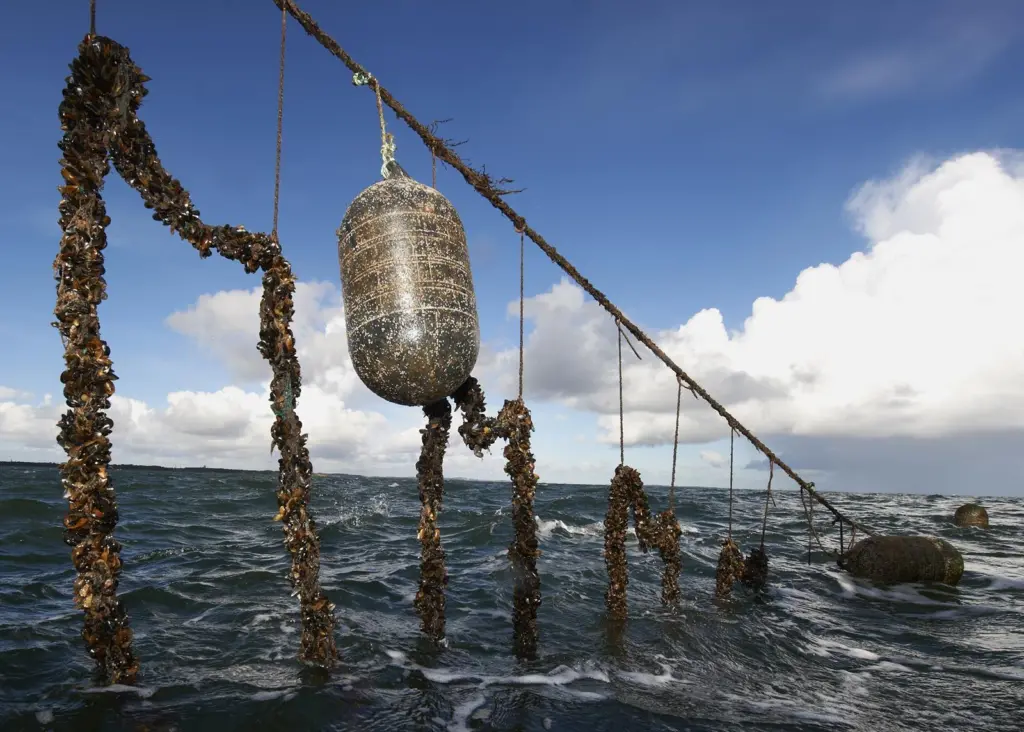
EUMOFA’s “Organic Aquaculture in the EU” study states that production has increased by 60% compared to 2015 (46,341 tonnes), mainly due to a growth in organic mussel production.
Based on data collected for the study, with 41,936 tonnes, mussels accounted for more than half of the total organic aquaculture production, followed by salmon (12,870 tonnes), trout (4,590 tonnes), carp (3,562 tonnes), oyster (3,228 tonnes) and European seabass/gilthead seabream (2,750 tonnes).
The main EU producers of organic aquaculture are Ireland (salmon and mussels), Italy (mussels and finfish), France (oysters, mussels, and trout), the Netherlands (mussels), Spain (mussels and sturgeon), Germany, Denmark and Bulgaria (mussels).
Looking at the sector’s main developments in recent years, the study determines that alongside the significant rise in organic mussel production, which now accounts for 10% of all mussel production in the EU, there has been an increase in the bloc’s organic oyster production, with France harvesting around 3,220 tonnes in 2020 compared with less than 900 tonnes in 2018.
There has also been a decrease or stagnation for most of the finfish species, it states.
Organic salmon production and trout have decreased slightly, while the carp total has halved. Only seabass and seabream demonstrated any growth – rising from 2,000 tonnes in 2015 – with Greece being the EU’s main producer.
The report suggests that organic finfish production has not increased because of “limited demand from the market” and “technical difficulties” in producing under the organic scheme, including the availability of organic feed and juveniles.
In addition, the organic scheme may not be in line with the production method developed by producers (for instance extensive pond polyculture in some eastern member states or closed recirculating aquaculture systems (RAS), or because of national requirements.
Another difficulty that stakeholders face when establishing a clear communication strategy towards their clients is the competition with other certification schemes, states EUMOFA. Its report gives the example of the Aquaculture Stewardship Council (ASC) or Marine Stewardship Council (MSC) standards, where the latter may also apply to shellfish production in the Netherlands, and the fact that organic scheme only covers aquaculture products and not wild-caught products.
According to the Research Institute of Organic Agriculture (FIBL) and the International Federation of Organic Agriculture Movements (IFOAM), the EU’s consumption of all organic foods via retail was estimated at €44.8 billion in 2020, representing an increase of 15.1% compared to 2019. Furthermore, that from 2000 to 2020, the value of the EU’s organic market increased by 707%.
After the United States (€49.5 billion), the EU is the world’s second largest market for organic food.
Related Articles
 AQUACULTURE
 FISHERIES
 AQUACULTURE