
Feed conversion ratios in aquaculture are improving faster than many in the industry thought possible, according to a new trial run by Danish biosolutions company Aerbio.
Results that meaningful gains can be achieved while significantly reducing reliance on fishmeal.
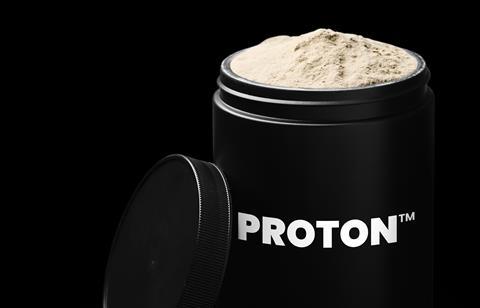
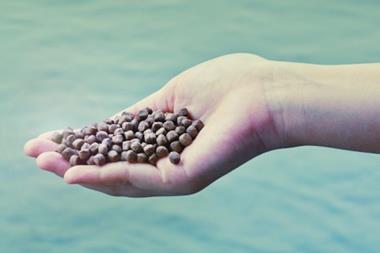
Independent, third-party trials of Aerbio’s protein ingredient, Proton, show strong performance across key aquaculture species. In commercial-style feed formulations, Proton replaced fishmeal at inclusion levels of 5–20%.
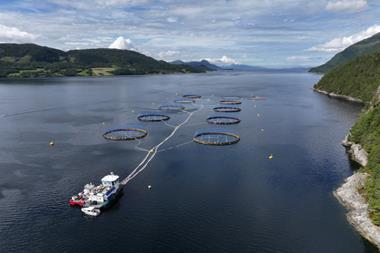
The outcome was a roughly 10% improvement in feed conversion ratios for shrimp, while salmon diets in some formulations recorded improvements of up to 30%.
“The results have been overwhelming, even for us,” said Aerbio chief executive Kaspar Kristiansen. “You always expect some improvement, but this level of performance across different formulations and species exceeded our assumptions.”
These efficiency gains translate directly into economics. Feed remains the single largest cost in aquaculture production, and Aerbio estimates that, based on current protein pricing, Proton could lift value-chain earnings by as much as €700 per tonne of aquafeed in which it is used.
READ MORE: Feed from gas project progresses with pilot facility launch
Proton is produced using a globally patented microbial process that converts CO2 into protein. It requires no arable land, minimal freshwater and no marine inputs, addressing both sustainability concerns and supply constraints tied to fishmeal. Improved feed conversion further reduces the environmental footprint by lowering total feed demand per kilogram of fish produced.
“To meet the protein needs of the future, we have to think differently,” Kristiansen said. “Proton works as a high-performing ingredient today, but the broader technology is what enables large-scale change in aquafeed.”
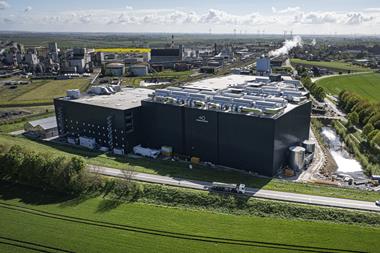
Aerbio is now running additional trials with leading aquafeed producers and preparing for scale-up, starting with a demonstration plant and followed by its first commercial facility. The company is currently fundraising to support this next phase, as demand for salmon and shrimp continues to rise globally.