



A smart solution to be part of
The most recent research shows that the seabird deaths as a result of longline fishing has been severely underestimated, says Hans Jusseit, managing director of Oceansmart, a company providing smarter, environmentally safe solutions for the global fishing industry and environment.
Now, threatened seabird populations, in particular the iconic albatross, all of which are endangered are in severe need of help.
There are over two billion longline hooks deployed every year and every day around 1,000 seabirds are killed by baited hooks used on tuna longlines.
Now the tuna longlining industry has the opportunity to ensure that marine creatures will be enjoyed by future generations by using the Smart Tuna Hook, reducing the environmental footprint and creating a safer and more productive industry.
The problem is merely a consequence of the need to feed the billions of people healthy protein. However, this doesn’t mean that consumers have to stop eating sushi or tuna, but they should try to ensure it has been caught using a seabird and turtle safe method like the Smart Tuna Hook.
Fishermen play a vital and important role in our society just as farmers do. Shutting it down or restricting it because of this problem does us no good at all, particularly when there is a solution that can solve the bycatch issue.
Smart Tuna Hook
The Smart Tuna Hook can be the solution. The hook is an innovative and practical Australian invention that will ensure hundreds of thousands of sea birds and turtles are saved each year. Seabird and turtle deaths caused by the longlining industry can be a thing of the past.
The Smart Tuna Hook is the brainchild of experienced tuna longline fisherman, Hans Jusseit.
“As a fisherman it was hard to believe that catching a few seabirds a year was really any problem, after all we would see thousands every year. It took a while to be convinced that it was the collective impact from all the fishermen throughout the world.
“I realised, as a fisherman, that if I wasn’t part of the solution, I was part of the problem.”
So, using his years of experience and knowledge, he invented and developed a way to stop the seabirds and turtles being caught, while still allowing the fishermen to catch his fish – the Smart Tuna Hook.
“Now there is a practical, affordable solution. It is 100% effective. It benefits both the environment and the fishing industry”, he says.
Proven solution
The Smart Tuna Hook is a proven solution, having gone through independent testing in Australia, New Zealand and the US, all of which found the hook to be 100% effective, with no sea birds or turtles hooked.
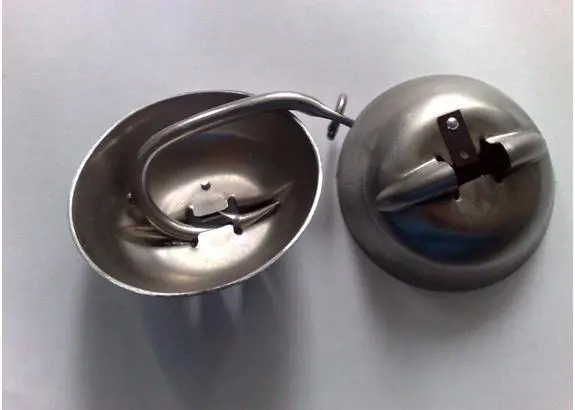
The smart part of the system is an attachable shield that makes ingestion and the subsequent hooking of birds or turtles impossible while in place. When the hook reaches a depth below the usual feeding range of birds and turtles an alloy pin holding the shield to the hook disintegrates, allowing the shield to sink to the seabed and exposing the baited hook to the fish.
The system uses a modified tuna longline hook, circle or Japanese style, which accepts a specially designed shield that disarms the hook once it has been baited.
The steel shield, once attached to the baited hook creates a large 3D barrier encompassing the hook’s point and barb, making it impossible for any seabird or turtle to be hooked, internally or externally.
The use of the Smart Tuna Hook system will increase bait retention, increasing productivity and catch, saving time and resources on the fishing grounds, and more than making up for the minimal cost of applying the shield to hooks during a setting operation.
The mild steel shield increases the sink rate of the baited hook, and acts to protect the bait from tearing off the hook when it enters the water after being cast from the vessel.
The shield is easily and quickly snapped and held on to the baited hook by a clip. The application of the shield to the baited hook is simple, requiring no special training, requires minimal time and does not increase the time to set a tuna long-line. This can be viewed at http://www.oceansmart.com.au/1142/smart-tuna-hook.aspx .
Once released, the shield sinks to the seafloor where it corrodes within 12 months, leaving no pollution or toxic residue, only naturally occurring iron oxide and carbon.
A thrust of modern approaches to stopping seabird bycatch in pelagic fisheries is the
application of weight, usually lead swivels, to branch-lines to increase sink rates and hence bait availability for seabirds. However, adoption of this approach is often not favoured by many fishers because of safety concerns over lead swivels injuring crewmembers in ‘bite-off’ or break off situations during gear retrieval.
To further help the environment and fishermen the Smart Tuna Hook system also replaces the toxic lead weights commonly used by fisherman, which can be lost, poisoning the ocean with lead and causing serious injury and death to fishermen.
Support
Oceansmart and Mr Jusseit are calling for support to substantiate the benefits of the Smart Tuna Hook to conservationists, the fishing industry, government agencies and the public.
The plan is for 100,000 Smart Tuna Hooks to be deployed on longlines, which will demonstrate to fisherman, fisheries agencies and conservation groups just how beneficial it can be in saving hundreds of thousands of seabirds and turtles.
Everyone can support this initiative by going to www.oceansmart.com.au and making a pledge.
There is a choice for all, says Mr Jusseit; to continue with unsustainable fishing practices that are killing seabirds and turtles, or be part of the solution and start using the Smart Tuna Hook.
Related Articles
 FISHING TECHNOLOGY
 NEW VESSELS
 FISHING TECHNOLOGY