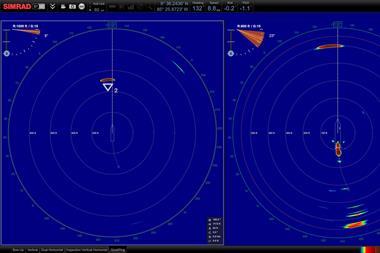




Launched at Danfish this October, the new Simrad PX TrawlEye and Simrad TV80 software platform are designed to deliver a clear, detailed picture of the net and condition of either a bottom or pelagic trawl.
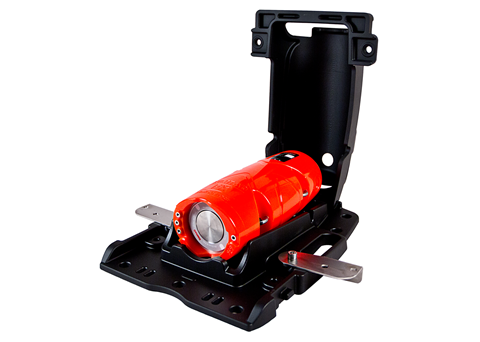
Through the unique use of a composite echo sounder transducer enabling advanced Linear Frequency Modulation (LFM), also called CHIRP, the PX TrawlEye provides a crisp and detailed presentation of catch entering the trawl, the status of the gear, as well as the bottom conditions. The sensor is placed on the headrope of a bottom trawl, or in the intermediate section of a pelagic trawl, from where skippers and crew receive a real time echogram from the trawl via a wireless link.
To ensure long range communication and optimum alignment between sensor and vessel, the PX TrawlEye also sends up roll and pitch information. By knowing the sensor’s roll and pitch angle it’s possible to detect bad alignment or if the TrawlEye has become tangled in a mesh or similar while shooting the trawl. This data provides a detailed insight into what’s happening below the water, enhancing trawl monitoring.
In addition to the high resolution echogram the PX TrawlEye also provides battery status information, making it easier to plan when to charge the sensor, ensuring it will always be ready for action when needed. PX TrawlEye data can be received through the Simrad PI Hydrophone or even non-Simrad types, provided that the frequency is similar.
All data from the PX TrawlEye, along with data from Simrad PI/PX/ITI sensors can be collected, recorded and displayed using the innovative new Simrad TV80 software platform. Simrad TV80 has been designed as a single user interface for a wide range of sensors from Simrad, essentially providing a single application to view and act on data from all sensors available. By simplifying access and viewing of a huge amount of data, Simrad TV80 can significantly improve trawling efficiency, safety and results.
The TV80 advanced data interface will, in the future, also allow the user to receive data from other systems on board like flow, pressure, and tension metres, weather and environmental sensors, ADCPs (Acoustic Doppler Current Profiler) and more. Once the data is received, the system will offer several options to present the information on the screen; i.e. gauges, graphs, bars, numbers or arrows. The TV80 data engine will record all the data internally, time stamped and ready for post processing.